Car sensors are essential electronic components that monitor and regulate key vehicle functions such as engine performance, fuel efficiency, safety systems, and emissions control. By converting physical parameters like temperature, pressure, speed, and chemical composition into electrical signals, these sensors enable the vehicle’s ECU to make real-time decisions.
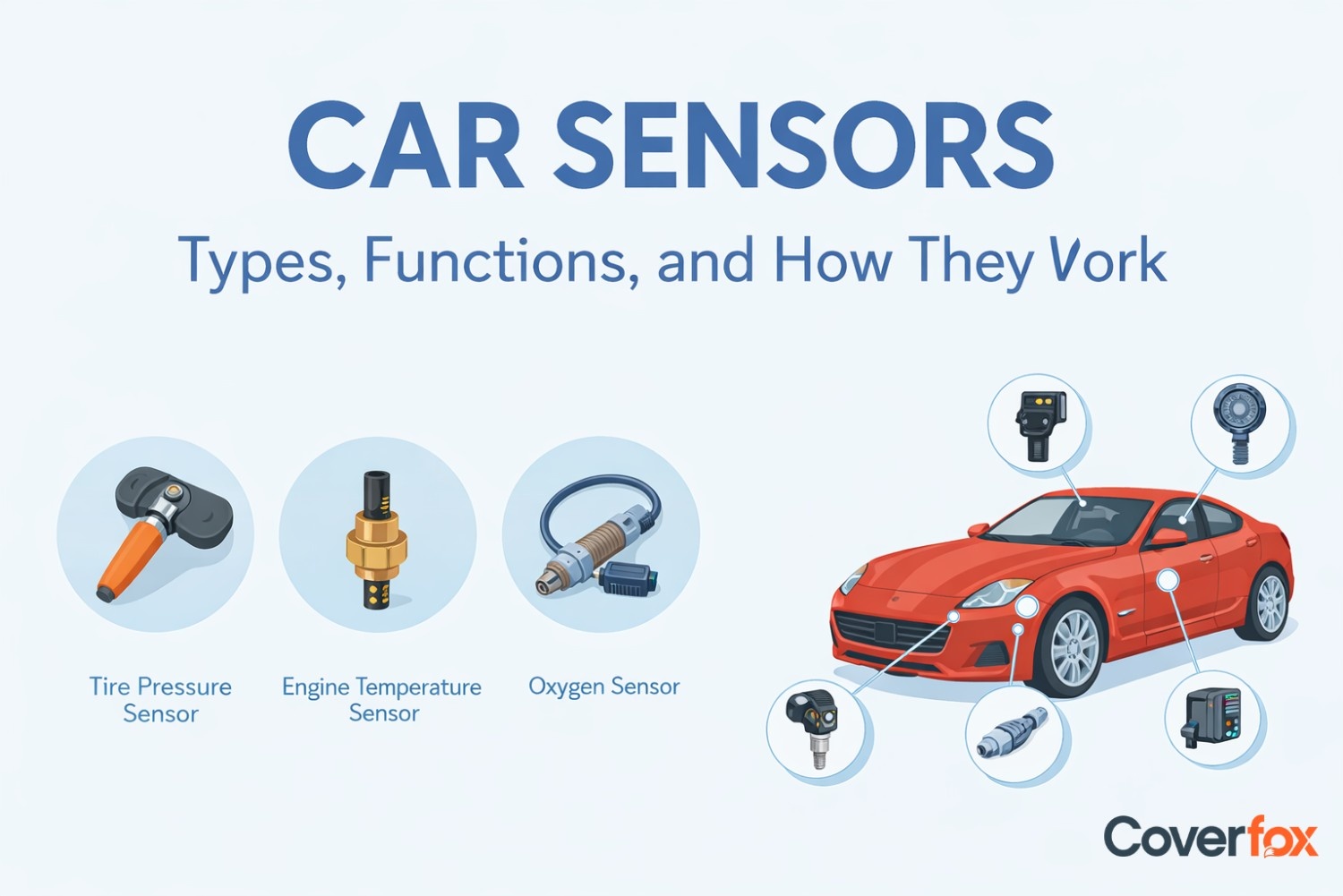
From oxygen and wheel speed sensors to advanced AI-enabled and ADAS-integrated systems, modern vehicles rely on a network of 60–100 sensors to ensure optimal performance and regulatory compliance. This blog breaks down the different types of sensors used in cars, how they function, and why they are indispensable in modern automotive systems.
What Are Car Sensors and Why They Matter?
An automotive sensor is an electronic device that detects a physical phenomenon and relays the information it gathers to the control unit of the automobile. They comprise the basic building blocks for automotive sensors that are utilised in engine management, safety systems and emissions control.
Commonly measured parameters consist of:
Temperature (coolant, intake air)
Pressure (oil, fuel, manifold)
Position and motion (crankshaft, camshaft, wheel speed)
Chemical composition (oxygen in exhaust)
The Evolution of Automotive Sensors: From Mechanical to Electronic
Early vehicles relied on mechanical gauges. In the 1980s, when electronic control units were developed, sensors could provide extremely precise measurements of fuel injected into a vehicle and when the spark plug was fired. To comply with stricter emission standards in India, such as those contained in the Bharat Stage 6 requirements, which are regulations set by the Ministry of Road Transport and Highways to limit vehicle emissions, automakers began using more and more sensors.
Growing Use of Sensors in Modern Vehicles
Modern vehicles contain 60–100 sensors, depending on the segment and features. Safety mandates such as ABS and airbags require multiple sensors used in cars, including wheel speed and crash detection sensors. Telematics systems under AIS-140 guidelines also add GPS and diagnostic modules (MoRTH AIS-140).
Emerging Technologies in Automotive Sensors
Recent advances in sensor technologies include the following:
Miniaturised, more accurate MEMS sensors for automotive applications
Advanced driver assistance systems that use both LiDAR and radar technology
Artificial intelligence-enabled sensors that use multiple data inputs to provide sensor fusion
On-board diagnostics (OBD-II) for emissions monitoring (Central Pollution Control Board, India)

How Car Sensors Work: Detection ➝ Conversion ➝ Processing
There are three basic processes that a sensor goes through:
1. Detection:
The sensor first detects a physical parameter such as temperature, pressure, speed, or chemical composition. For example, an oxygen sensor measures the level of oxygen in the exhaust gases, while a wheel speed sensor monitors how fast each wheel is rotating.
2. Conversion:
Once detected, the physical parameter is converted into an electrical signal. This signal is typically a voltage, current, or digital data that can be easily read by the car’s electronic control unit (ECU). For instance, changes in oxygen levels are transformed into voltage signals proportional to the gas concentration.
3. Processing:
The ECU receives the electrical signals and interprets the data to make real-time adjustments. Using the oxygen sensor example, if the sensor detects too much oxygen in the exhaust, the ECU enriches the fuel-air mixture to optimize combustion, improve fuel efficiency, and reduce emissions.
Example:
An oxygen sensor detects the exhaust gases after combustion, sends a voltage signal to the ECU, which then adjusts the fuel injection timing and quantity. This ensures the engine runs efficiently while meeting emission standards like BS6.
Key Functions Performed by Automotive Sensors
The primary functions of sensors used in cars include:
Monitoring engine performance:
Controlling fuel efficiency:
Enhancing passenger safety:
Reducing emissions:
Supporting driver assistance systems:
Sensors continuously track engine parameters such as temperature, pressure, and RPM, allowing the ECU to maintain smooth operation and prevent damage
By measuring air intake, fuel flow, and exhaust oxygen, sensors help optimize the air–fuel mixture for better mileage and reduced fuel consumption.
Sensors in ABS, airbags, and stability control systems detect hazards and trigger safety mechanisms to protect occupants during emergencies.
Oxygen and exhaust gas sensors monitor and adjust combustion to comply with emission standards, helping vehicles stay environmentally friendly and BS6‑compliant.
Advanced sensors like radar, LiDAR, and cameras enable features such as adaptive cruise control, lane-keeping assistance, and collision warnings, improving convenience and safety.
Benefit-led overview:
Real-time diagnostics for engine health
Improved fuel economy through optimised combustion
Enhanced braking and stability via ABS and ESC systems
Types of Sensors in Automobile Systems
The following table summarizes a typical car sensor list:
| Sensor Type | Function | Location |
|---|---|---|
| Oxygen Sensor | Measures the exhaust oxygen levels | Exhaust system |
| Mass Air Flow Sensor | Calculates air intake | Air intake system |
| Coolant Temperature Sensor | Monitors engine temperature | Engine block |
| Wheel Speed Sensor | Detects wheel rotation for ABS | Wheel hub |
| Crankshaft Position Sensor | Tracks engine speed and timing | Engine crankshaft |
This car sensor list highlights the diversity of components required for efficient vehicle operation.
Pros and Cons of Sensors Used in Cars
Below are the key pros and cons of sensors used in cars, highlighting their benefits for safety and performance as well as potential drawbacks in maintenance and reliability.
Advantages
Reduces risk by using automated detection systems that can identify any likely hazard
Supports using BS6-compliant emissions standards
Will provide better fuel economy and better engine performance
Disadvantages
Sensor failure may affect vehicle performance
Replacement and calibration may increase maintenance costs
Dependency on electronic systems increases complexity
To Conclude
Sensors are critical to modern vehicle design, ensuring safety, compliance, and performance. This is evidenced by the automotive sensor industry, which continues to grow due to regulation and the advancement of vehicle automation. Understanding the working and scope of types of sensors in automobile systems supports better maintenance and informed ownership decisions. Comparing car insurance quotes can also help you stay financially prepared for sensor-related repairs and damages.
Related Articles:
Car Alternator Failure: Symptoms and How to Fix
Car Clutch: What It Is, Types, and How It Works
What Is a Car Facelift? A Complete Guide for Car
Frequently Asked Questions
How do sensors work in cars?
Car sensors detect physical changes like temperature, pressure, or speed, convert them into electrical signals, and send them to the ECU, which adjusts the vehicle’s systems in real time for performance, safety, and efficiency.
What are common car sensor problems?
Faulty wiring, contamination, or wear can lead to inaccurate readings and warning lights.
Can a car run without sensors?
While basic mechanical operation may persist, it will impact performance, efficiency, and safety features.
What sensor is responsible for RPM?
The crankshaft position sensor measures rotational speed and determines engine RPM.
What is the relationship between speed and RPM?
RPM indicates engine rotational speed, while vehicle speed depends on gear ratios and wheel rotation.
Disclaimer: The information in this article is intended for educational purposes only and should not be construed as professional automotive or insurance advice. Sensor performance, diagnostics, and insurance considerations vary by vehicle model, make, and geographic region. Always consult licensed professionals for maintenance recommendations and insurance coverage suitability.