Dashcam footage plays a vital role in speeding up car insurance claims by providing clear visual evidence of accidents and road incidents. It helps insurers determine fault accurately, reduce disputes, and ensure faster, more transparent claim settlements.
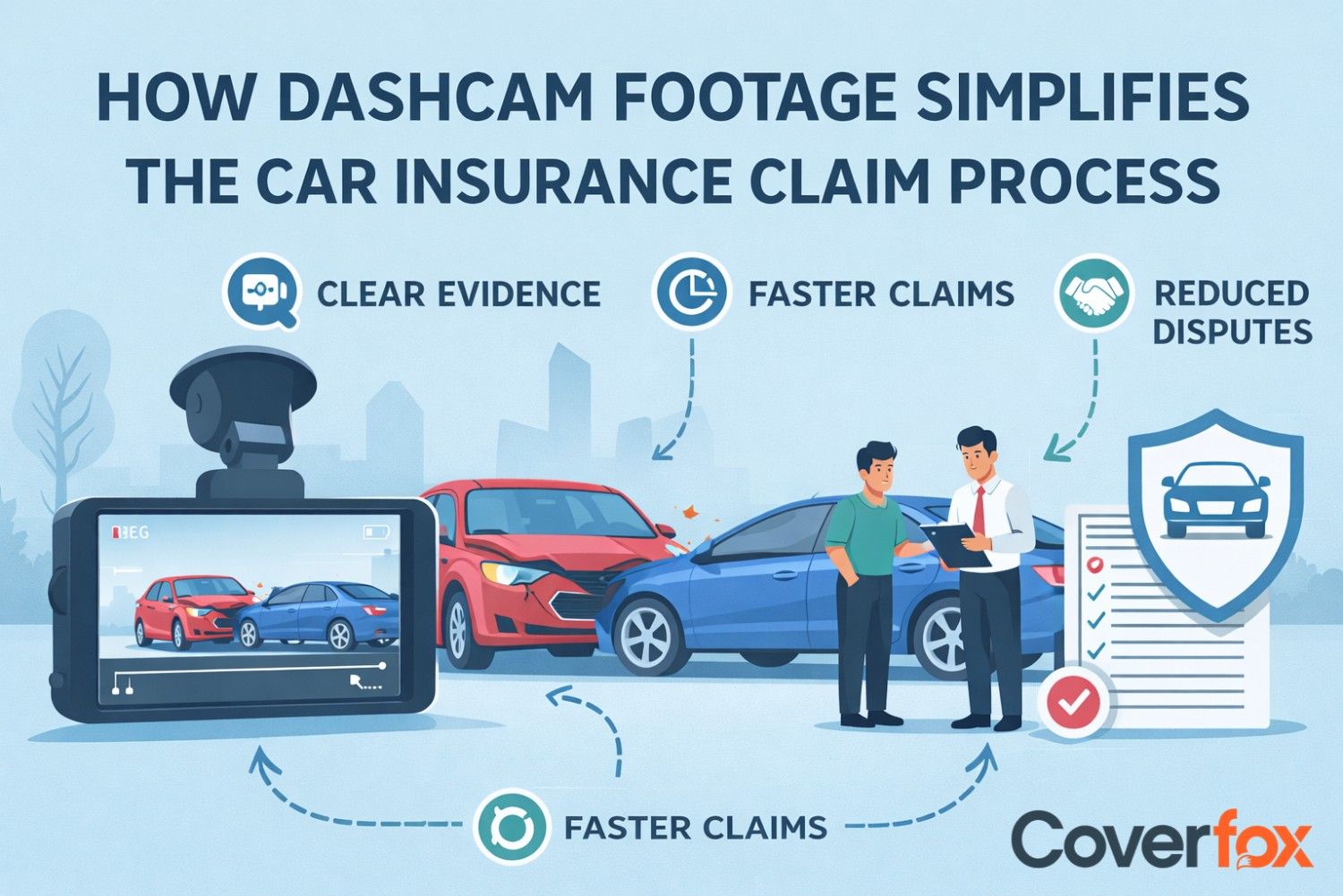
Evidence plays a crucial role while filing and settling car insurance claims. From eye witness statements to dashcam footage, each piece of evidence paces the process of the claim. In situations where it is one’s word against another's, dashcam footage provides the real evidence to determine fault in an accident. This article will explain how dashcam footage can help settle car insurance claims faster, and why they are an essential piece of evidence.
Understanding Dashcam Footage
First, let us understand what dashcam footage is. Dashcam footage refers to video recordings captured by a dashboard-mounted camera while a vehicle is in motion or parked. These cameras continuously record the road ahead (and in some cases, the rear or cabin), helping document real-time driving conditions, traffic incidents, and accidents.
The Role of Dashcam Footage in Car Insurance Claims
In motor insurance, dashcam footage serves as valuable visual evidence to establish fault, verify accident circumstances, and support faster claim processing. It helps reduce disputes, prevents false claims, and adds an extra layer of transparency during claim assessment. It is especially useful when two parties are in a dispute over whose fault the accident was. Dashcam footage also helps car insurers and policemen determine the culprit behind the accident and settle claims accordingly.
How Dashcam Footage Expedites the Claims Process
Oftentimes, eyewitnesses are not reliable. Having actual video evidence ensures the claim made is true, and no fraud has been committed. Dashcam footage significantly reduces the number of fraud claims against car insurance, thus insurers always prefer dashcam footage as evidence, settling claims faster.
Common Situations Where Dashcam Footage Is Essential
Dashcam footage plays a crucial role in providing visual proof during incidents where fault or events need to be clearly established.
Road accidents involving multiple vehicles
Hit-and-run cases
Disputes over traffic signal violations
False or exaggerated insurance claims
Rear-end collisions and sudden braking incidents
Damage caused while the vehicle is parked
Unclear liability in intersection accidents
Road rage or aggressive driving incidents
Insurance claim verification and dispute resolution

How to Use Dashcam Footage in the Claims Process?
Dashcam footage can significantly simplify and strengthen a motor insurance claim by providing clear visual evidence of an incident. To ensure it is accepted during claim assessment, it must be used correctly and submitted on time.
1. Save the footage immediately:
Secure the video recording after the incident to prevent it from being overwritten.
2. Capture clear details:
Ensure the footage clearly shows the accident, vehicle numbers, date, time, and surrounding conditions.
3. Inform the insurer promptly:
Register the claim with your insurer and mention that dashcam footage is available.
4. Upload the footage during claim filing:
Submit the video through the insurer’s app, website, or as instructed by the claims team.
5. Avoid editing or altering the video:
Raw, unedited footage carries higher credibility during claim assessment.
6. Use it for liability clarification:
Dashcam footage helps insurers determine fault, especially in disputed or unclear cases.
7. Keep a backup copy:
Retain a copy of the footage until the claim is fully settled.
Common Mistakes to Avoid When Using Dashcam Footage
Using dashcam footage correctly can strengthen your insurance claim, but certain mistakes can reduce its effectiveness or even lead to claim rejection.
Not saving the footage immediately:
Submitting edited or trimmed videos:
Poor camera placement or unclear recording:
Failing to capture date and time details:
Delaying claim intimation:
Relying only on dashcam footage:
Not backing up the recording:
Using footage that violates privacy or traffic laws:
Important clips may get overwritten if not saved right after the incident.
Altered footage may be considered unreliable during claim assessment.
Improper angles or low-quality footage can make details hard to verify.
Missing timestamps can weaken the credibility of the evidence.
Late reporting may affect claim acceptance, even if footage is available.
Additional documents like FIR, photos, or repair estimates may still be required.
Losing the original file can cause issues during claim verification.
Improper use of footage may lead to legal complications.
Legal and Privacy Considerations
While dashcams are useful for safety and insurance claims, it’s important to use them responsibly and within legal boundaries.
Dashcams are legal in India, but recordings must not violate privacy or be misused.
Footage should be used only for lawful purposes, such as insurance claims, accident evidence, or legal proceedings.
Do not share videos publicly on social media without blurring faces or number plates, as it may breach privacy laws.
Audio recording without consent may not be legally valid in some situations, so caution is advised.
Footage should not be tampered with, edited, or altered when submitted as evidence.
Insurers may reject footage if it appears manipulated or incomplete.
Law enforcement authorities may request dashcam footage during investigations, and policyholders are expected to cooperate.
Final Words
While dashcam footage serves as excellent evidence for car insurance claims, speeding up the entire process, it must be done with diligence. Non-edited videos, and dated footage are very important for approval of dashcam footage as evidence. Always keep a copy handy with you in case the original is misplaced or deleted. Providing truthful and accurate information is the key to fasten the claim settlement process.
Explore More Articles:
Inclusions and Exclusions of Car Insurance
Electric vs. Conventional Vehicle Insurance: What You Need to Know
Impact of Anti-theft Device in Car Insurance
Frequently Asked Questions
Can dashcam footage really speed up claims?
Yes. Dashcam footage provides visual evidence of the incident, helping insurers assess damage faster and reduce back-and-forth during claim verification.
Does a dashcam help determine who’s at fault?
Yes. Dashcam recordings help establish the sequence of events, traffic movement, and impact points, making it easier to determine liability in disputed cases.
Can dashcams reduce paperwork for claims?
Yes. Since video evidence supports the claim, it can reduce the need for repeated explanations, manual inspections, or additional documentation in many cases.
Do insurers accept dashcam footage as evidence?
Yes. Most insurers accept dashcam footage as supporting evidence, provided it is clear, unedited, and submitted within the claim reporting timeline.
Can dashcam footage prevent insurance fraud?
Yes. Dashcams help prevent false or exaggerated claims by providing factual proof of how the incident occurred.
How is dashcam footage used in police reports and legal claims?
Dashcam footage can be shared with traffic police or legal authorities to support FIRs, accident investigations, and legal proceedings, subject to verification.
Is all dashcam footage useful for insurance claims?
No. Footage must clearly show the incident, date, time, and vehicle details. Blurry, incomplete, or edited videos may not be accepted.
Can dashcams help in hit-and-run cases?
Yes. Dashcams can capture the vehicle number, direction, and time of the incident, which can assist in tracing the offender and supporting insurance or police action.
Will using a dashcam reduce my insurance premium?
Currently, most insurers do not offer direct discounts for dashcam usage. However, dashcam footage can help in faster claim settlement and dispute resolution, which indirectly benefits policyholders.