Electric vehicle insurance differs from conventional car insurance due to the high cost of EV-specific components like batteries, electric motors, and charging equipment, which require specialised repairs. This leads to higher own-damage premiums for EVs, although third-party premiums are lower due to IRDAI-mandated discounts. Conventional vehicle insurance remains more stable because of mature technology and widely available repair networks.
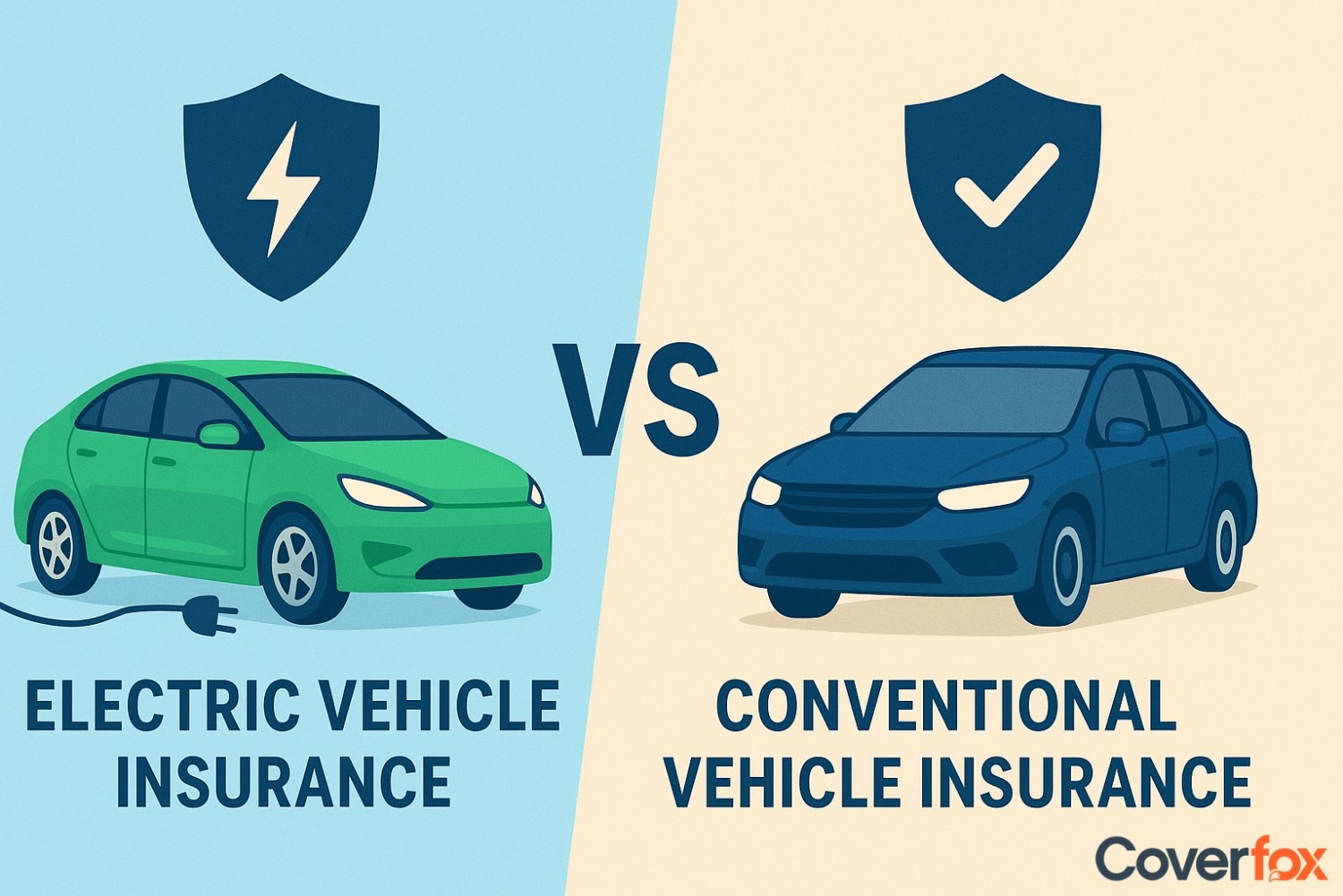
When it comes to car insurance, many times people get confused if electric vehicle insurance is the same as conventional vehicle insurance. The short answer is no – there is a significant difference between the two. From coverage, cost to claims, EV insurance differs from traditional vehicle insurance. To find out more about the differences between the two, read along.
Understanding Electric Vehicle Insurance
Electric vehicle insurance is similar (not the same) to regular motor insurance but is tailored to cover EV-specific components that are costly and critical. Unlike traditional vehicle insurance, it places greater focus on protection for the battery pack, electric motor, charging equipment, and risks like battery damage due to water ingress or power surges.
What Makes EV Insurance Different from Conventional Car Insurance
EV insurance differs from regular car insurance by specifically covering expensive components like the lithium-ion battery, electric motor, onboard charger, and charging cables. It also addresses EV-specific risks such as battery damage from water ingress, short circuits, or power surges during charging. Since battery replacement costs are high, EV policies often include separate battery protection and specialised add-ons that are not relevant for petrol or diesel cars. Also, EV comprehensive insurance has a higher premium than conventional vehicle insurance. However, third-party EV insurance rates are cheaper due to government discounts, encouraging sustainable choice.
What Determines the Cost of Electric Vehicle Insurance?
When you compare EV insurance with conventional car insurance, the price difference is driven by how EVs are built and repaired. Beyond just the purchase cost, insurers assess multiple EV-specific risks before deciding the premium.
High-cost battery systems
Limited repair ecosystem
Dependence on global supply chains
Greater own-damage exposure
Cost-reducing incentives
Lithium-ion batteries are the most valuable part of an EV and can form a significant share of the car’s total value, making even minor damage expensive to fix.
EV repairs require certified technicians, insulated tools, and specialised equipment, all of which add to labour and service costs.
Key EV components are often imported, leading to higher part prices and longer vehicle downtime during repairs.
Higher vehicle prices and costly electrical components result in higher own-damage cover compared to petrol or diesel cars.
EV owners benefit from a 15% lower third-party insurance premium as per IRDAI guidelines, and state-level tax and registration waivers can further reduce overall insurance costs.

EV Insurance vs Conventional Vehicle Insurance - Key Differences
While the core structure of motor insurance remains the same, EV insurance is designed to address the unique technology, risks, and costs associated with electric vehicles.
| Aspect | EV Insurance | Conventional Vehicle Insurance |
|---|---|---|
| Key components covered | Battery pack, electric motor, onboard charger, charging cables | Engine, gearbox, exhaust system |
| Repair requirements | Specialised EV-trained technicians and diagnostic tools | Widely available mechanics and tools |
| Parts availability | Many components are imported, increasing cost and repair time | Mostly locally available parts |
| Own-damage premium | Generally higher due to expensive components and repairs | Relatively lower for similar models |
| Third-party premium | 15% discount mandated by IRDAI | Standard IRDAI rates apply |
| Additional add-ons | Battery protection, charging equipment cover | Engine protect, zero depreciation |
| Government benefits impact | Road tax and registration waivers may lower IDV | Limited or no such incentives |
Why Does Conventional Vehicle Insurance Remain Relatively Stable?
Conventional vehicle insurance remains relatively stable because petrol and diesel cars use mature, widely understood technology with predictable repair and replacement costs. Spare parts, skilled mechanics, and service networks are easily available, allowing insurers to accurately assess risk and keep premiums more consistent over time.
How Add-ons Differ for EVs and Conventional Cars?
Add-ons for electric vehicles are designed to protect high-value electrical components and charging-related risks that do not exist in conventional cars. These covers focus more on battery safety, electrical failures, and charging infrastructure rather than mechanical parts.
Battery protection cover
Charging equipment cover
Electrical and electronic accessories cover
Power surge and short-circuit cover
Roadside assistance for EVs
Covers repair or replacement of the battery due to accidents, water ingress, or short circuits.
Protects home chargers, wall boxes, and charging cables against damage or theft.
Covers damage to inverters, controllers, and power electronics.
Covers damage caused by voltage fluctuations during charging.
Specialised support for battery depletion, towing to EV-compatible service centres, or nearest charging station.
Are There any Differences in Claims Handling for EVs and Conventional Cars?
Yes, claims handling for EVs differs in a few important ways due to the technology involved. EV claims often require specialised inspection, battery health checks, and repairs at authorised EV service centres, which can increase assessment time, whereas conventional cars usually have faster claim processing due to wider repair networks and readily available parts.
Choosing Between EV and Conventional Vehicles: Does Insurance Affect Your Choice?
Insurance is an important cost consideration when deciding between an electric vehicle and a conventional car, as premiums, add-ons, and long-term expenses can differ. Understanding how insurance impacts ownership helps you make a more informed choice.
1. If you choose an Electric Vehicle (EV):
Insurance premiums may be higher due to expensive components like the battery and specialised repair requirements.
EV-specific add-ons and government benefits, such as lower third-party premiums and tax waivers, can help balance long-term costs.
2. If you choose a Conventional Vehicle:
Insurance costs are generally more stable and predictable because of established repair networks and lower part replacement costs.
Fewer specialised add-ons are required, making policy selection simpler and often more affordable upfront.
Key Takeaways
EV insurance is shaped by high-value components, specialised repairs, and EV-specific risks, making it different from conventional car insurance. While EV premiums can be higher, regulatory discounts and government incentives help offset costs. Choosing between an EV and a conventional vehicle ultimately depends on balancing upfront insurance costs with long-term ownership benefits.
Related Articles:
Roadside Assistance for Electric Vehicles
The Cost of Charging an Electric Car in India
Difference Between an Electric Car & a Petrol Car
Frequently Asked Questions
Is electric vehicle insurance more expensive than conventional insurance?
EV insurance can be costlier due to high-value components like the battery and specialised repair needs. However, lower third-party premiums and state incentives can help reduce the overall cost.
Can I get the same coverage for my EV as a conventional car?
Yes, EVs can be insured with comprehensive or third-party policies, just like conventional cars. In addition, EV-specific add-ons are available for battery and charging-related protection.
Is the claims process different for EVs?
The process is similar, but EV claims may take longer as they require specialised inspections, battery health checks, and repairs at authorised EV service centres.
Can I insure my EV with the same policy as my conventional car?
No, EVs require a separate motor insurance policy tailored to electric vehicles, even if you already own a conventional car.
Why do EV repairs cost more for insurance?
EV repairs involve advanced electrical systems, trained technicians, and sometimes imported parts, all of which increase repair and replacement costs.
Does EV insurance cover charging equipment?
Charging equipment is usually covered through an add-on, which can include home chargers, wall-mounted units, and charging cables.
Are EVs safer to insure than conventional cars?
EVs are not necessarily riskier, but insurers price them differently due to higher component costs and limited repair networks rather than safety concerns.
Can I get roadside assistance for my electric vehicle?
Yes, many insurers offer EV-specific roadside assistance covering battery depletion, towing to charging stations, and EV-compatible service centres.