GST on used car sales in India depends on who sells the vehicle. Private individual-to-individual sales are fully GST-exempt, while GST-registered dealers must charge 18% GST only on their profit margin under the margin scheme. If a dealer sells at a loss, no GST applies. Business-owned vehicle sales attract GST and must be reported in GST returns.
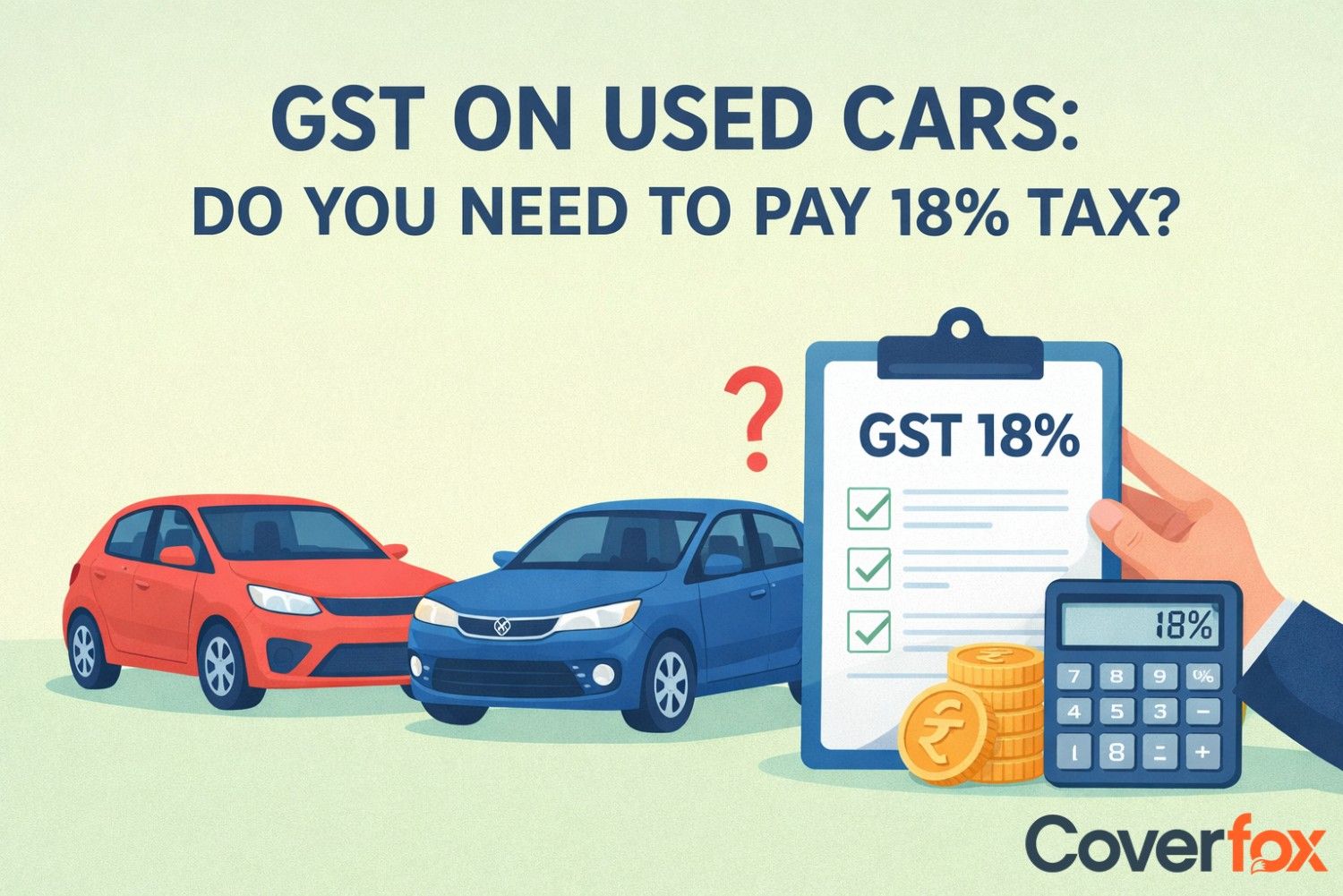
The sale of a used car in India may or may not attract Goods and Services Tax (GST), depending on who is selling the vehicle and under what circumstances. Understanding the rules surrounding GST helps both buyers and sellers determine whether tax is applicable and how it is calculated. This guide explains current GST provisions, the applicable used car GST rate, and situations where tax is fully exempt.
The sale of a used car in India may or may not attract GST, depending on whether the seller is a registered business and the conditions laid out under the CGST Act, 2017. As per notifications and clarifications issued by the Central Board of Indirect Taxes and Customs (CBIC), GST is generally applied only when the vehicle is sold as part of a business activity, while sales by individuals remain outside GST. Tax advisory firms such as Deloitte and EY India note that most business sellers use the margin scheme, where GST is charged only on the difference between the selling price and purchase price.
Used cars’ GST rates have evolved since 2017. Initially, used vehicles were taxed at the same high rates as new cars, but a 2018 CBIC notification introduced reduced rates and clearer valuation methods. Subsequent circulars further clarified exemptions and compliance requirements, leading to the more streamlined framework we follow today.
Do Individuals Have to Pay GST when Selling a Used Car in India?
When a private individual sells a personal vehicle to another private individual, no GST is applicable. Such a sale is treated as a transfer of personal property and not a commercial transaction. Therefore, private sellers do not need to pay GST on the sale of a pre-owned car.
What GST Applies to Used Cars Sold Through Dealers?
When a GST-registered dealer sells a used vehicle, GST is charged under the margin scheme. The standard used car GST rate in 2025 is 18%, but the tax is applied only to the dealer’s profit margin, not the full sale price. If the dealer makes no profit, GST liability becomes zero.
What Is the GST Rate on Second-Hand Vehicles in India?
The current rates for GST on second-hand cars are:
18% GST on the profit margin of used petrol, diesel, and CNG vehicles
GST is not charged on the total transaction value
Input Tax Credit (ITC) is not allowed for used-vehicle sales under the margin scheme
These rules keep taxation fair and prevent double-charging on previously taxed vehicles.

How GST Applies to the Resale of Used Vehicles?
Understanding how GST applies to used vehicles:
GST applies only when sold by a registered dealer
GST is calculated on the difference between the purchase price and the selling price
If the vehicle is sold at a loss, the GST payable is zero
Private sales remain fully exempt
This margin-based framework avoids excessive taxation and ensures transparency in the resale market.
Also Read - How GST Will Impact Your Insurance Premium
GST on Sale of Old Cars by Dealers
Dealers must charge GST on used vehicles at 18% on profits earned from reselling pre-owned cars. Dealers must maintain records of the purchase price, refurbishment costs (if applicable), and the selling price to accurately compute the margin. These compliance requirements apply to all organised used-car dealerships.
GST Implications for Selling Used Cars by Dealers
Dealers must:
Register under GST if turnover exceeds the applicable threshold
Charge GST on profit margins
Issue GST-compliant invoices
File periodic GST returns
Maintain documentation related to vehicle acquisition and sale
These obligations ensure proper reporting of GST on the sale of old car transactions.
No GST on Selling Used Cars Privately
If a private individual sells a vehicle for personal use, GST does not apply. Private transactions are not treated as taxable supplies, and therefore, no GST is payable on the tax on second-hand cars in such cases.
How Is GST Calculated for Pre-Owned Car Sales?
GST is calculated only on the profit margin.
For Example:
Purchase price: ₹8,00,000
Selling price: ₹10,00,000
Profit margin: ₹2,00,000
GST @ 18% on ₹2,00,000 = ₹36,000
If the selling price is lower than the purchase price, the used car GST rate becomes zero.
Also Read - 0% GST on Health & Life Insurance and New GST Rules for Cars & Bikes: What It Means for Citizens
Do You Need to Pay GST When Selling a Used Car at a Loss?
No. If the vehicle is sold below cost, the margin is negative, meaning no GST is payable by the seller. The margin scheme ensures GST applies only to profit earned.
Key Takeaways for Buyers and Sellers
Private individual-to-individual sales of used cars are GST-free.
Sales by GST-registered dealers attract 18% GST, calculated only on the profit margin, not the total sale price.
If the dealer sells at a loss or break-even, no GST is payable.
Buyers should confirm whether GST has been applied — this affects the final price and legal compliance.
Having valid used car insurance remains important, regardless of GST, to cover post-sale liabilities.
When a company sells a business-owned vehicle, GST is applicable to the sale value, and the transaction must be reported on GST returns.
Frequently Asked Questions
Is GST applicable to the sale of a used car?
GST applies only when a registered dealer sells the car; private individual sales are not subject to such charges.
Do you pay GST when selling a car?
Only dealers or registered businesses pay used car GST rates, not private individuals.
Do you have to pay GST on a used vehicle private sale?
No, private sales are exempt.
What is the new GST rule for selling cars?
A uniform 18% GST applies to profit margins of used cars sold by registered dealers.
Is the sale of a used car taxable?
It is taxable only if the seller is a GST-registered dealer; otherwise, it is exempt.
Disclaimer: This article is intended for general informational purposes only and should not be considered tax, legal, or financial advice. GST rules and rates are subject to change based on Government notifications, amendments, or circulars.