The Motor Vehicles Act, 1988, is the cornerstone of road transport regulation in India, providing a structured legal framework for how vehicles are owned, operated, and managed on public roads. It was enacted to improve road safety, ensure accountability, streamline transport services, and outline essential rules around driver’s licenses, vehicle registration, traffic conduct, and mandatory insurance.
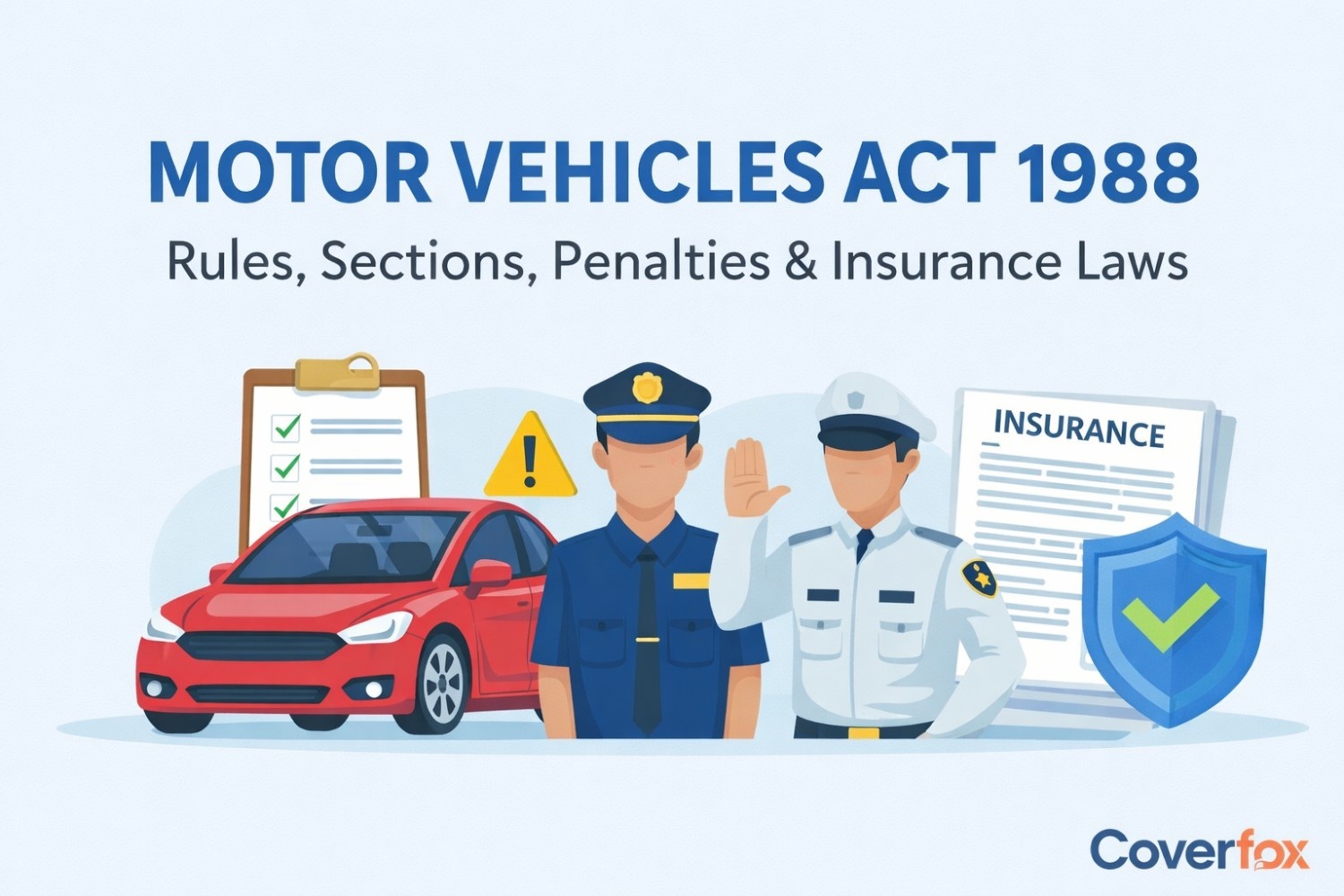
The purpose of this Act is to enhance road safety and regulate transport services. In addition, the Act creates a mechanism to compensate victims of automobile accidents. The Act has been amended by the Ministry of Road Transport and Highways (MoRTH) to impose stricter penalties for violating the law and establish higher levels of compliance with the law. In this blog, we will be digging deep into the Motor Vehicle Act, its features, functions, traffic penalties, and other important sections.
What is the Motor Vehicle Act 1988?
The Parliament of India has passed the Motor Vehicle Act as a central law that governs all aspects of road transportation via Motor Vehicles. The Motor Vehicles Act 1939 is an updated version of the Motor Vehicles Act 1939 and applies to all regions within the country.
Salient Features of the Motor Vehicles Act 1988
The Motor Vehicles Act 1988 sets the legal framework for driving, vehicle registration, traffic rules, insurance, and enforcement to ensure road safety and accountability in India.
Governs the issuance of driving licenses:
Mandates vehicle registration:
Regulates transport vehicles:
Prescribes traffic rules and penalties:
Requires compulsory third-party insurance:
Electronic Enforcement:
The Motor Vehicles Act 1988 establishes the rules and procedures for issuing learner’s and permanent driving licences in India. It ensures that only qualified individuals who pass the required tests are legally allowed to operate motor vehicles on public roads.
Under the Act, every motor vehicle must be registered with the relevant Regional Transport Office (RTO) before being driven on public roads. Registration provides a unique identification number and helps authorities track vehicle ownership and compliance.
The Act lays down regulations for commercial and transport vehicles such as buses, taxis, trucks, and goods carriers. These vehicles must obtain permits, follow safety standards, and maintain valid fitness certificates to operate legally.
The Motor Vehicles Act defines traffic regulations that drivers must follow, including speed limits, road safety practices, and driving behaviour.
An effective requirement under Section 146 of the MVA states that before any motor vehicle may be used upon public highways, there must be a valid third-party insurance policy for that vehicle.
Post-2019, higher fines and digital (i.e., electronic) monitoring of violations have been implemented.
Additionally, all motor vehicles must comply with the rules established by the Central Government under the Motor Vehicles Act of 1988 for vehicle safety, regulation of emissions, etc., according to the Central Motor Vehicle Rules.

Traffic Penalties Under the Motor Vehicles (Amendment) Act, 2019
The amendment to the MV Act 1988 significantly increased penalties to deter violations. As per MoRTH notifications:
| Offence | Penalty (Post-2019 Amendment) |
|---|---|
| Driving without a licence | ₹5,000 |
| Driving without insurance | ₹2,000 (first offence) |
| Drunk driving | ₹10,000 and/or imprisonment |
| Riding without a helmet | ₹1,000 + licence suspension |
| Dangerous driving | ₹5,000 |
Important Sections in the Motor Vehicle Act 1988
Some critical sections under the Motor Vehicle Act include:
1. MV Act Section 3 – Necessity for a driver's license
This section states that no person is allowed to drive a motor vehicle on public roads unless they hold a valid driving license issued by a competent authority.
2. MV Act Section 39 – Registration requirement
Under this section, every motor vehicle must be registered with the Regional Transport Office (RTO) and must display a valid registration number before it can be legally driven on public roads.
3. MV Act Section 129 – Protective headgear for riders
This provision makes it mandatory for both the rider and pillion rider of a two-wheeler to wear protective headgear (helmet) to improve safety and reduce the risk of head injuries during accidents.
4. MV Act Section 146 – Compulsory insurance
Section 146 mandates that every motor vehicle must have at least a valid third-party insurance policy before being used on public roads in India.
5. MV Act Section 166 – Application for compensation
This section allows victims of motor accidents, or their legal representatives, to file a compensation claim before the NCRB data for 2022, there were over Motor Accident Claims Tribunal (MACT) for injuries, death, or property damage caused by an accident.
How Does the Motor Vehicle Act 1988 Function?
The provision for implementation of the MV Act 1988 requires a partnership of:
Ministry of Road Transport and Highways
State Transport Departments
Regional Transport Offices
Traffic enforcement authorities
Bottom Line
The salient features of motor vehicles act 1988 demonstrate its focus on road safety, accountability, and victim compensation. The 2019 amendment strengthened enforcement and increased penalties to address rising road accidents. According to NCRB data for 2022, there were over 1.6 Lakh deaths due to crashes in India, and the law must be followed closely due to this alarming statistic. The MV Act continues to be the legal basis for governing road transport in India. Having a car insurance policy is also essential to comply with legal requirements and ensure financial protection.
Related Articles:
Section 166 of the Motor Vehicles Act
Motor Insurance Types in India
Frequently Asked Questions
What is a violation of the MV Act 1988?
Any breach of provisions under the MV Act 1988, such as driving without a licence, insurance, or helmet, constitutes a violation.
What are the four objectives of the Motor Vehicles Act, 1988?
Regulate road transport, Improve road safety, Ensure compensation for accident victims, Enforce vehicle and licensing standards
What are the benefits of the Motor Vehicles Act, 1988?
The Motor Vehicles Act, 1988, provides a legal framework, documents that comply with liability insurance provisions regarding accident benefits, and documents that standardize vehicle specifications.
What is the claim of the Motor Vehicles Act of 1988?
Section 166 allows accident victims to seek compensation through motor accident claims tribunals.
Is riding without a helmet illegal under the Motor Vehicles Act, 1988?
Yes. Section 129 mandates protective headgear for two-wheeler riders. Non-compliance attracts penalties and possible license suspension.
What happens if you drive without insurance in India?
Driving without at least third-party motor insurance is illegal under Section 146 of the Motor Vehicles Act. Violators may face fines, vehicle seizure, or imprisonment depending on the severity of the offense.
Disclaimer: The specifications, features, and dimensions mentioned in this article are based on publicly available manufacturer data and industry sources at the time of writing. Actual vehicle specifications may vary depending on the variant, model year, and location. Readers are advised to verify the latest details with authorized dealerships or the official manufacturer before making purchase decisions. This content is intended for informational purposes only and does not constitute vehicle purchase advice or insurance recommendations.