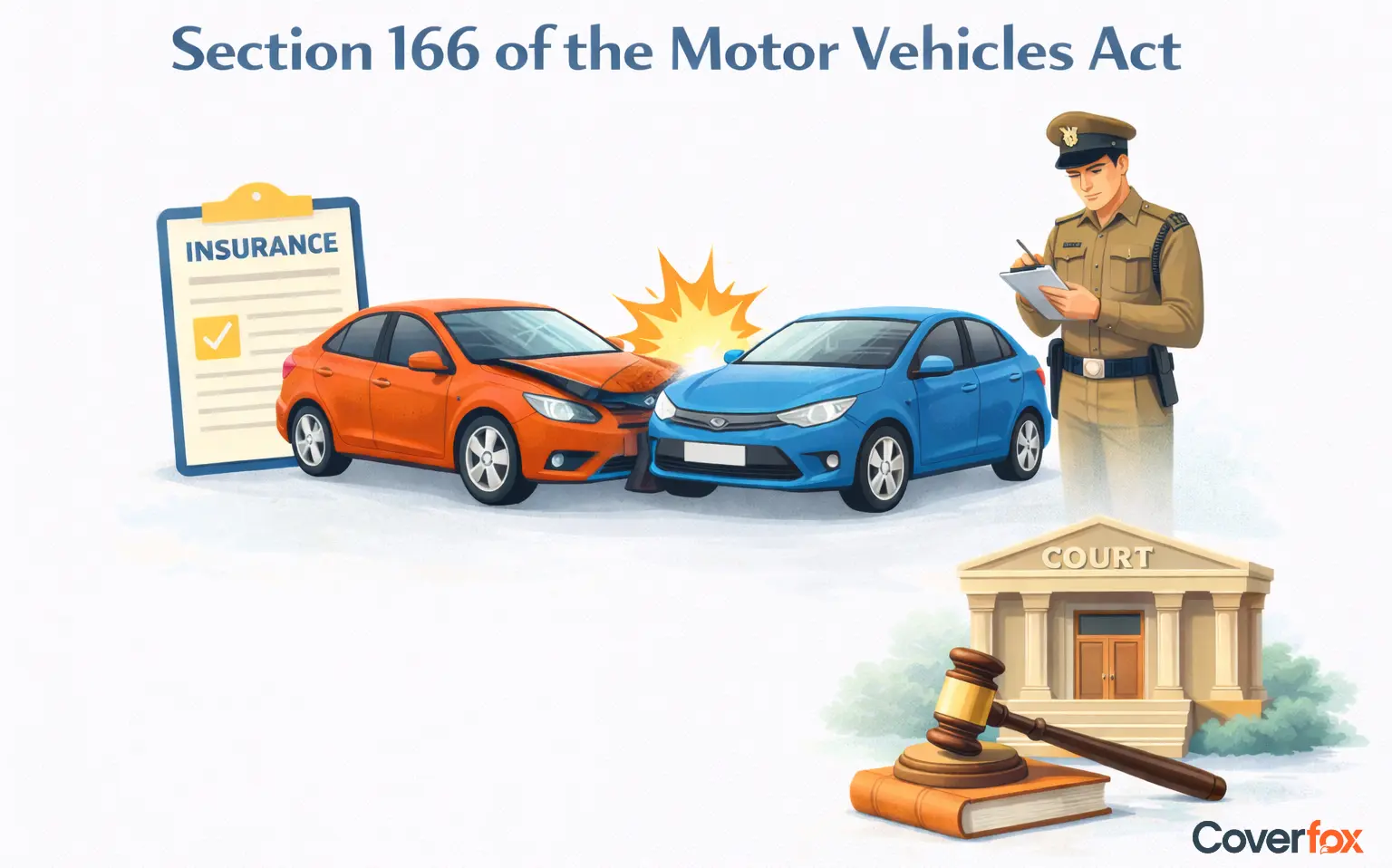
Section 166 of the Motor Vehicle Act 1988 establishes the legal framework for accident victims to claim compensation through Motor Accident Claims Tribunals (MACT). This provision ensures rightful financial relief for injuries, fatalities, and property damage arising from motor vehicle accidents.
Importance of the MV Act 1988 for Road Accident Victims
The Motor Vehicles Act 1988 mandates the Motor Accident Claim Tribunal Act jurisdiction exclusively for motor accident compensation, bypassing lengthy civil court proceedings. MACTs resolve claims within 6 months, typically, compared to 3-5 years in regular courts. Section 166 empowers victims regardless of fault establishment, initially prioritising swift justice delivery.
Annual road fatalities exceed 1.5 lakh cases in India, generating ₹40,000 crore in claims annually through 600+ MACTs nationwide. Insurance penetration reaches 85% for third-party insurance, ensuring statutory compliance. Section 166 authorises certain claimants to approach MACTs:
Victims sustaining bodily injury or permanent disability
Legal heirs of deceased victims
Property owners suffering vehicle-related damage
Contract carriage passengers with valid tickets
No-fault liability applies initially under Section 140 alongside Section 166 claims. Recent 2025 Supreme Court rulings expanded the claimant scope to include non-earning family members.
Claims Under Section 166 of the Motor Vehicle Act
To file a claim, keep the following documents ready:
FIR copy establishing accident occurrence
Medical certificates documenting injuries/disability
Income proof (salary slips, ITR) for earning victims
Death certificate and heirship proof for fatalities
Insurance policy copies, where applicable
MACTs summon insurers, vehicle owners, and drivers during proceedings. Cross-examination establishes negligence quantum.

When to Claim Under Section 166 of the Motor Vehicle Act?
Eligible scenarios include:
Hit-and-run accidents (Section 161 structured compensation)
Rash/negligent driving causing bodily injury
Fatal accidents affecting dependents' livelihood
Property damage exceeding ₹10,000 in value
Contract carriage mishaps during paid travel
The 166 MV Act limitation period stands at 6 months from the accident date, extendable by MACT for sufficient cause under Section 166(3). Recent amendments have clarified the enhancements related to hit-and-run incidents.
Jurisdiction & Motor Accident Claim Tribunal Process
MACT jurisdiction covers:
| Criteria | Jurisdiction |
|---|---|
| Accident location | Local MACT limits |
| Claimant residence | Victim's district MACT |
| Vehicle registration | Owner's RTO jurisdiction |
The Claims Tribunal follows a summary procedure under Section 169, possessing civil court powers for evidence collection and witness summoning.
What is the Compensation Structure Under Section 166?
MACT awards consider multiple heads:
Medical expenses
Loss of income
Pain/suffering
Prospects
Consortium
Actual bills plus future treatment
Multiplier method (age-based)
₹50,000-5 lakh conventional damages
40% income addition for ages under 40
₹40,000 per legal heir (Supreme Court 2018)
| Victim Category | Compensation Range |
|---|---|
| Death | ₹10–50 lakhs |
| Permanent Disability | 50–100% income loss |
| Minor Injury | ₹25,000–2 lakh |
| Property Damage | Actual repair cost |
What are the Compensation Amounts Under Section 166 MVA?
No statutory ceiling exists under Section 166, unlike Section 163A fixed payouts. The multiplier table below determines dependency loss:
Age 15-20: 18 multiplier
Age 41-50: 13 multiplier
Age 61+: 5 multiplier
Conclusion
Section 166 of the Motor Vehicles Act ensures accident victims can seek fair compensation through MACT for injuries, fatalities, and property damage. Understanding eligibility, timelines, and documentation helps streamline the claim process. Since insurers handle third-party liabilities, having valid car insurance is essential for financial protection and smoother claim settlements. Being aware of your rights under Section 166 ensures better preparedness after a motor accident.
Also Read:
Disclaimer: This article is published for general informational purposes only and does not constitute legal advice, insurance advice, or a guarantee of claim approval. The interpretation of Section 166 of the Motor Vehicles Act, 1988 may vary based on individual facts, tribunal discretion, and judicial precedents. Compensation amounts are indicative and subject to adjudication by the Motor Accident Claims Tribunal (MACT). Insurance coverage, claim eligibility, and liability depend on the specific policy terms and conditions issued by the insurer.
FAQs on MV ACT Section 166
What is the difference between 163A and 166 of the MV Act?
Section 163A offers fixed no-fault compensation (₹50,000 for death); section 166 provides fault-based unlimited claims through MACT adjudication.
What is the limitation period of the 166 MV Act?
Claims must be filed within 6 months from the accident date, extendable by MACT for valid reasons under Section 166(3) provision.
What is the role of insurance companies in claims under Section 166?
Insurers defend third-party claims before MACT, deposit awarded sums, and cover owner liability under comprehensive insurance policies.
How can claimants ensure a smooth claim process under Section 166?
Maintain complete documentation, file within limitations, engage MACT-specialised advocates, and leverage insurance company legal support where applicable.
Does Section 166 cover property damage claims?
Yes, Section 166 includes property damage claims alongside personal injury/fatality compensation before MACT jurisdiction.