SUVs offer better ground clearance, space, and confidence on rough Indian roads, while sedans deliver smoother rides and higher fuel efficiency. Sedans usually cost less to run, maintain, and insure, whereas SUVs suit families and challenging road conditions. The right choice depends on driving needs, budget, comfort expectations, and long-term costs including car insurance.
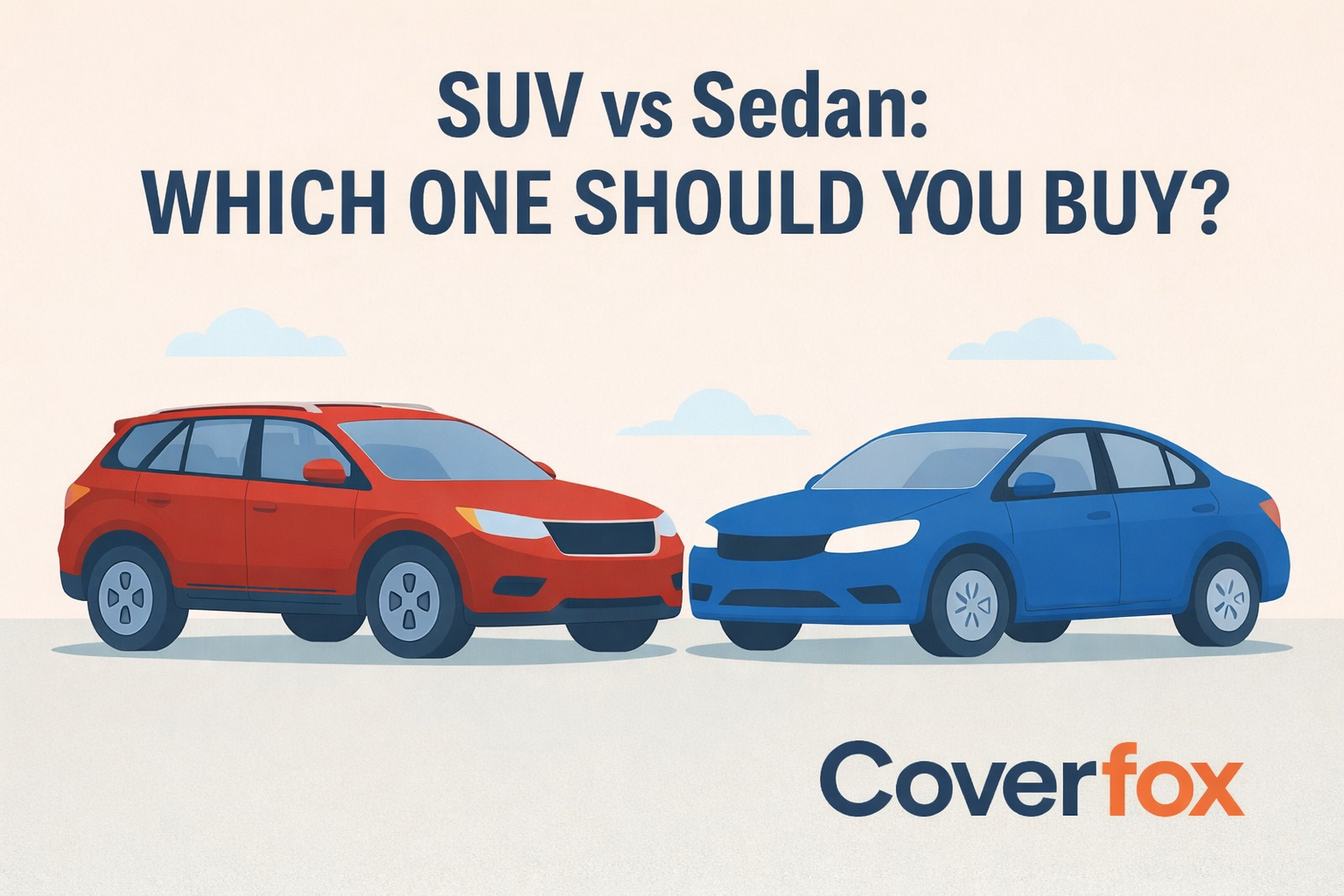
Sedan vs. SUV decisions confuse 70% of Indian buyers-both excel differently. Sedans dominate fuel efficiency (18-25 kmpl); SUVs rule rough roads (190-235mm clearance). This guide highlights the major differences between the two and how to choose.
Fuel Economy Reality
Sedans average 20-24 kmpl (Honda City 24.1 kmpl, Hyundai Verna 20.6 kmpl) vs. SUVs 14-18 kmpl (Creta 17.6 kmpl, XUV700 16.5 kmpl)—₹15,000+ annual savings on sedans for 15,000 km/year at ₹100/litre.
Safety Ratings Benchmark
Global NCAP 2025: 5-star sedans (Verna, Virtus) score higher adult protection (32/34 pts) than 4-star SUVs (Nexon, Sonet); SUVs win side-impact (16.1/17) due to mass. [Bharat NCAP]
Maintenance Cost Breakdown
SUVs are 25-40% costlier: Creta annual service is ₹18,000 vs Verna ₹12,000 (SIAM); tyres are ₹15K/piece (265/60R18) vs ₹9K (205/55R16).
Ground Clearance for Indian Roads
SUVs 200mm+ (Thar 226mm) clear potholes; sedans 165mm scrape urban breakers. Choose a sedan for city/highway (lower running costs); an SUV for family/rural (space, versatility). Check model-specific NCAP ratings.
What is an SUV?
An SUV carries a tall build and a wide interior. The design supports mixed roads found across many parts of India. Some basic points include:
Tall build and wide interior provide 20-30% more shoulder/legroom; the Mahindra XUV700 offers 1,105mm rear leg space vs the Hyundai Verna's 890mm.
Higher ground clearance (190-235mm) conquers potholes—the Toyota Fortuner (225mm), Mahindra Thar (226mm) clear 8-10" dips vs sedans' 165mm average.
Stronger suspension for long drives: Heavy-duty multi-link absorbs 25% more impact; Fortuner rated 14-16 kmpl (ARAI) highway vs Creta's 12-15 kmpl [ARAI].
More headroom/leg space: 1,000mm+ headroom in Harrier; 5 passengers fit comfortably with luggage (550L boot). Clear outside view: Elevated seats (150-200mm higher) reduce blind spots by 30-40% in traffic.
Optional AWD/4WD in 40% models (Thar, Fortuner)—Global NCAP 5-star rated for side impacts; excels in hills (Himalayan passes) and broken roads (rural NH stretches).
What is a Sedan?
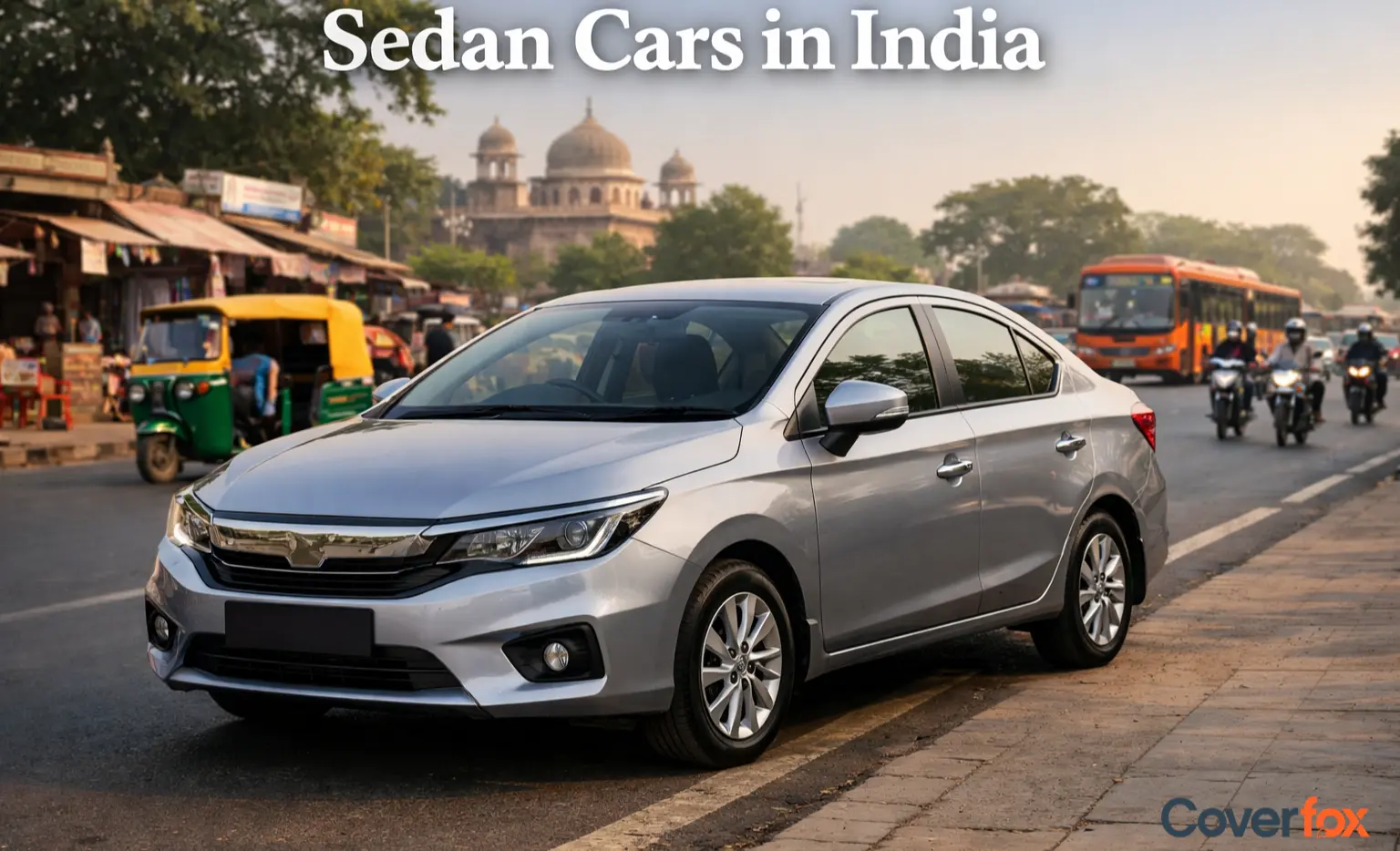
A sedan comes with a neat three-part layout: engine, cabin, and boot. The body sits low, so the flow of motion stays steady even at higher speeds. Sedans are known for:
Balanced movement on city roads
Better mileage in most engines
Easy turns in narrow lanes
Separate boot for luggage
This shape suits daily office travel or regular highway trips on smooth tarmac.
Also Read - Things To Know Before Purchasing Sedan Car Insurance
Understanding Driving Needs
Choosing between suv and a sedan depends on how the car will be used. A buyer may check:
Length of usual daily travel
Nature of the roads
Parking area space
Number of people who travel most days
Luggage is carried every week
Such points help decide whether the car must focus on comfort, height, or fuel cost.
Who Should Buy an SUV?
An SUV suits those who want more space and a steady grip in rough areas. It fits:
Families with more members
Travellers who take long holidays
Drivers living near hills or broken roads
Users who want extra boot space
Also Read - Best Mileage SUVs in India
Who Should Buy a Sedan?
A sedan fits people who want smooth travel, fuel saving, and simple handling. It suits:
Smaller families
Office workers who travel many kilometres each week
Buyers who want lower running costs
Residents of crowded towns with tight lanes
Consider the Budget
SUVs generally cost more in the showroom. Running costs are also higher because the engines are larger, and the tyres cost more. Sedans usually offer better mileage, so fuel costs are lower. SUV insurance premiums average 15 to 25% higher than sedans due to costly repair parts and higher IDV.
Visit Coverfox to compare car insurance online with a detailed breakdown of costs, coverage, and other terms of each insurer's plan.
Data Examples (India 2025):
Hyundai Creta SUV comprehensive: ₹18,000-22,000/year
Hyundai Verna sedan: ₹14,000-17,000/year (same insurer)
Mahindra XUV700 (₹25L+ IDV): ₹28,000 premium vs Maruti Dzire (₹8L IDV): ₹12,000
Why Higher: Larger tyres/brakes (₹40K+ kits) and premium suspension parts drive repair costs 30 to 50% above sedans. Many compare car insurance online for SUV-specific quotes.

Where Will the Car Mostly Drive?
The Indian roads change every few kilometres. That is why the travel route matters:
SUVs climb over potholes with ease
Sedans are more comfortable on smooth highways
SUVs suit towns with steep internal roads
Sedans handle best where the surface stays level
The decision becomes simple once the everyday route is clear.
Pros & Cons of SUVs: Power, Space and Adventure
Strengths
Wide interior with large seats: Expansive cabins offer 20-30% more shoulder/legroom; second-row captain chairs accommodate 3 adults comfortably, unlike sedans' cramped benches.
Better view from a tall position: Elevated seating (150-200mm higher) provides 30-40% superior road visibility, reducing blind spots during city traffic or on highways.
Good for long rides with full luggage: 500-800L boot space swallows family vacation gear; roof rails add 100-200kg capacity for extra baggage.
Handles rough patches better: Stronger suspension components (heavy-duty shocks, multi-link setups) + 200mm+ ground clearance absorb potholes 25% more effectively than sedans.
Limitations
Higher fuel use: 12-18 kmpl vs sedans' 18-25 kmpl due to 25-50% heavier kerb weight and aerodynamic drag.
Tyres and parts cost more: 18-22" tyres cost ₹12K-18K each (vs. sedan ₹8K); suspension/brake kits are 30-50% more expensive for larger components.
Body size feels heavy in narrow lanes: 4.5 m+ length + 1.9m width struggles in urban alleys; 5-10m turning radius vs sedans' agile handling.
Pros & Cons of Sedans: Comfort, Efficiency and Style
Strengths
Smooth movement on city roads
Lower fuel cost
Simple steering response
Long boot with separate storage
Limitations
Lower ground height
Not suitable for very rough terrain
The cabin is usually smaller than an SUV
Also Read - Compact SUVs vs Mid-Size SUVs: Which Is Right for You?
Key Factors to Consider in India for Sedan vs. SUV
| Point | SUV | Sedan |
|---|---|---|
| Seating Height | Tall | Low |
| Fuel Use | Higher | Lower |
| Cabin Space | Large | Medium |
| Grip on Rough Roads | Strong | Limited |
| Turning Ease | Moderate | Simple |
| Insurance Premium | Often higher | Often lower |
Finding the Right Balance
An SUV gives height, extra space, and confidence on rough Indian roads, while a sedan brings smooth travel, lower fuel spend, and steady movement on clean surfaces. The right choice depends on comfort needs, family size, future running costs, and car insurance considerations such as premium costs and coverage requirements.
FAQs on SUV vs. Sedan
Why do people choose sedans over SUVs?
Sedans offer smoother travel and lower fuel costs, so many buyers prefer them for daily city use.
Which is safer, a sedan or an SUV?
Safety depends on the model, rating, and build. SUVs offer a higher driving position for better visibility, but sedans provide superior high-speed stability at a lower centre of gravity. Check Global NCAP/ Bharat NCAP ratings for specific cars, Hyundai Verna (5-star) outperforms some 3-star SUVs; Tata Harrier (5-star) excels in side impacts. Rollover risk is 2-3x higher in SUVs; sedans are safer, avoiding crashes through agility.
For a family, which is better, sedans or SUVs?
Large families often pick SUVs for space. Smaller families may choose sedans for comfort and lower cost.
How much does it cost to apply PPF to an SUV?
PPF cost for SUVs is more than that of sedans because the body is larger. Prices vary depending on the film quality and the service centre used.
Do SUVs last longer than sedans?
Lifespan hinges on service habits (timely oil changes, fluid top-ups), component quality (OEM vs aftermarket), and driving style (city vs highway)—not body type alone. Harsh Indian conditions (dust, monsoons) demand rigorous 5,000–10,000km service intervals, regardless of sedan or SUV. Both last for years if properly maintained.
Which car is better for families: an SUV or a sedan?
SUVs give more room. Sedans give a steady ride. Choice depends on travel style.
Should a buyer choose an SUV or a sedan for long-distance travel?
SUVs suit mixed terrain. Sedans work well on level highways.
Does the cost of insurance change for sedans and SUVs?
Premiums differ. SUVs can have higher insurance costs due to bigger repair expenses.
Disclaimer: The information in this article is meant for general awareness and should not be taken as financial, automotive, or professional advice. Vehicle features, pricing, specifications, and insurance premium amounts may vary by model, manufacturer, and insurer. Readers are advised to verify details independently and compare options before making any purchase or insurance decision.