Tubeless tyres and tube-type tyres are two common tyre designs that differ in construction, performance, and overall driving experience. Tubeless tyres seal air directly within the tyre and rim, offering better puncture safety, improved fuel efficiency, reduced heat buildup, and easier maintenance. In contrast, tube tyres rely on an inner tube to hold air, making them more affordable upfront and suitable for older or spoke-wheel vehicles.
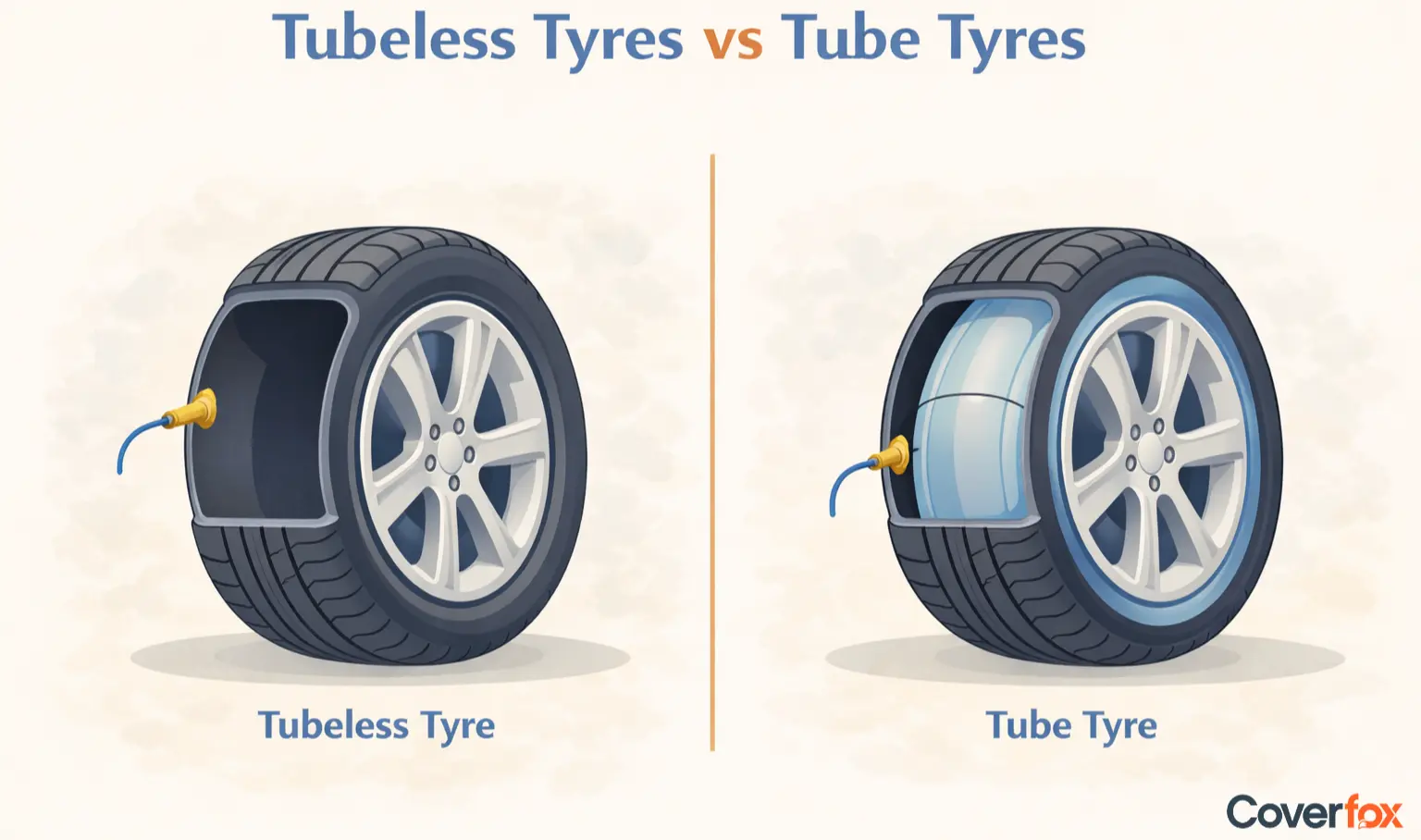
Tubeless tyres and tube-type tyres differ mainly in how they hold air and handle punctures - tubeless tyres seal air directly between the tyre and rim, while tube tyres rely on an inner tube. Because of this design, tubeless tyres usually offer better safety with slower air loss, improved fuel efficiency, less heat buildup, and easier repairs, whereas tube tyres are more affordable upfront and suitable for older spoke-wheel setups. This article compares both options across key factors like safety, mileage, cost, durability, repair ease, and compatibility to help drivers choose the right tyre type based on their vehicle, driving conditions, and budget.
Understanding Tubeless and Tube-Type Tyres
| Feature | Tube Tyre | Tubeless Tyre |
|---|---|---|
| Air Retention System | Uses an inner tube to retain air. | Air is contained within the tyre itself, sealed to the rim. |
| Valve Position | Valve attached to the inner tube. | Valve mounted directly on the wheel rim. |
| Design Complexity | Simpler on older rims, especially those with spokes. | Requires tubeless-ready rims. |
| Heat & Friction | Higher friction between the tube and tyre wall. | Less internal friction; better heat dissipation. |
Understanding the difference between a tube and a tubeless tyre begins with these structural distinctions, which influence performance and safety.

Tubeless vs Tube Tyres: Structural and Functional Differences
The main difference between a tube and a tubeless tyre is how they contain air and attach to the rim. A tube-type tyre has an additional inner tube that contains air, while a tubeless tyre creates an airtight seal between the rim and tyre.
Other notable differences include:
Air Leakage
Weight
Heat Management
When a tube-type tyre experiences a puncture, it leaks air immediately; however, tubeless tyres lose air slowly after the puncture has occurred.
Tubeless setups tend to be lighter, improving fuel efficiency.
The fact that tubeless tyres dissipate heat more quickly means a lower chance of failure when subjected to high heat loads.
What are the advantages of Tubeless Tyres?
Enhanced Safety
Improved Fuel Efficiency
Quick and Easy Puncture Repair
Lower Heat Buildup
Greater Control and Comfort
Longer Lifespan
Air escapes slowly through small punctures, reducing the risk of sudden blowouts and enabling controlled deceleration.
Reduced weight and rolling resistance lower energy demand, which can translate to measurable fuel savings over time.
Minor punctures can usually be repaired while the tyre is still mounted on the rim using either plugs or a liquid sealant.
Tubeless tyres have much lower internal friction than those with a tube system; therefore, tubeless tyres dissipate heat much better than tube tyres.
Because tubeless tyres can run at lower tyre pressures than tube tyres, the risk of pinch punctures is greatly reduced, allowing for improved handling and ride quality over uneven surfaces.
Advanced construction and fewer pinch-flat concerns tend to extend tyre life, especially under regular highway or urban usage.
What are the Benefits of Tube-Type Bike Tyres?
Cost-Effectiveness
Grip on Certain Surfaces
Ease of Replacement
The upfront cost of tube tyres is generally lower than that of their tubeless equivalents.
Softer rubber compounds and a simple configuration offer good traction in certain road conditions.
The inner tubes can be replaced individually without changing the entire tyre, which is economical in certain markets.
Tubeless Tyre or Tube Tyre: Factors to Consider
When considering a tubeless tyre or a tube tyre, which is best, key factors include:
Vehicle Type
Usage Pattern
Tools and Equipment
Cost
Insurance Implications
Modern cars and many motorcycles are supplied with tubeless tyres as standard fitment.
Highway and high-speed driving is an area where tubeless tyres have advantages. These advantages include slow deflation of the tyre and greater heat resistance than traditional tyres.
Tubeless tyres require different types of rims, tools, and equipment when installing.
The initial cost of tubeless tyres is higher than that of traditional tyres, but eventually they will save you money over time.
Safer and more durable tyre choices may help reduce the risk of accidents, which can be beneficial when dealing with your car insurance policy and coverage conditions.
Conclusion
When comparing tubeless vs tube tyres, tubeless tyres provide higher levels of protection with better fuel economy, less hassle when repairing a flat, and more compatibility with new standards than tube-type tyres. As such, tube-type tyres continue to be a viable option where the initial price, existing or traditional designs, and spoke rims are important factors. Ultimately, each vehicle owner's decision will depend upon the type of vehicle they own and its normal operation and maintenance.
Also Read:
Disclaimer:
The information provided in this article is for general informational and educational purposes only. Tyre performance, durability, and safety may vary depending on vehicle type, road conditions, maintenance practices, and manufacturer specifications. Readers are advised to consult their vehicle manufacturer’s guidelines or a certified automotive professional before making any tyre-related decisions.
* Savings are based on the maximum discount provided on own damage premium as offered by our car insurer partners.
FAQs on Tubeless Tyres vs Tubed Tyres
Which is better, a tubed or tubeless tyre?
Tubeless tyre types are becoming increasingly popular among today's automotive manufacturers, partly due to their extended service life after a puncture, improved fuel economy, and ease of repair compared to traditional tube tyre types.
What are the disadvantages of tubeless tyres?
In a tubeless tyre vs tube tyre comparison, tubeless tyres have a higher initial cost and require compatible rims and more specialised installation tools than tube tyres.
Does a tubeless tyre reduce mileage?
Tubeless tyres may provide a better mileage benefit than tube tyres because they weigh less than tube tyres and have lower rolling resistance than tube tyres.
How long do tubeless tyres last?
As a result of less heat generation from tubeless designs and a lower incidence of tube failure rates, tubeless types provide greater longevity than tube tyre types if they are properly maintained and used.
What are the disadvantages of tube tyres?
The disadvantages of tube tyres are that they can deflate quickly if punctured, require more maintenance, and create more rolling resistance than tubeless tyres.