A car steering system enables directional control by translating driver input into wheel movement. It plays a critical role in vehicle safety, handling, and stability. The efficiency of a steering system directly affects maneuverability, especially in urban and high-speed driving conditions.
According to the Ministry of Road Transport and Highways (MoRTH), the proper functioning of essential vehicle components, including car steering, is necessary to ensure roadworthiness and safety compliance in India.
Classification of Steering Systems in Modern Vehicles
Steering systems are essential for vehicle control, and modern cars use a variety of designs to improve handling, comfort, and safety.
1. Manual Steering Configuration
Manual systems are typically dependent on the operator to apply all the force required to move the steering mechanism. No outside assistance is provided.
Key characteristics:
There is a mechanical connection between the driver (i.e., steering wheel) and the vehicle's wheels.
More effort is required at lower speeds.
Maintenance complexity is lower than for other car steering systems.
2. Power-Assisted Steering Systems
The purpose of power-assisted steering is to make it easier to turn the steering wheel by assisting with hydraulic or electric means.
Makes it easier to operate.
Provides better control in congested areas.
Available as either hydraulic-powered steering (HPS) or electric-powered steering (EPS).
According to research by the Society of Indian Automobile Manufacturers, EPS is growing in popularity because of improved fuel economy and reduced maintenance costs.
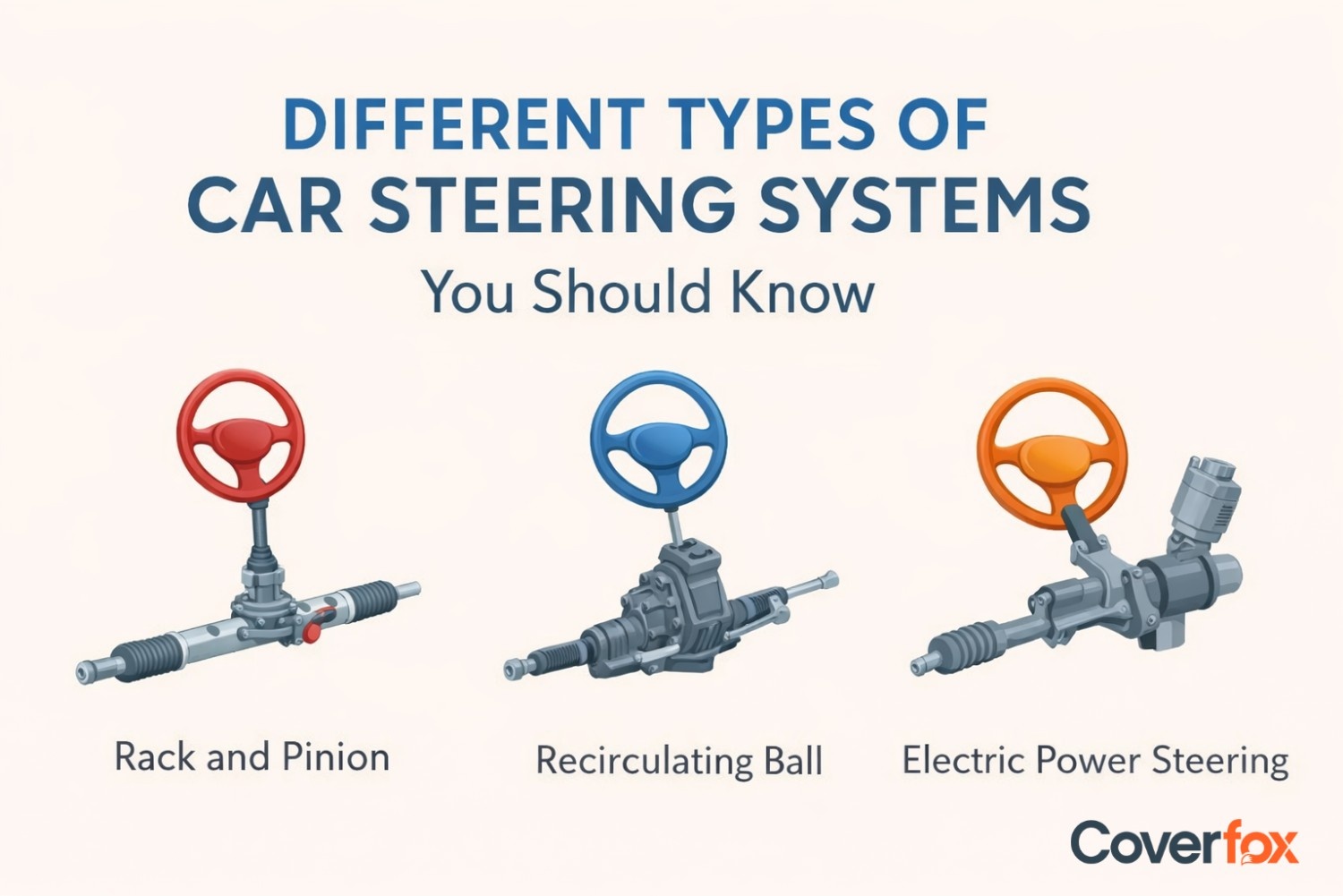
3. Rack-and-Pinion Steering Design
A rack and pinion is one of the most popular steering mechanisms used in modern passenger vehicles. It has a few main features:
It converts rotational movement into linear movement.
It is a compact design that works well in smaller vehicles.
When used correctly, it will provide an accurate response when steering.
4. Recirculating Ball Steering Design
Recirculating ball steering is a design that uses ball bearings to reduce friction from the steering system. It is typically found on larger vehicles and has several characteristics:
It is good for larger vehicles like SUVs and trucks with heavier loads.
It has a higher load capacity than a rack and pinion.
It is built to last longer.
5. Four-Wheel Steering Technology
This advanced system allows all four wheels to turn for improved handling.
Key characteristics:
Rear wheels turn in coordination with front wheels
Enhances stability at high speeds
Improves turning radius in tight spaces
6. Adjustable Steering Column Systems
Tilt and telescopic systems enable customization of the steering wheel position.
Key characteristics:
Support increased driver comfort with ergonomic designs
Enhance the ability to operate a vehicle over extended time periods
Frequently found on both mid-size and luxury automobiles
7. Steer-by-Wire Technology
A modern innovation eliminating mechanical linkage, relying entirely on electronic controls.
Key characteristics:
Use sensors and actuators to create linear motion of the steering wheel
Reduce overall vehicle weight
Allow for greater integration of new technologies, such as advanced driver assistance systems, into an existing vehicle.

Comparative Analysis of Steering Technologies
Below is a comparison of different steering technologies, highlighting effort, maintenance, application, and precision to show their advantages and ideal use in various vehicles.
| Steering Type | Effort Level | Maintenance | Application | Precision |
|---|---|---|---|---|
| Manual | High | Low | Older vehicles | Moderate |
| Power Steering (EPS/HPS) | Low | Moderate | Passenger vehicles | High |
| Rack-and-Pinion | Low | Moderate | Small cars | High |
| Recirculating Ball | Moderate | Moderate | SUVs, trucks | Moderate |
| Four-Wheel Steering | Low | High | Premium vehicles | Very High |
| Steer-by-Wire | Very Low | High | Advanced vehicles | Very High |
Factors Influencing Steering System Selection
The selection of the ideal car steering setup will be based on several design and operational issues and factors such as:
Vehicle type: Passenger cars typically use rack-and-pinion systems
Driving conditions: Urban driving benefits from power-assisted systems
Maintenance considerations: Simpler systems have lower servicing needs
Fuel efficiency: EPS contributes to reduced engine load
From a compliance perspective, MoRTH guidelines emphasise regular inspection of the car steering system to ensure safe operation.
Relevance of Car Insurance for Steering Components
A properly functioning steering system is critical to making sure the vehicle can be operated safely. Car insurance usually covers damage to the steering system (in a non-accidental way) as part of comprehensive coverage.
A comprehensive policy will typically cover:
Damage resulting from an accident or collision.
Replacement of damaged steering system components.
Coverage is subject to the applicable terms and exclusions of the policies.
In Conclusion
Depending on what kind of vehicle they will be driving and meeting the demands the driver has of the steering system, there is a different type of steering system to fit that need. There are several types of steering mechanisms, and each type of steering system provides its own benefits with respect to control, efficiency, and overall maintenance.
Related Articles:
Power Steering System: Types, Function, and How It Works
Why Your Car’s Steering Wheel Feels Hard or Stiff
Traction Control System in Cars: How It Works and Why It Matters
Frequently Asked Questions
Is electric power steering as effective as hydraulic systems?
Electric power steering (EPS), in terms of energy consumption and service time savings, is more efficient than hydraulic systems; however, hydraulic systems provide a consistently reliable experience for larger vehicles.
How can steering system issues be identified?
Common indicators include unusual noise, difficulty in turning, vibration, or delayed steering response.
What are the different types of car steering systems?
The major types of steering mechanisms include manual steering, power-assisted (or "Power") steering, rack and pinion, recirculating ball, four-wheel steering, and steer-by-wire systems.
What is the difference between EPS and HPS?
Electric power steering uses an electric motor for assistance in turning the vehicle, while hydraulic power steering uses hydraulic fluid pressure generated by a pump. Electric power steering uses substantially less energy than hydraulic power steering, thereby making it more fuel-efficient.
Why is steering system maintenance important?
A properly functioning steering system will result in increased vehicle control and will help to reduce accidents and improve the overall safety of the vehicle.
Disclaimer: The information provided is for general awareness and educational purposes only. Coverage for steering system components may vary by insurer and policy terms. Please refer to the policy document for specific inclusions, exclusions, and conditions.