As per the Year End Review of MoRTH 2023 released by the Press Information Bureau (PIB), Government of India, India’s road network was estimated at about 66.71 lakh kilometers, making it the second-largest road network in the world.
The road network is categorized based on its function and connectivity. National Highways cover about 146,145 km, State Highways extend to around 179,535 km, and the remaining 6,345,403 km consist of other roads, including district roads, rural roads, and urban roads. Together, these road categories form a comprehensive transport system that facilitates both local and long-distance travel.
Among these, national highways play a crucial role in India’s economic and social development. They connect major cities, ports, industrial hubs, and border areas, enabling efficient movement of passengers and freight. Over the years, the Ministry of Road Transport and Highways (MoRTH) and its implementing agencies have taken several initiatives to expand and upgrade highway infrastructure, improving connectivity and transport efficiency across the country.
This blog explains the various types of roads in India, including national highways, state highways, district roads, village roads, and expressways. It also highlights how lane systems such as 2-lane, 4-lane, and 6-lane roads are designed to manage different traffic volumes. In addition, the article covers the importance of road markings and barriers, which guide drivers, regulate traffic flow, and improve overall road safety.
Overview of the Road Network in India
India ranks high globally in terms of the scale of its road network, encompassing national highways, state highways, district roads, and village roads. The Ministry of Road Transport and Highways leads the main planning and control activities for this extensive network. The state public works departments and local authorities contribute to its operation.
The road network serves as a fundamental system that enables the transportation of passengers and freight, emergency services, and support for development activities. Every road is designed based on its purpose, traffic patterns, speed limits, and usage characteristics.
Major Types of Roads in India
There are six major types of road networks in India. They are as follows:
National Highways
State Highways
District Roads
Village Roads
Town Roads
Expressways
The differences between these types of roads in India can be seen in construction standards, traffic density, and connectivity. Altogether, they enable a seamless transition from local neighborhoods to interstate corridors.

Types of Highways in India and Their Importance
Highways link major cities and thus play a crucial role in the transport of goods and in market development. Some of the common types of highways are:
National Highways (NH):
State Highways (SH):
Expressways:
These are the main routes connecting major cities, international airports, seaports, and border crossings.
These roads connect cities and districts within the state and also provide access to National Highways.
These are high-speed roads where vehicles move without stopping because there is no traffic control to halt them.
The Role of Different Types of Roads in India
Each category of roads plays a significant role in facilitating national progress and people's everyday lives. National highways enable the movement of goods, people, and tourism. State highways allow regional communities to develop their strengths. District and rural roads provide remote areas with direct access to essential facilities such as schools, hospitals, and markets.
Urban roads handle daily commuting, and expressways enable efficient travelling between major hubs. The country operates multiple road categories that serve as the foundation for its economic growth, social accessibility, and emergency service delivery.
Understanding Lane Systems in India
A lane system refers to the division of a road into separate sections called lanes, allowing vehicles to travel in an organized manner. These lanes are marked using white or yellow road lines that guide drivers on where to drive and when it is safe to change lanes. Lane systems help maintain traffic discipline and improve road safety.
Lane systems are especially important on highways, expressways, and busy city roads, where large numbers of vehicles travel simultaneously. By separating traffic into lanes, roads can handle higher traffic volumes while reducing confusion and accidents.
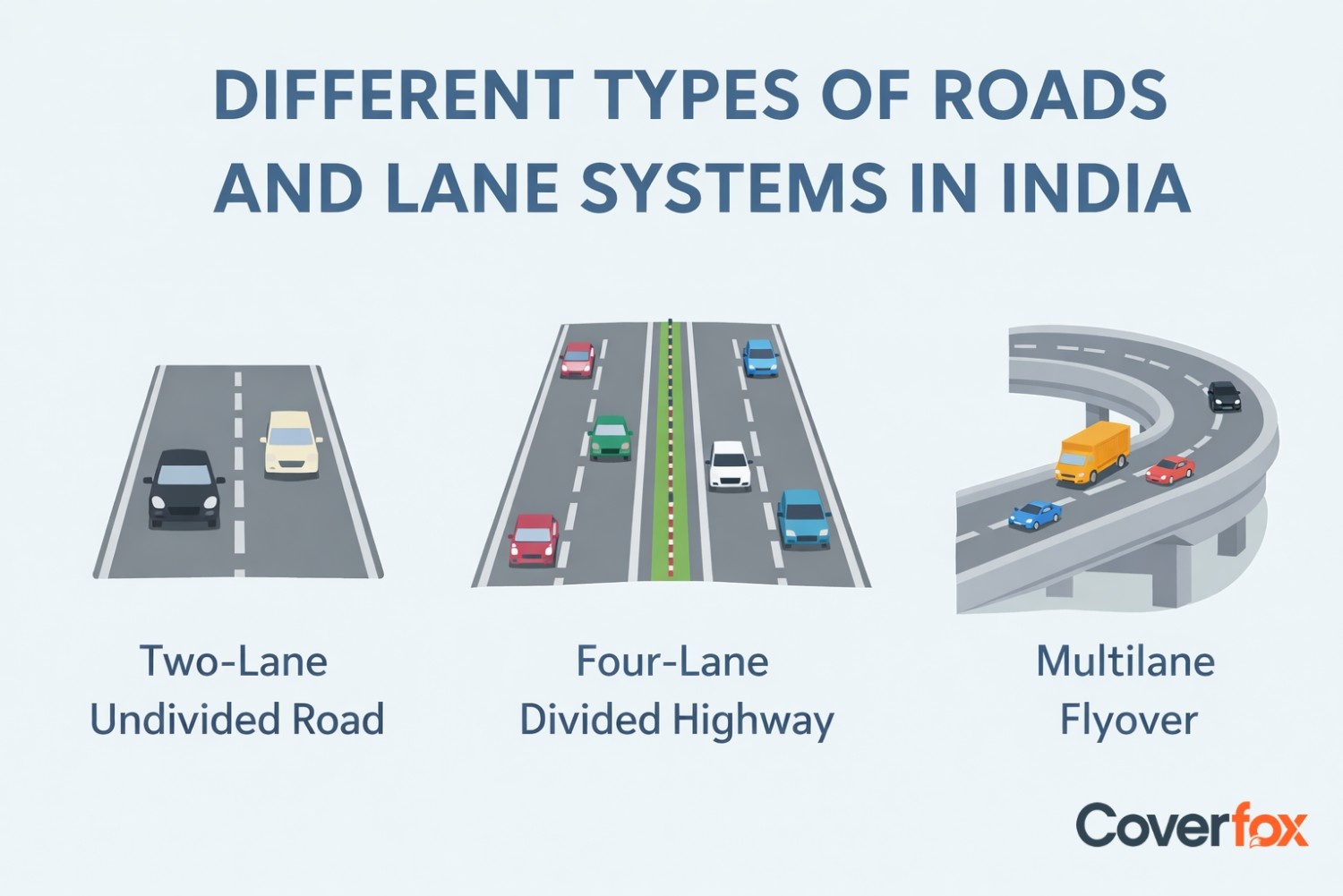
What is a Two-Lane Road?
A two-lane road has one lane for each direction of traffic. These roads are commonly found in rural areas and smaller towns. Drivers must be careful while overtaking because vehicles from the opposite direction use the same roadway.
What is Four-Lane Road?
A four-lane road has two lanes in each direction. These roads are common on busy highways and major city routes. A divider or median usually separates traffic moving in opposite directions, improving safety and reducing head-on collisions.
What is a Six-Lane road?
A six-lane road includes three lanes in each direction, allowing a large number of vehicles to move smoothly. These roads are usually found on national highways and expressways where traffic volume is high and faster travel is required.
Why Are Lane Systems Important for Traffic Management?
Lane systems help improve traffic flow, reduce congestion, and increase road safety. When drivers follow lane markings and maintain lane discipline, roads become safer and more efficient for everyone.
What are the Types of Road Barriers Used in India?
Road barriers are important, as they help guide vehicle movement and reduce the risk of accidents. The different types of road barriers are as follows:
Concrete barriers function as safety measures, which prevent vehicles from crossing into opposing traffic on highways and flyovers.
Metal crash barriers absorb impact forces, minimising damage during accidents.
Plastic barriers are short-term devices used on construction sites and in traffic control operations to direct vehicle movement.
Properly placed barriers improve road safety for drivers.
Types of Road Markings in India
Road markings are essential visual guides painted on roads to help regulate traffic movement and improve road safety. They provide clear instructions to drivers and pedestrians about lane discipline, stopping points, and permitted directions of travel. These markings reduce confusion, prevent accidents, and ensure smoother traffic flow, especially on busy roads and highways.
Lane Dividers
Stop Lines
Pedestrian Crossings
Directional Arrows
Lane dividers are painted lines that separate lanes of traffic moving in the same or opposite directions. Broken lines allow lane changes when safe, while solid lines discourage overtaking to maintain road safety and lane discipline.
Stop lines are thick white lines marked at traffic signals and intersections. They show where vehicles must stop when the signal is red or when pedestrians are crossing.
Pedestrian crossings, also called zebra crossings, are marked with white stripes across the road. They provide a designated area for pedestrians to cross safely, and drivers must slow down and give them priority.
Directional arrows indicate the direction vehicles are allowed to move in a lane, such as going straight, turning left, or turning right. They help drivers follow the correct route and improve traffic.
Final Words
India has developed a strategic road network which enables movement while maintaining safety standards and supporting economic development throughout all geographical areas.
The different road types separate functions to handle varying traffic volumes. Road users will achieve better navigation skills and improved safety practices through their understanding of the types of roads in India. The road markings and barriers provide safety measures that help manage traffic and protect drivers. Opting for car insurance online also helps ensure financial protection while driving on these roads.
Explore More Articles to Read:
How Does Car Insurance Work In India?
Understanding the Different Types of Car Insurance in India
Road Safety Tips for Safe and Smooth Driving
Frequently Asked Questions
What are the Different Types of Roads in India?
India’s road network includes national highways, state highways, district roads, village roads, urban roads, and expressways. These roads are designed for different traffic volumes and travel speeds and are supported by lane systems, road markings, and safety barriers to ensure efficient and safe transportation.
What is the purpose of road markings?
Road markings help drivers and pedestrians control traffic flow and boost safety. They show lane-use rules, where to stop, and when passing is okay, without needing signs.
Can I cross a solid white line?
A solid white line indicates that lane changing or overtaking is discouraged or restricted. Drivers must cross the line only when necessary to avoid an obstacle, and they must drive carefully while following all established traffic regulations for their area.
How are state highways different from national highways?
The central government manages national highways, which connect multiple states and major economic centers. State governments maintain state highways and operate them to connect various locations within their state boundaries.
What do double yellow lines mean?
Double yellow lines mark areas where drivers must stay in their current lane because the road does not provide enough space for safe passing. The barriers function as highway safety devices that protect drivers by establishing physical divisions between lanes on mountainous roads and high-speed roads.
Disclaimer: The information provided in this article is intended for general educational and informational purposes only. While every effort has been made to ensure the accuracy of the content, traffic rules, road classifications, and regulations may vary by state and may change over time. Readers are advised to refer to official government sources such as the Ministry of Road Transport and Highways (MoRTH) or local transport authorities for the latest regulations. This article does not constitute legal or professional advice and should not be relied upon as a substitute for official guidelines.