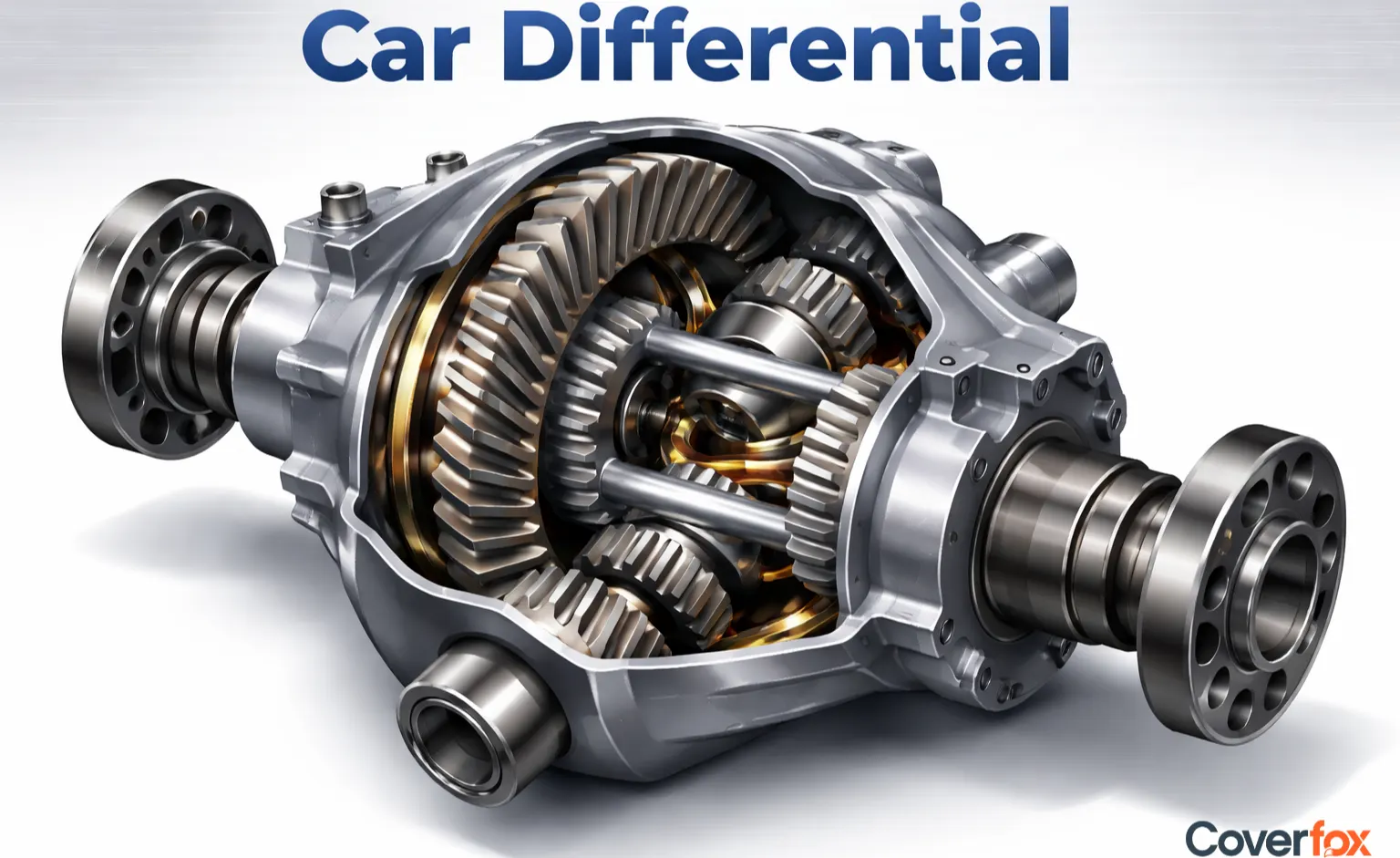
The car differential is an essential part of the vehicle's drive assembly. The purpose of the differential is to transfer the engine's power to the vehicle's wheels while allowing the wheels on one side to rotate at a different speed than those on the other side when making right or left turns.
Failure to use an effective vehicle differential will result in poor vehicle handling, increased tyre wear, and excessive strain on the vehicle's drive assembly. This guide explains the working principle, types of differentials, warning signs of failure, and why proper maintenance is important for vehicle safety and performance.
What Is a Car Differential?
The differential is a key part of a car's drivetrain that transfers engine power to the wheels and allows them to turn at different speeds, especially during turns. The differential assembly is usually installed between the drive wheels located at the end of an axle. For vehicles with front-wheel drive (FWD drivetrain), the differential is often integrated with a transaxle.
What is the function of a differential in an automobile?
The differential driveshaft functions as a crucial element that enables vehicles to distribute their power to their wheels with maximum efficiency. The system operates between the drive wheels because it connects to the transmission system, which controls engine power distribution. The absence of a differential causes a vehicle to handle poorly because its tyres and mechanical parts face unnecessary damage. The primary functions of a differential include:
Distributing engine torque to the drive wheels
Allowing wheels to rotate at different speeds during cornering
The system delivers engine power through its wheel connection, which enables vehicle movement while keeping track of its operational state.
The differential enables this speed variation, which ensures smooth handling through its capacity to manage different wheel speeds.
The system protects the drivetrain and tyres from damage because it stops wheel slip and binding, which results in less strain on axles, gears, and tyres and improves driving comfort.
Key Working Principles of a Car Differential
Power Transmission
Gear Interaction
Straight Motion
Turning
Torque is delivered from the engine to the differential via the driveshaft.
The pinion gear transfers power from a smaller gear (pinion) to the larger gear (ring). The spider gears and the side gears will allow the wheel shafts to rotate at different RPMs.
A vehicle moving straight has both wheels rotating at the same speed, with no need for the internal gears to rotate relative to each other.
A differential accommodates the outer wheel needing to turn faster than the inner wheel by allowing each wheel shaft to turn independently with very little slip.

What is a Transaxle in a Car?
A transaxle integrates the transmission and differential into a single unit. It is typically employed in front-wheel drive (FWD) and some all-wheel drive (AWD) configurations, where space constraints favour combining these components. Unlike a standalone differential, a transaxle manages both gear ratios and differential action.
What are the Common Types of Car Differentials?
| Type | Description | Typical Use Cases |
|---|---|---|
| Open Differential | Standard design provides independent wheel speeds but equal torque distribution. | Everyday road vehicles. |
| Limited-Slip Differential (LSD) | Limits the difference in wheel speed and directs torque towards the wheel with more traction. | Performance vehicles, moderate off-road conditions. |
| Locking Differential | Forces wheels on an axle to rotate at the same speed when engaged. | Off-road or low-traction environments. |
| Torque-Vectoring Differential | Uses electronic controls to dynamically distribute torque based on conditions. | High-performance and AWD vehicles. |
What are the warning signs of a failing differential?
The various symptoms which show different problems show multiple connections to transmission issues, suspension problems, wheel bearing faults, CV joint damage and driveshaft defects. A proper mechanical inspection is essential to confirm whether the differential is truly at fault. Below is a clarified breakdown:
| Symptom | Possible Cause | Issues With Similar Signs |
|---|---|---|
| Whining or howling noises (especially during acceleration or deceleration) | Worn differential bearings or low/contaminated differential fluid | Worn wheel bearings, transmission gear wear |
| Grinding or clunking during turns | Internal gear damage or excessive backlash in the differential | CV joint failure, worn suspension bushings |
| Excessive vibration at certain speeds | Damaged differential gears or misalignment | Unbalanced tyres, bent driveshaft, faulty engine mounts |
| Oil leaks around the differential housing | Failed seals or gaskets are causing fluid loss | Axle seal leaks, transmission fluid leaks |
| Difficulty turning smoothly or jerky cornering | Impaired differential action restricting wheel speed variation | Power steering issues, tyre pressure imbalance |
The symptoms do not indicate only differential failure because a certified mechanic should diagnose the problem to stop unnecessary repairs which would result in additional drivetrain problems.
Risks of Operating a Vehicle with Differential Damage
The operation of a vehicle becomes hazardous when the differential system suffers from either damage or complete deterioration. The differential system is the primary mechanism that distributes torque between the wheels and allows drivers to make safe turns, so any failure in this system will result in a loss of vehicle control and damage to the entire drivetrain system. Driving with a compromised differential can:
Reduce vehicle stability, especially during cornering: Uneven wheel rotation may cause jerky turns, reduced grip, or loss of control on sharp bends.
Increase tyre wear: Improper torque distribution can lead to uneven tread wear, shortening tyre lifespan and affecting road traction.
Cause additional stress on the transmission or driveshaft: A faulty differential forces connected components to compensate, increasing the risk of secondary damage.
Ultimately lead to drivetrain failure: Prolonged neglect can result in complete breakdown, leaving the vehicle immobile.
Comprehensive car insurance policies typically provide coverage for differential damage when it results from accidents, natural disasters, or other insured events covered under your car insurance policy. However, standard insurance coverage does not include damage caused by normal wear and tear, mechanical breakdown, or poor maintenance. To avoid insurance claim rejection and unexpected repair costs, regular vehicle servicing and timely maintenance are essential.
Conclusion
The differential assembly is a vital part of determining how the vehicle will handle and respond to road conditions. The differential allows for an even distribution of engine torque to the drive wheels without having to turn both at the same rate. Understanding how the car differential works and how it is categorised will offer suggestions for how to service and maintain your vehicle properly and drive safely.
Also Read:
Disclaimer: The information provided in this article is for general educational and informational purposes only. It does not constitute professional mechanical, automotive, or legal advice. Vehicle components and specifications may vary depending on the manufacturer and model. Readers are advised to consult a certified automotive technician or authorised service centre for diagnostic, repair, or maintenance-related decisions. This content is published on a general insurance aggregator platform and should not be considered a substitute for expert consultation or policy-specific advice.
* Savings are based on the maximum discount provided on own damage premium as offered by our car insurer partners.
Frequently Asked Questions on Car Differential
What is a differential on a car, and how does it function?
A vehicle's engine sends power to the drive wheels through a gearbox called a differential, allowing the wheels to turn at different speeds when the vehicle makes a turn, which helps keep the vehicle stable and controllable.
What is the purpose of a rear differential in a car?
In a vehicle with rear-wheel drive, the rear differential provides torque and speed differences to the rear wheels, enabling the vehicle to turn smoothly and safely.
What are the different types of differentials used in cars?
Many types of differentials exist, but the most commonly used are open, limited-slip, locking, and torque vectoring. Each style is customised for a specific driving situation.
Can a car be driven with a bad differential?
It is not advisable, as the failure of a differential may negatively affect handling, increase wear on tyres and other parts of the driveline, and create safety problems.
How long do differentials last?
Differentials will vary in longevity due to the usage of your car, frequency of maintenance services, and the environment in which you drive. If you perform regular fluid changes and inspect your differential regularly, it is possible to add years to your differential's life.