- Retail Insurance
- Business Insurance
- Resources
- Claims
Paralysis is a neurological condition where your body loses its ability to move. It can occur suddenly, such as after an injury or stroke, or develop gradually due to underlying medical conditions. Understand the severity, symptoms, treatments and how the burden of this disease can be lessened with health insurance.
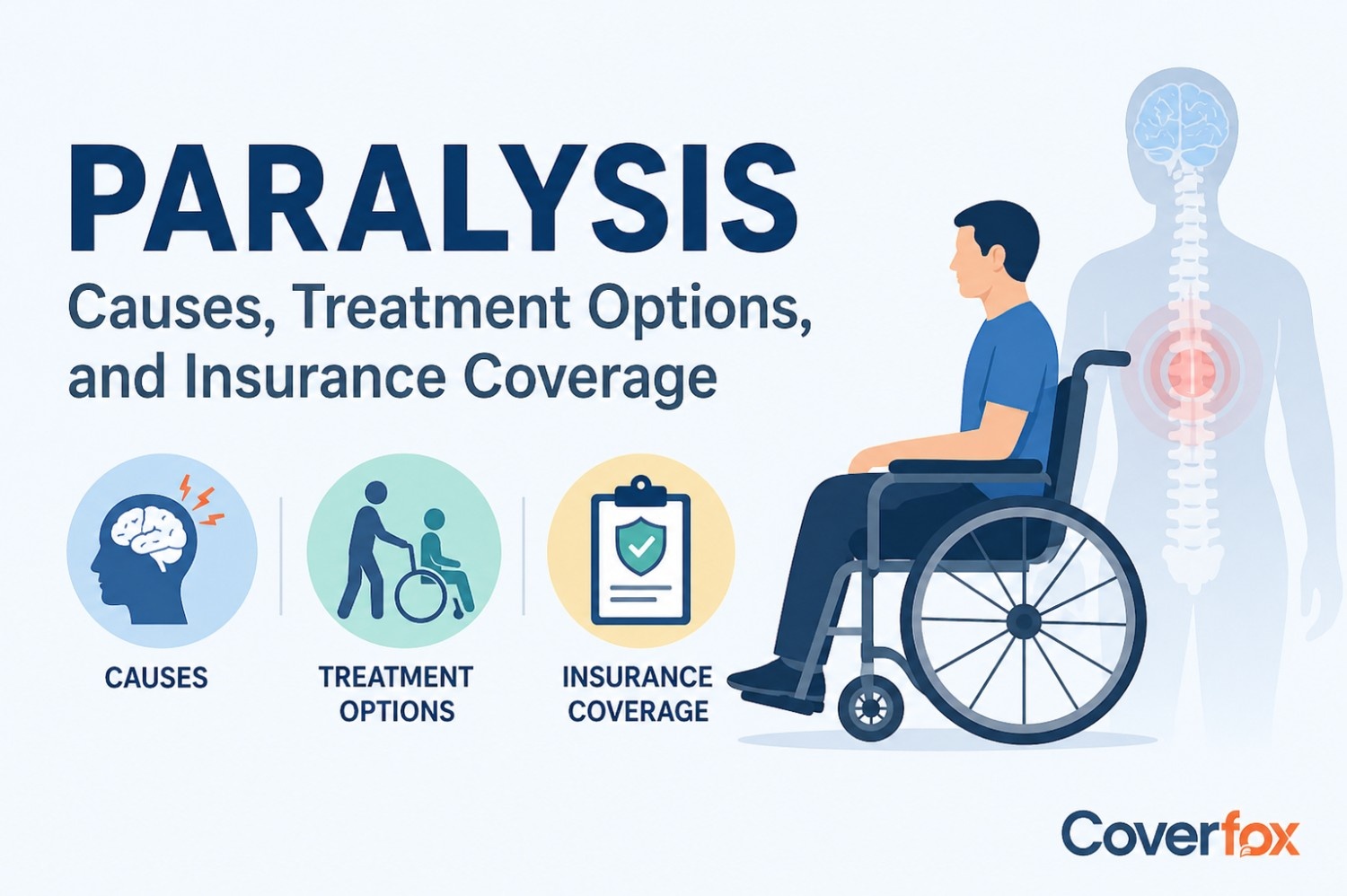
Paralysis is the loss of muscle function in part or all of the body, usually caused by a disruption in the signals between the brain and muscles. It happens when the nervous system pathways responsible for movement are damaged, preventing muscles from receiving instructions to move. Paralysis can be complete (no movement at all) or partial (limited movement), and it may also be accompanied by loss of sensation in the affected area.
Paralysis is classified based on which part of the body is affected and how severe the loss of movement is. These classifications help in understanding the condition and its impact.
Based on Body Area Affected
Affects one limb, usually an arm or a leg. It is relatively rare and often linked to nerve damage or certain neurological conditions.
Affects one side of the body (left or right), including the arm, leg, and sometimes the face. It is most commonly caused by a stroke.
Affects both legs and the lower part of the body. It is typically associated with spinal cord injuries affecting the lower spine.
Affects all four limbs and the torso. This is usually caused by severe spinal cord injury in the cervical (neck) region and may also impact breathing.
Based on Severity
There is limited movement and reduced muscle strength, but not complete loss of function.
There is no voluntary movement or control in the affected muscles.
Based on Distribution
Affects a specific, small area of the body, such as the face, hand, or foot.
Affects larger or multiple areas of the body, such as both legs or the entire body.
Paralysis affects the body by interrupting signals between the brain and muscles, leading to loss of control over movement and sensation. Its impact can range from mild weakness to complete loss of function, depending on the cause and severity.
Loss of movement: Difficulty or inability to move certain body parts
Loss of sensation: Reduced or no feeling of touch, pain, or temperature
Muscle weakening: Muscles shrink and become stiff due to lack of use
Organ function impact: May affect breathing, digestion, and bladder control
Circulation issues: Poor blood flow can lead to swelling or clots
Skin problems: Higher risk of bedsores due to prolonged immobility
Paralysis affects millions globally, with estimates suggesting over 40–50 million people living with some form of paralysis worldwide (derived from global disability and neurological burden studies)
Source: WHO
Stroke, the leading cause of paralysis, affects ~12 million people globally each year, with many survivors experiencing long-term paralysis
Source: WHO
In India, stroke incidence is rising, with ~1.8 million new cases annually, a major contributor to paralysis cases
Source: NCBI
Up to 70% of stroke survivors experience some form of motor impairment or paralysis
Source: WHO
Paralysis is a key contributor to long-term disability, which accounts for ~16% of the global burden of disease
Source: WHO
Paralysis occurs due to an interruption in motor pathways between the brain and muscles, which prevents muscle contraction and movement.
Stroke disrupts the blood supply to the brain, damaging motor pathways
Spinal cord injuries block nerve signal transmission between brain and body
Neurological disorders like Multiple Sclerosis damage nerve pathways
Infections affecting the nervous system can impair motor function
Tumours in the brain or spinal cord can compress and damage motor pathways
Physical trauma can directly injure nerves responsible for movement
Underlying medical conditions affecting upper motor neurons lead to paralysis
The main symptom is the loss of voluntary muscle contraction, meaning the affected muscles cannot move.
Inability to move muscles voluntarily in affected areas
Loss or reduction of muscle strength (complete or partial)
Impaired movement ability due to disrupted motor control
Reduced coordination depending on nerve involvement
Symptoms vary based on severity (partial vs complete) and location of nerve damage, affecting specific or multiple body parts.
Paralysis is identified by assessing loss of muscle function and nerve pathway disruption.
Physical examination to evaluate muscle contraction and strength
Neurological assessment to check motor pathway function
Imaging tests (MRI, CT scans) to identify damage in brain or spinal cord
Clinical evaluation to determine whether paralysis is complete or partial
Early diagnosis helps identify the exact level of motor pathway disruption, allowing better treatment planning and management.
Paralysis treatment focuses on restoring function, improving mobility, and managing symptoms, depending on the cause and severity.
Medications help treat underlying causes and symptoms such as inflammation, infections, pain, or muscle stiffness
Physical therapy improves muscle strength, mobility, and coordination through exercises and rehabilitation techniques
Occupational therapy helps individuals regain independence in daily activities like eating, dressing, and movement
Speech therapy is used when paralysis affects facial, throat, or communication muscles
Surgery may be required to relieve nerve compression, repair damage, or remove tumours affecting nerve pathways
Assistive devices such as wheelchairs, braces, and mobility aids support movement and independence
Advanced therapies like neurostimulation or cell-based treatments may help improve nerve function in some cases
Psychological support and rehabilitation play a key role in improving quality of life and long-term recovery
Paralysis can lead to several complications due to loss of movement and impaired nerve function, affecting both physical health and overall well-being.
Muscle atrophy: Muscles weaken and shrink over time due to lack of use
Pressure sores (bedsores): Prolonged immobility puts pressure on skin, leading to ulcers
Respiratory issues: Weak chest muscles can make breathing difficult and increase infection risk
Infections: Higher risk of urinary tract infections, lung infections, and skin infections
Blood clots: Reduced movement can lead to deep vein thrombosis (DVT)
Poor circulation: Limited blood flow may cause swelling and delayed healing
Preventive care and management of paralysis:
Regular repositioning to avoid pressure sores
Physiotherapy to maintain muscle strength and circulation
Proper hygiene and skin care to prevent infections
Use of compression devices or medications to reduce clot risk
Routine medical check-ups for early detection and management of complications
Paralysis can occur as a symptom of several genetic, neurological, and metabolic disorders that affect nerve function or muscle control:
Charcot-Marie-Tooth disease type 4G
Primary CD59 deficiency
Variegate porphyria
Congenital laryngeal adductor palsy
Amyotrophic lateral sclerosis type 15
Progressive sclerosing poliodystrophy
Neuronopathy, distal hereditary motor, type 2B
Cerebral cavernous malformation 3
Familial hypokalemia-hypomagnesemia
Neurodegeneration, infantile-onset, with optic atrophy and brain abnormalities
Porphobilinogen synthase deficiency
Acute intermittent porphyria
Autosomal recessive congenital ichthyosis 2
Amyotrophic lateral sclerosis-parkinsonism-dementia complex
Lethal congenital contracture syndrome 7
Encephalopathy due to GLUT1 deficiency
Neuronopathy, distal hereditary motor, type 2A
Tay-Sachs disease, variant AB
Congenital Horner syndrome
Multiple mitochondrial dysfunctions syndrome 9b
Progressive demyelinating neuropathy with bilateral striatal necrosis
Yes, Health insurance plans do cover paralysis as per terms and conditions of the policy. Health insurance plans for paralysis patients include the following benefits:
Lump sum payment on diagnosis of paralysis
Second opinion for better treatment decisions
Physiotherapy care to support recovery and mobility
Emergency ambulance services during critical situations
ICU benefits from intensive medical care
Health check-ups for ongoing monitoring
Wellness programmes to support overall health and rehabilitation
The following are commonly not covered under such plans:
Non-medical expenses
Non-allopathic treatments
Unproven or experimental treatments
Treatment related to alcohol or drug addiction
Self-inflicted injuries
NOTE: Inclusions and exclusions may vary based on policy and policy type. For accurate coverage, refer to your policy document carefully.
Paralysis is the loss of voluntary muscle movement due to disruption in the communication between the brain and muscles. It can be partial or complete and may affect a specific part of the body or multiple areas.
Paralysis is caused by damage to the nervous system, commonly due to stroke, spinal cord injuries, neurological disorders, infections, or trauma that interrupt motor pathways.
No, paralysis is not always permanent. Some cases, such as those caused by temporary nerve damage or conditions like Bell’s palsy, can improve over time, while severe nerve or spinal injuries may lead to permanent paralysis.
Early signs may include sudden weakness, numbness, tingling sensations, difficulty moving a limb, loss of coordination, or drooping of one side of the face.
Yes, paralysis can occur suddenly, especially in cases like stroke, traumatic injuries, or acute neurological events where nerve function is abruptly affected.
Yes, therapies such as physiotherapy, occupational therapy, and speech therapy can significantly improve mobility, strength, and independence, even if full recovery is not possible.
Yes, children can develop paralysis due to conditions like cerebral palsy, infections, genetic disorders, or injuries affecting the nervous system.
Yes, guided exercises and rehabilitation programmes can help maintain muscle strength, improve circulation, and enhance functional recovery under professional supervision.
Paralysis itself may not always cause pain, but some individuals experience nerve pain, muscle stiffness, or discomfort depending on the underlying cause.
In some cases, nerves can heal or regenerate partially, especially if the damage is not severe. However, recovery depends on the extent and location of nerve injury.
Yes, many critical illness plans cover paralysis if it meets specific criteria, such as total and irreversible loss of function, and provide a lump sum payout.
Yes, most health insurance plans cover hospitalisation, treatment, and related medical expenses for paralysis, subject to policy terms and conditions.
Yes, stroke-related paralysis is typically covered under both health insurance and critical illness policies, as stroke is a major insured condition.
Many insurance plans cover rehabilitation therapies like physiotherapy if prescribed by a doctor, though coverage limits and conditions may apply.