- Retail Insurance
- Business Insurance
- Resources
- Claims
Poliomyelitis, more commonly known as Polio, is a highly contagious viral disease that primarily affects young children and spreads through contaminated food, water, or contact with an infected person. The virus attacks the nervous system and, in severe cases, can lead to paralysis or even death. Although there is no specific cure for polio, it can be effectively prevented through proper immunization. Vaccination stimulates the body’s immune system to fight the virus and provides long-term protection. Therefore, early and timely vaccination is crucial in safeguarding children and communities from this serious disease.
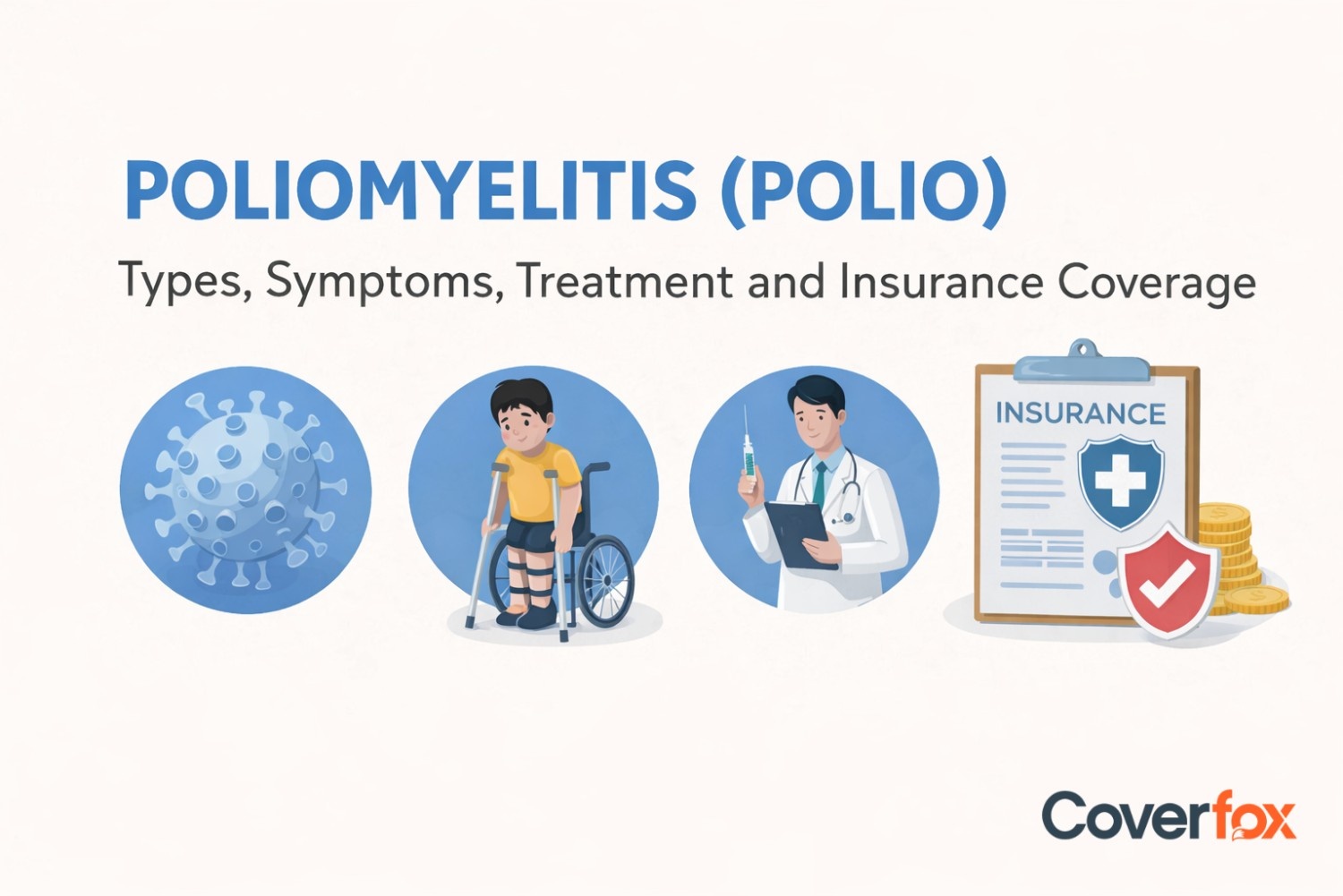
Polio is a viral disease caused by the poliovirus that mainly affects children under the age of five. It spreads through contaminated food, water, or close contact with an infected person. The virus attacks the nervous system and, in severe cases, can cause paralysis or even death. While there is no cure, polio can be prevented through safe and effective vaccination.
Polio has various forms, ranging from mild infection to severe complications. These include:
This is the most common form, where infected individuals do not show any symptoms. Despite appearing healthy, they can still carry and spread the virus to others. Around 90–95% of polio cases are asymptomatic.
This form causes mild, flu-like symptoms such as fever, sore throat, headache, vomiting, fatigue, and sometimes neck stiffness. It does not lead to paralysis but may temporarily affect the nervous system.
This is the most severe and rare form of polio. The virus attacks the nervous system, leading to muscle weakness and paralysis, usually in the legs. In some cases, it can affect breathing muscles and become life-threatening, with paralysis often being permanent.
This condition occurs years or even decades after recovery from polio. It leads to new muscle weakness, fatigue, joint pain, and reduced mobility. It is not contagious but is a long-term complication of a previous polio infection.
Polio spreads easily in environments with poor hygiene and sanitation, primarily through contaminated food, water, and close contact.
Spread mainly through the faecal–oral route, where infected faeces contaminate food or drinking water
Virus enters the body through the mouth and begins multiplying in the intestines
In some cases, it enters the bloodstream and attacks the nervous system, leading to paralysis
It can spread through close person-to-person contact, especially in crowded areas
Children are at higher risk due to weaker hygiene practices and frequent exposure to contaminated surfaces
Polio is a preventable yet potentially life-threatening disease, and understanding key facts about it helps raise awareness and support global eradication efforts.
Polio (poliomyelitis) mainly affects children under the age of 5, but unvaccinated individuals of any age can contract it.
The virus multiplies in the intestine and can quickly invade the nervous system, potentially causing paralysis within hours.
Approximately 1 in 200 infections leads to irreversible paralysis, usually affecting the legs.
Among those who become paralysed, 5–10% may die due to paralysis of breathing muscles.
Two types of vaccines are available: oral polio vaccine (OPV) and inactivated polio vaccine (IPV).
Global polio cases have reduced by over 99% since 1988, from around 350,000 cases across 125+ countries to just a few endemic regions today.
Polio remains endemic in only two countries: Afghanistan and Pakistan, but the risk persists globally until eradication is complete.
If eradication efforts are not sustained, the disease could resurge worldwide, putting children everywhere at risk.
More than 20 million people have been saved from paralysis, and around 1.5 million childhood deaths have been prevented through related health interventions.
Eradicating polio could save an estimated $40–50 billion globally, especially benefiting low-income countries.
Source - WHO and Polio Eradication Org
Polio symptoms can range from mild flu-like signs to severe paralysis, depending on the severity of the infection and the type/form of polio.
Fever, fatigue, and general weakness
Headache and sore throat
Nausea, vomiting, and stomach discomfort
Stiffness in the neck and back
Pain or stiffness in the limbs
Muscle weakness, especially in the legs
Loss of reflexes
In severe cases, sudden paralysis (usually in the legs)
Difficulty in breathing or swallowing in critical conditions
Polio can be effectively prevented through vaccination and proper hygiene practices.
Ensure complete vaccination with Oral Polio Vaccine (OPV) and Inactivated Polio Vaccine (IPV) as per schedule
Participate in pulse polio immunisation drives to ensure full coverage
Maintain proper hand hygiene, especially after using the toilet and before eating
Drink clean and safe water; avoid contaminated food and beverages
Improve sanitation facilities to prevent faecal contamination
Promote awareness about polio vaccination and its importance
Ensure early detection and reporting of suspected cases for quick response
Strengthen routine immunisation programmes to prevent outbreaks
There is no cure for polio, so treatment focuses on prevention through vaccination and managing symptoms.
Polio can be prevented through timely vaccination, which provides long-term protection
Two main vaccines are used: Oral Polio Vaccine (OPV) and Inactivated Polio Vaccine (IPV)
Multiple doses are required to ensure full immunity in children
Routine immunisation and pulse polio campaigns play a key role in eradication
Vaccination not only protects individuals but also helps stop community transmission
There is no specific antiviral treatment for polio
Treatment focuses on relieving symptoms and preventing complications
Pain relievers may be used to reduce muscle pain and discomfort
Physical therapy helps improve mobility and prevent muscle stiffness
Use of assistive devices like braces or splints for muscle support
In severe cases, ventilators may be required to support breathing
Long-term rehabilitation may be needed for recovery and improved quality of life
Health insurance in India can help cover the medical and long-term costs associated with polio, especially in cases involving paralysis or disability.
Covers hospitalisation expenses, including doctor fees, medicines, and diagnostic tests
Includes pre- and post-hospitalisation costs related to treatment
May cover surgeries, rehabilitation, and physiotherapy for polio-related complications
Paralysis (a major effect of polio) is often covered under critical illness plans or riders
Some policies also cover assistive devices like braces or mobility aids under disability plans
If a person already has polio, it is treated as a pre-existing disease (PED)
Coverage is usually available after a waiting period (commonly 1-3 years)
Some specialised or inclusive plans may offer earlier or customised coverage
Ayushman Bharat (PM-JAY) offers up to ₹5 lakh annual coverage for eligible families
Niramaya Health Insurance Scheme provides up to ₹1 lakh cover for persons with disabilities
The Swavalamban Scheme offers affordable insurance options for differently-abled individuals
Not all policies cover long-term care or lifelong rehabilitation fully
Some treatments, cosmetic procedures, or non-medical expenses may be excluded
Coverage varies by insurer, so policy terms must be checked carefully
Early insurance purchase (before illness) ensures better and faster coverage benefits
Disclaimer: Information is for educational purposes only, and should not be taken as a doctor’s advice. For health insurance terms, please refer to your policy document carefully before making a decision.
Polio is a highly infectious viral disease that mainly affects young children and can damage the nervous system, sometimes leading to paralysis.
It spreads primarily through the faecal–oral route via contaminated food, water, or close contact with an infected person.
Yes, although cases have reduced significantly, polio still exists in a few countries, and the risk remains until it is completely eradicated.
No, there is no cure for polio. Treatment focuses on managing symptoms, but it can be prevented through vaccination.
Early symptoms include fever, fatigue, headache, vomiting, neck stiffness, and pain in the limbs.
Yes, in severe cases, polio can lead to irreversible paralysis, usually affecting the legs.
Polio can be prevented through timely vaccination, proper hygiene, clean water, and improved sanitation.
It is a condition that occurs years after recovery from polio, causing new muscle weakness, fatigue, and joint pain.
Yes, most health insurance plans cover hospitalisation, treatment, and rehabilitation costs, though pre-existing cases may have a waiting period.
It helps reduce the financial burden of hospitalisation, long-term care, physiotherapy, and disability-related expenses.