Parkinson’s Disease is a progressive neurological disorder that affects movement, balance, and coordination due to the loss of dopamine-producing brain cells. According to the World Health Organisation (WHO), over 8.5 million people worldwide are living with Parkinson’s disease, making it one of the fastest-growing neurological conditions globally. This page explains what Parkinson’s disease is, its symptoms, causes, and how it is diagnosed and managed, and how health Insurance plays an important role in dealing with Parkinson's.
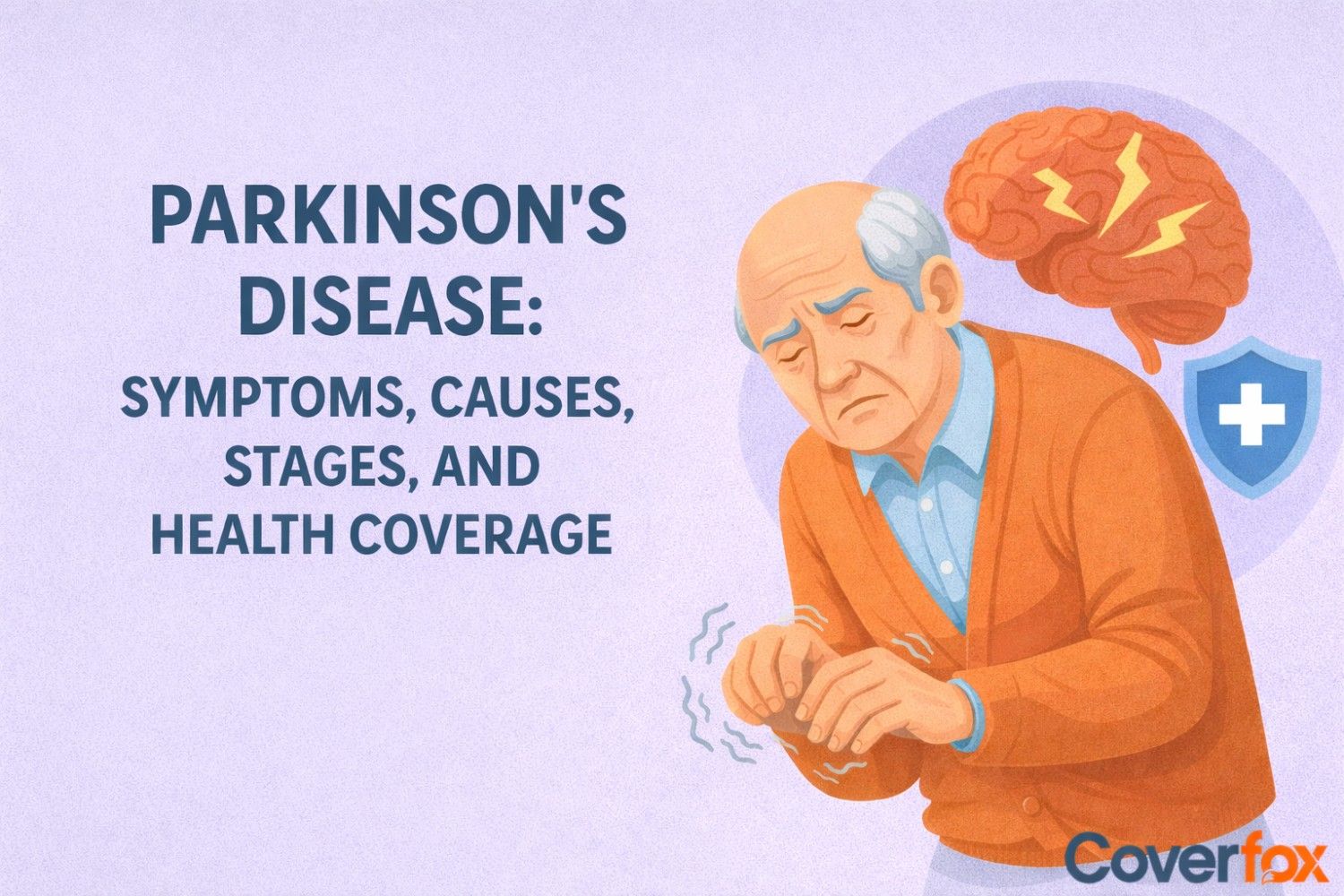
Parkinson’s Disease is a progressive neurological disorder that occurs when nerve cells in the brain responsible for producing dopamine gradually deteriorate, leading to problems with movement, coordination, and muscle control. It commonly causes symptoms such as tremors, stiffness, slow movement, and balance issues. In simple terms, Parkinson’s disease affects how smoothly a person can move, making everyday actions like walking, writing, or speaking slower and more difficult over time.

Parkinson’s disease affects the brain by gradually damaging nerve cells in an area called the substantia nigra, which is responsible for producing dopamine, which is a chemical that helps control movement. As dopamine levels drop, communication between the brain and muscles weakens, leading to symptoms like tremors, stiffness, slow movement, and balance problems.
Parkinson’s disease can be classified into different types based on its cause, symptoms, and progression.
The most common form, with no known cause, usually develops gradually and responds well to medication.
Caused by factors such as medications, toxins, infections, or head injuries rather than natural brain degeneration.
Includes conditions like Multiple System Atrophy and Progressive Supranuclear Palsy, which progress faster and respond poorly to standard treatment.
Develops due to multiple small strokes affecting brain areas responsible for movement.
Occurs in younger individuals, often before the age of 40, and is usually linked to genetic factors.
Parkinson’s disease progresses gradually and is commonly divided into 5 stages based on the severity of symptoms and their impact on daily life.
Stage 1: Mild symptoms affecting one side of the body, such as slight tremors or changes in posture, with minimal impact on daily activities.
Stage 2: Symptoms appear on both sides of the body, including stiffness and slow movement, but balance is usually unaffected.
Stage 3: Balance begins to worsen, movements become slower, and daily tasks become more difficult, though the person can still live independently.
Stage 4: Severe symptoms with significant mobility issues; assistance is needed for most daily activities.
Stage 5: Advanced stage where the person may be unable to walk or stand without support and requires full-time care.
Parkinson’s disease develops due to gradual damage to nerve cells in the brain that control movement, leading to reduced dopamine levels.
Loss of dopamine-producing brain cells, which affects movement and coordination
Age-related degeneration, with risk increasing after the age of 60
Genetic factors that may increase susceptibility in some individuals
Environmental exposure to toxins or chemicals over time
A combination of genetic and environmental triggers rather than a single cause
Certain factors can increase a person’s likelihood of developing Parkinson’s disease, although the exact cause may vary from individual to individual.
Age: Risk increases significantly after the age of 60
Genetics: Family history can raise the chances of developing the condition
Gender: Men are more likely to develop Parkinson’s than women
Environmental exposure: Long-term exposure to pesticides, chemicals, or toxins
Head injuries: Repeated or severe head trauma may increase risk
Lifestyle factors: Limited physical activity and long-term exposure to pollutants may contribute
Parkinson’s disease causes both movement-related and non-motor symptoms that gradually worsen over time.
Tremors: Shaking of hands, fingers, or limbs, usually starting on one side
Slowness of movement (Bradykinesia): Difficulty in initiating and performing movements
Muscle stiffness: Rigid muscles cause pain and reduced range of motion
Impaired balance and posture: Increased risk of falls
Changes in speech and writing: Soft voice, slurred speech, or small handwriting
Fatigue and sleep problems: Ongoing tiredness and disturbed sleep
Non-motor symptoms: Depression, anxiety, constipation, and memory or concentration issues
Parkinson’s disease is primarily diagnosed based on medical history, symptoms, and neurological examination, as there is no single test that can confirm it definitively.
A neurologist assesses movement, reflexes, coordination, and balance
Symptoms, progression, and family history are carefully examined.
Improvement with Parkinson’s medicines can help support the diagnosis
MRI or CT scans may be used to rule out other conditions, though they do not confirm Parkinson’s
Helps assess dopamine activity in the brain when the diagnosis is unclear
Treatment for Parkinson’s disease focuses on managing symptoms, improving quality of life, and slowing functional decline. While there is no cure yet, research-backed therapies and medical management help control symptoms effectively.
The primary treatment involves medicines that increase or mimic dopamine levels in the brain. Levodopa remains the most effective drug and is commonly prescribed to improve movement, stiffness, and tremors. Other medications help regulate dopamine activity or reduce its breakdown, improving symptom control over time.
In advanced cases where medications become less effective, Deep Brain Stimulation may be recommended. This procedure involves implanting electrodes in specific brain areas to regulate abnormal signals and reduce motor symptoms. Clinical studies have shown DBS to significantly improve the quality of life in suitable patients.
Regular physiotherapy helps maintain mobility, balance, and muscle strength. Occupational therapy supports patients in performing daily activities independently and safely.
Speech therapy helps manage voice changes and swallowing difficulties, which are common as the disease progresses.
Research is ongoing in areas such as gene therapy, stem cell therapy, and neuroprotective drugs aimed at slowing disease progression, with several clinical trials showing promising results.
Lifestyle changes play an important role in managing Parkinson’s disease and improving daily functioning alongside medical treatment.
Helps improve mobility, balance, and muscle strength while reducing stiffness.
A balanced diet with fibre, fluids, and nutrients supports digestion and overall health.
Helps maintain communication skills and physical independence.
Proper rest helps manage fatigue and other non-motor symptoms.
Stress management, counselling, and social support improve emotional health.
Simple modifications reduce the risk of falls and injuries.
As Parkinson’s disease progresses, it can lead to several complications that affect both physical and mental health.
Mobility problems: Increased difficulty in walking, balance issues, and a higher risk of falls
Swallowing difficulties: Can lead to choking or aspiration-related infections
Speech problems: Soft or slurred speech affecting communication
Cognitive changes: Memory issues, confusion, or dementia in later stages
Mental health concerns: Depression, anxiety, and mood changes
Sleep disorders: Insomnia, daytime sleepiness, and restless sleep
Digestive issues: Constipation and slower digestion
Autonomic dysfunction: Blood pressure fluctuations, urinary problems, and excessive sweating
While Parkinson’s disease cannot be completely prevented, maintaining a healthy lifestyle may help reduce risk. Regular physical activity, a balanced diet, and avoiding exposure to toxins support brain health. Protecting against head injuries and managing stress can also contribute to better neurological well-being.
Health insurance typically covers Parkinson’s disease under neurological or chronic illness benefits, including consultation, diagnostic tests, medications, and hospitalisation. Treatment costs such as long-term medication, physiotherapy, and in some cases, surgery like Deep Brain Stimulation may be covered depending on the policy. Coverage usually applies after the waiting period, especially if Parkinson’s is classified as a pre-existing condition.
Below are some of the top health insurance plans for Parkinson’s Disease, highlighting their coverage, benefits, and features for managing critical illness.
| Name of the Plan | Best Features |
|---|---|
| Care Mediclaim Health Insurance | Covers 32 critical diseases including Parkinsons Provides psychiatric counselling to the patients OPD expenses are covered |
| HDFC ERGO critical Illness Health Insurance | Under the Platinum Plan, Parkinson’s Disease is covered Survival period of 30 days Easy claim settlement |
| Activ Secure Critical Illness Plan | Covers 64 critical illnesses Up to INR 1 crore of benefits You can receive 150% of the sum insured in case you get diagnosed with more than 1 illnesses |
| Less pollution | 3 plan options with different sum insured 30 day survival period and a 90 day waiting period You are eligible for a claim if the illness has persisted for at least six months Receive a lump sum on the diagnosis of the illness Other critical illnesses are covered as well |
Disclaimer: This content is for informational purposes only and should not be considered medical advice. Treatment and health insurance coverage for Parkinson’s disease may vary based on individual medical conditions and policy terms, so consult a doctor and your insurer for accurate guidance.
Parkinson’s disease is a progressive neurological disorder that affects movement, balance, and coordination. It occurs due to reduced dopamine levels in the brain, leading to symptoms such as tremors, stiffness, and slow movement.
Parkinson’s is caused by the gradual loss of dopamine-producing nerve cells in the brain. The exact cause is unknown, but age, genetics, and environmental factors are believed to play a role.
Early symptoms include mild tremors, muscle stiffness, slow movement, changes in handwriting, reduced facial expressions, and balance problems.
Parkinson’s is considered a serious chronic neurological condition. In many insurance policies, it may be covered under critical illness or long-term illness categories, depending on the policy terms.
Yes, Parkinson’s is a progressive condition. Symptoms usually worsen gradually, though the speed of progression varies from person to person.
Most health insurance plans cover Parkinson’s-related treatment, including hospitalisation and medication, after the waiting period. Coverage depends on whether it is classified as a pre-existing condition.
Treatment costs vary depending on disease stage and treatment type. Expenses may include doctor visits, medicines, physiotherapy, and, in advanced cases, surgery, which can make long-term care costly.
Parkinson’s is diagnosed through clinical evaluation, medical history, and neurological examination. Imaging tests may be used to rule out other conditions, but there is no single definitive test.