- Retail Insurance
- Business Insurance
- Resources
- Claims
As per the WHO, Vector-borne diseases constitute 17% of the total infection cases worldwide. These diseases remain a major public health issue in regions with warm, humid climates and poor sanitation, especially during the monsoon and post-monsoon seasons. India is a major hotspot for vectors (pathogens that carry these diseases), and hence, it is important to have knowledge about what vector-borne diseases are, their symptoms, diagnosis, treatment and prevention.
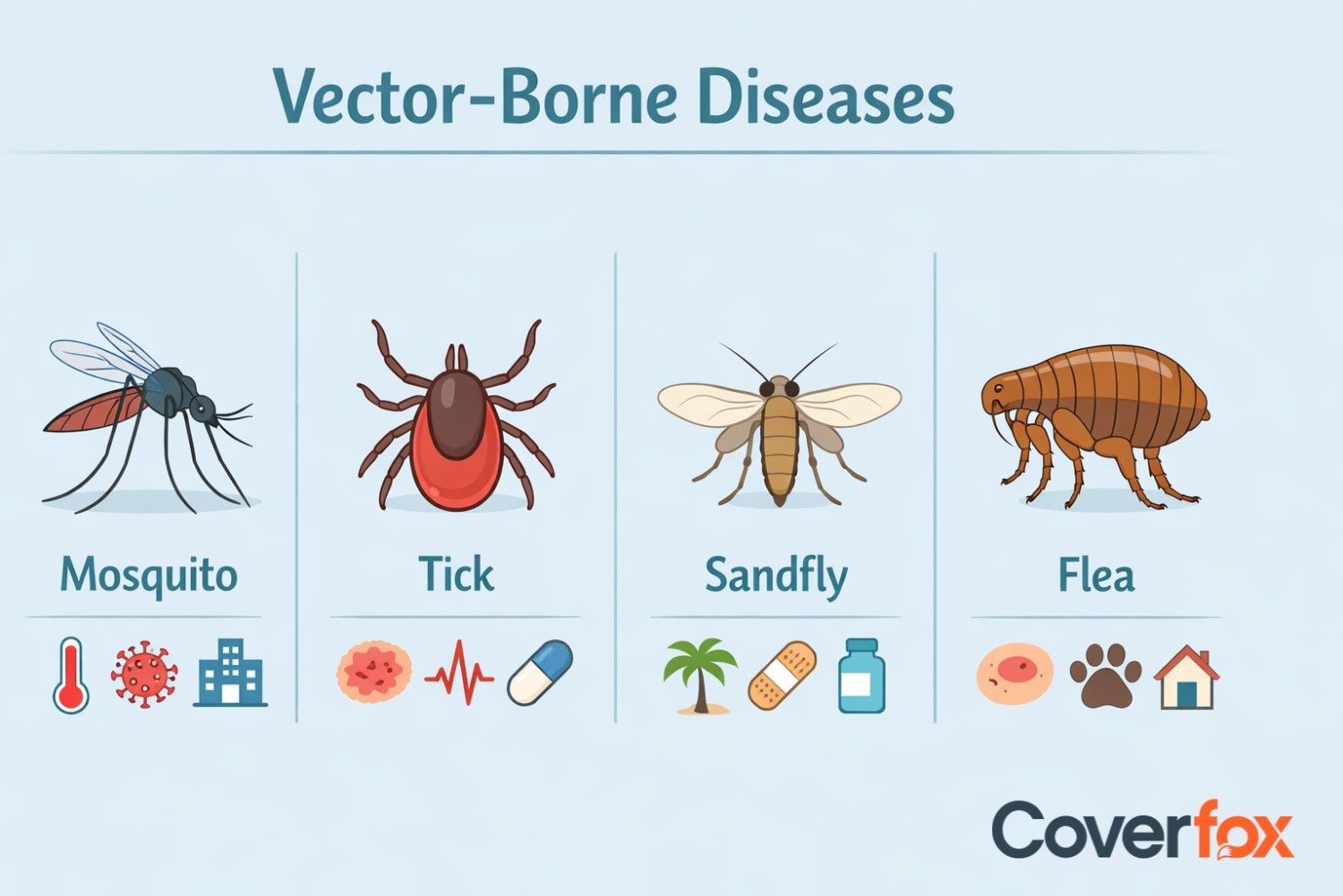

Vector-borne diseases are illnesses caused by pathogens that are transmitted to humans through vectors such as insects and arthropods. These vectors carry disease-causing organisms from infected hosts and spread them through bites or contact, making environmental and climatic factors key contributors to their spread.
Here are some stats about vector-borne diseases, in India and globally:
Sources - WHO and National Centre for Vector-Borne Diseases Control
The major vector-borne diseases include malaria, dengue, chikungunya, Lyme disease, yellow fever, Zika, Japanese encephalitis and kala-azar, which are spread through bites from specific infected vectors:
Malaria is caused by Plasmodium parasites transmitted through the bite of infected Anopheles mosquitoes. It leads to cyclical fever, chills, headache and can cause severe complications if not treated promptly. In India, malaria remains endemic and is one of the key diseases targeted for elimination under national programmes.
Dengue is a viral infection spread primarily by Aedes mosquitoes, especially Aedes aegypti and Aedes albopictus. It typically causes high fever, severe joint and muscle pain, rash and, in severe cases, bleeding and shock. Dengue fever is one of the most common mosquito-borne viral diseases globally and in India.
Transmitted by the same Aedes mosquitoes that spread dengue, chikungunya is a viral illness marked by sudden fever and debilitating joint pain. Most patients recover fully, but joint symptoms can persist for weeks to months in some cases.
Lyme disease is a bacterial infection transmitted to humans through the bite of infected ticks, often Ixodes species. Early symptoms include fever, headache and a characteristic skin rash; if untreated, it can affect joints, the heart and the nervous system. It is one of the most common vector-borne illnesses in temperate regions like the United States, but less common in India.
Yellow fever is a viral disease transmitted by Aedes mosquitoes, especially in Africa and tropical South America. It can cause fever, jaundice, bleeding and organ failure in severe cases, but safe and effective vaccines are available. While not prevalent in India, yellow fever remains a major public health concern in endemic countries.
Zika virus is spread mainly by Aedes mosquitoes and can cause mild fever, rash, joint pain and conjunctivitis. It gained global attention due to its association with birth defects such as microcephaly when infection occurs during pregnancy. The same mosquito vectors that transmit dengue also spread Zika.
JE is a viral brain infection transmitted by Culex mosquitoes that breed in rice fields and stagnant water. Most infections are silent, but symptomatic cases can develop high fever, headache, seizures and neurological damage. JE is a significant problem in parts of India and Asia and is preventable through vaccination.
Kala-azar is caused by Leishmania parasites transmitted by the bite of infected sandflies (Phlebotomus species). It affects internal organs like the liver, spleen and bone marrow, causing prolonged fever, weight loss and anaemia if untreated. In India, kala-azar remains one of the six major vector-borne diseases under national control efforts.
Vector-borne diseases often present with similar early symptoms such as fever, fatigue, and body aches, but each condition also has distinct signs that help in identification.
Vector-borne diseases spread due to environmental, social, and behavioural factors that encourage vector breeding and increase human exposure.
Warm temperatures, rainfall, and humidity create ideal conditions for mosquitoes and other vectors to breed and survive.
Stagnant water, open drains, and improper waste disposal provide breeding grounds for disease-carrying insects.
Overcrowded living spaces and rapid urban growth increase contact between humans and vectors.
Movement of people across regions can introduce infections into new areas and aid rapid disease spread.
Altered ecosystems and loss of natural habitats bring humans closer to disease-transmitting vectors.
During high-risk seasons such as the monsoon, the chances of vector-borne infections increase due to water stagnation and favourable breeding conditions for mosquitoes and other vectors. Adopting preventive measures at both the individual and community levels plays a crucial role in reducing the risk of infection.
Wearing long-sleeved clothing, full-length trousers, and socks helps minimise skin exposure and reduces the risk of insect bites, especially during early morning and evening hours.
Using mosquito repellents, coils, vaporisers, or creams containing approved active ingredients provides effective protection against bites.
Regularly removing stagnant water from coolers, flower pots, tyres, and open containers helps prevent mosquito breeding around homes and workplaces.
Maintaining cleanliness and proper waste disposal reduces conditions that attract disease-carrying insects.
Sleeping under mosquito nets and installing screens on windows and doors helps prevent indoor exposure to vectors.
Vaccines for certain vector-borne diseases, such as Japanese encephalitis and yellow fever, offer protection and are especially important in high-risk or endemic areas.
Fogging, larvicidal treatments, and coordinated public health efforts help control vector populations and reduce disease transmission.
Early consultation and diagnosis help prevent complications and limit further spread of infection.
Medical treatment of vector-borne diseases focuses on timely diagnosis, appropriate medical care, and vaccination where available, as recommended by the National Centre for Vector Borne Diseases Control (NCVBDC).
Most health insurers in India provide vector-borne diseases cover with comprehensive health insurance plans. However, a few insurers provide additional plans that are specifically catered for treating VBDs. These diseases require hospitalisation, medication and treatments, which can be hefty on the wallet unless you have Health insurance. These plans are at a minimal cost, so that every person can have access to them. In a health insurance plan for vector-borne diseases, generally, a lump-sum cash is compensated directly as per policy terms.
Health insurance policies generally cover vector-borne diseases, but the extent of coverage depends on policy terms, waiting periods, and specific conditions mentioned in the policy document.
Disclaimer:
The information provided on this page is intended for general awareness and educational purposes only. It does not constitute medical advice, diagnosis, or treatment. Health conditions, symptoms, and treatments may vary from person to person, and readers are advised to consult a qualified healthcare professional for personalised medical guidance. Reliance on this information is at the reader’s own discretion.
Health insurance coverage for vector-borne diseases is subject to the terms, conditions, exclusions, and waiting periods specified in individual policy documents. Coverage, benefits, and claim eligibility may vary across insurers and plans. Readers are advised to review the policy wording carefully or consult their insurer or insurance advisor for accurate and up-to-date information before making any decisions.
Vector-borne diseases are infections transmitted to humans through vectors such as mosquitoes, ticks, and sandflies that carry viruses, bacteria, or parasites.
These diseases spread when infected vectors bite humans, transmitting disease-causing pathogens into the bloodstream.
Common vector-borne diseases include dengue, malaria, chikungunya, Japanese encephalitis, kala-azar, Zika, and yellow fever.
Yes, they can be prevented through measures such as using insect repellents, wearing protective clothing, eliminating stagnant water, vaccination where available, and timely medical care.
Most comprehensive health insurance policies cover hospitalisation expenses related to vector-borne diseases, subject to policy terms and waiting periods.
Yes, ICU expenses are generally covered if hospitalisation is medically necessary, as per the policy’s coverage limits and conditions.
Diagnostic tests required during hospitalisation are usually covered under health insurance policies, subject to policy terms.
Yes, treatment for vector-borne diseases is available at network hospitals under cashless facilities, provided the policy is active and coverage conditions are met.