Maintaining proper car tyre pressure is essential for safety, performance, and fuel efficiency, and a Tyre Pressure Monitoring System (TPMS) helps drivers track tyre health in real time. TPMS provides alerts for underinflated or overinflated tyres, preventing blowouts, uneven wear, and reduced fuel economy. Regular monitoring, whether via TPMS or manual checks, enhances handling, extends tyre lifespan, and supports responsible vehicle ownership, which can also positively impact insurance considerations.
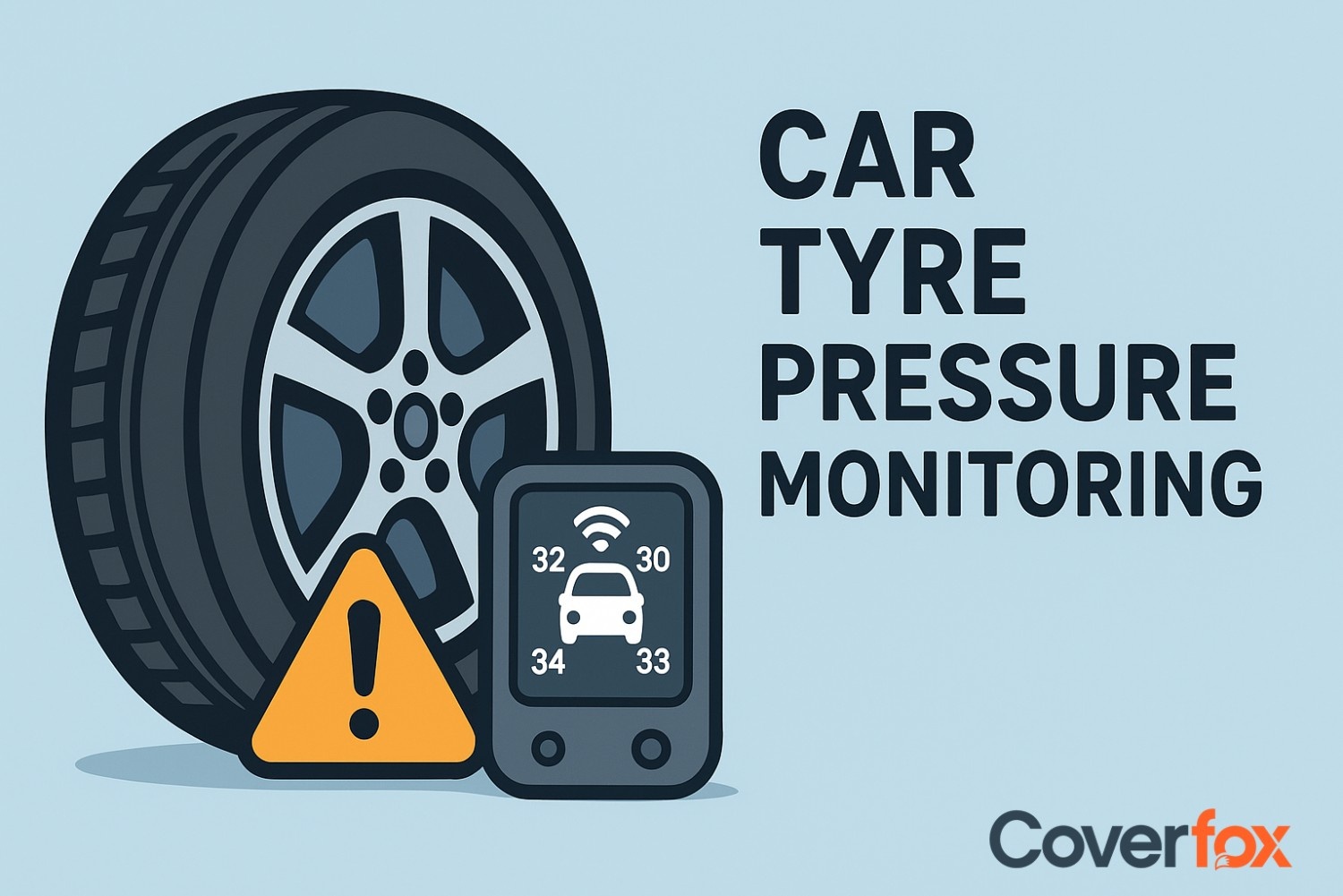
Your car must have proper tyre pressures for safe and efficient driving. Maintaining optimal pressure ensures better handling, improved fuel efficiency, and reduces the risk of tyre wear or blowouts. Monitoring your tyre pressure regularly helps in avoiding unexpected accidents and enhances the overall performance of your vehicle. Understanding TPMS alerts allows drivers to identify low or uneven tyre pressure early, prompting timely corrective action and ensuring that the car runs smoothly and safely.
What Is a Tyre Pressure Monitoring System?
A Tyre Pressure Monitoring System for a Car is an advanced safety feature that continuously tracks the air pressure in each tyre. It uses sensors installed either inside the tyre or on the valve stem to detect any deviation from the recommended pressure levels. When the system senses that a tyre is underinflated or overinflated, it immediately notifies the driver through dashboard warnings or alert lights, helping prevent accidents, uneven tyre wear, and reduced fuel efficiency.
Types of Tyre Pressure Monitoring Systems (TPMS)
Tyre Pressure Monitoring Systems (TPMS) help drivers track car tyre pressures and take corrective action when needed. The types of TPMS are:
1. Direct TPMS
Direct TPMS uses sensors installed inside each tyre to measure air pressure accurately. It provides real-time data to the dashboard for immediate alerts. Alerts notify the driver if the pressure is too low or too high. This system ensures precise monitoring and helps prevent tyre damage and accidents.
2. Indirect TPMS
Indirect TPMS estimates tyre pressure by monitoring wheel rotation and speed via the ABS. It does not measure air pressure directly but detects potential underinflation. Alerts are sent when a tyre may be underinflated, helping maintain safety. Though less accurate, it is simpler and more cost-effective for car tyre pressure monitoring.
How Does the Tyre Pressure Monitoring System (TPMS) Work?
TPMS uses sensors and smart alerts to keep drivers informed about tyre health. TPMS operation differs as per it’s type:
Direct TPMS Operation
Indirect TPMS Operation
Sensors inside each tyre measure the exact air pressure continuously. Data is transmitted wirelessly to the car’s dashboard system. If the pressure falls outside the recommended range, the system triggers an immediate warning. This allows drivers to take prompt action and maintain the car’s tyre pressure.
Uses the ABS or wheel speed sensors to monitor differences in wheel rotation. Uneven or faster rotation indicates possible underinflation. The system analyses this data and alerts the driver if the tyre pressure may be low. Although less precise than direct TPMS, it provides an early warning for monitoring car tyre pressure.
Tyre Pressure Monitoring Importance and Benefits
Maintaining correct tyre pressure is essential for road safety, fuel efficiency, and smooth vehicle performance. A tyre pressure monitoring system (TPMS) keeps drivers updated about tyre health in real time, helping prevent issues before they become serious.
The key reasons and benefits of tyre pressure monitoring are:
1. Prevents Blowouts
Properly inflated tyres are less likely to overheat or burst, reducing the risk of sudden tyre failures on the road.
2. Better Grip and Handling
Correct pressure maintains optimal contact with the road surface, improving traction, braking, and cornering stability.
3. Improved Fuel Efficiency
Recommended pressure reduces rolling resistance, enabling better mileage and lowering fuel consumption.
4. Extended Tyre Life
Evenly inflated tyres wear more uniformly, increasing tyre lifespan and reducing replacement expenses.
5. Enhanced Safety
Real-time alerts warn drivers of low or uneven tyre pressure, helping avoid accidents and ensuring safer control of the vehicle.
6. Convenience
Drivers do not need to manually check each tyre regularly since the system continuously monitors pressure.
7. Environmentally Friendly
Maintaining proper pressure reduces CO₂ emissions and supports a greener driving experience.

How to Check Tyre Pressure Manually
Even with a car tyre air pressure monitor, manually checking tyre pressure is a useful habit. It ensures each tyre is inflated correctly, maintaining safety, performance, and fuel efficiency. This is how to check tyre pressure manually:
Gather a Tyre Pressure Gauge
Check Tyres When Cold
Remove Valve Caps and Measure
Adjust to Recommended PSI
Replace Valve Caps and Recheck
Use a reliable gauge, either digital or analogue, to measure the air pressure of each tyre accurately.
Tyres should be checked before driving, as heat from driving can raise the pressure and give inaccurate readings.
Unscrew the valve cap, press the gauge onto the valve stem, and note the reading. Repeat for all tyres, including the spare.
Inflate or deflate each tyre to match the manufacturer’s recommended pressure, usually found in the owner’s manual or on the driver-side door jamb.
After adjusting, securely replace valve caps and recheck pressure to ensure accuracy for safe driving and optimal tyre pressure monitoring.
Common Issues with the Tyre Pressure Monitoring System for Cars
Like any other system, TPMS can sometimes encounter issues that need attention. The common Issues with tyre pressure monitoring systems for cars are:
1. Persistent Warning Lights
TPMS warning lights may stay on even after tyres are properly inflated. This can happen due to sensor misalignment or calibration errors. Recalibrating the system usually resolves the issue.
2. Sensor Damage or Battery Failure
Direct TPMS sensors have batteries that can wear out over time, or sensors may get damaged during tyre changes. Replacing faulty sensors restores accurate readings.
3. System Communication Errors
Occasional software glitches or weak signal transmission can prevent the TPMS from displaying correct pressure. Resetting the system or consulting a technician can fix these errors.
4. Incorrect Pressure Readings
Temperature changes or rapid altitude shifts may cause temporarily inaccurate readings. Regular manual checks and sensor maintenance ensure reliable monitoring of car tyre pressure.
Tips for Maintaining Proper Tyre Pressure
Regular monitoring and maintenance of tyre pressure helps prevent accidents, improve mileage, and extend tyre life. The tips for maintaining proper tyre pressure are:
Regular Pressure Checks
Follow Manufacturer Recommendations
Inspect Tyres for Damage
Adjust Pressure for Load and Conditions
Respond to TPMS Alerts
Check tyres at least once a month and before long trips using a reliable gauge or car tyre monitor. This ensures each tyre stays at the recommended PSI.
Always inflate tyres according to the pressure specified in the owner’s manual or on the driver's side door jamb for optimal performance.
Look for punctures, cuts, bulges, or uneven wear that can affect pressure and handling. Address issues promptly to maintain safety.
Increase tyre pressure slightly when carrying heavy loads or driving long distances at high speeds, following manufacturer guidelines.
Heed TPMS alerts immediately to correct underinflated or overinflated tyres, ensuring consistent performance and safety.
How Proper Tyre Maintenance Affects Your Car Insurance
Proper tyre maintenance is not only vital for safety and performance but can also impact your car insurance. Keeping tyres in good condition and monitoring car tyre pressures can influence claims and premiums. How proper tyre maintenance affects your car insurance.
Reduces Accident Risk
Supports Insurance Claims
Avoids Policy Complications
Demonstrates Responsible Ownership
Well-maintained tyres lower the chance of blowouts or skidding, decreasing the likelihood of accidents. Insurers may view this as a lower risk, potentially benefiting premiums.
If an accident occurs, having tyres properly maintained and documented through a car tyre air pressure monitor or TPMS can help validate that the vehicle was in a safe condition.
Neglecting tyre upkeep may be seen as negligence, which could affect claim approvals. Regular maintenance ensures compliance with safety standards.
Using a Tyre Pressure Monitoring System for cars shows proactive vehicle care, reflecting positively on the driver and possibly influencing insurance considerations.
Wrapping Up
A Tyre Pressure Monitoring System for Car is an essential tool for every driver, providing real-time insights into car tyre pressures. It enhances safety by alerting drivers to underinflated or overinflated tyres, helps maintain fuel efficiency by reducing rolling resistance, and extends tyre lifespan through proper upkeep. By combining convenience with preventive care, TPMS ensures smoother, safer, and more cost-effective driving.
Explore More Articles:
Why Tubeless Tyres are Essential for Modern Cars: Safety and Performance
Types of Tyres: A Guide to Choosing the Right One
Traction Control System in Cars: How It Works and Why It Matters
Frequently Asked Questions
What is TPMS, and how does it work?
A Tyre Pressure Monitoring System (TPMS) tracks tyre pressure using sensors. Direct TPMS measures pressure inside tyres, while indirect TPMS estimates it via wheel rotation and alerts the driver on the dashboard.
Can TPMS improve fuel efficiency?
Yes. Maintaining car tyre pressures with TPMS reduces rolling resistance, helping the engine use fuel more efficiently.
Can I install TPMS in any car?
Most cars can have TPMS installed via compatible aftermarket kits or factory options, depending on the vehicle.
Are direct TPMS sensors accurate?
Direct TPMS sensors provide precise, real-time tyre pressure readings, making them more reliable than indirect systems.
How often should I manually check my tyre pressure?
Check tyres at least once a month and before long trips, ideally when the tyres are cold.
What should I do if my TPMS alert keeps coming on?
Verify tyre pressure and condition; if correct, the sensors may need recalibration or replacement by a technician.
What PSI is ideal for Indian cars?
Typically 30–35 PSI, but always refer to your car’s owner manual or the driver-side door jamb for exact values.
Is a Car Tyre Pressure Monitoring System legally required?
Not mandatory in India, but it is recommended for safety. Some premium models come with TPMS as standard.
What happens if I ignore TPMS warnings?
Ignoring alerts can lead to blowouts, reduced grip, uneven tyre wear, and higher fuel consumption.
How do I know if my car has TPMS?
Check for a TPMS dashboard light (tyre icon with exclamation) or confirm in the car’s owner manual.
What’s the best TPMS for cars?
Direct TPMS offers accurate real-time monitoring, while indirect TPMS is more cost-effective; choose one compatible with your vehicle for proper car tyre pressure monitoring.