Cruise control and adaptive cruise control are advanced car technologies that reduce driver fatigue and enhance highway driving comfort. Traditional cruise control maintains a fixed speed, while adaptive cruise control uses radar and cameras to monitor traffic, automatically adjusting speed and maintaining a safe distance from vehicles ahead. Understanding these systems helps drivers navigate long journeys safely and efficiently, making driving less tiring and more enjoyable.
Long-distance driving can be enjoyable until the right foot begins to hurt from pressing the accelerator for hours. This is where advanced driving technology comes in to make driving easier and less exhausting. Systems, such as cruise control in cars, were created to make highway driving easier by allowing the driver to set a constant speed with ease.
The convenience of adaptive cruise control allows for maintaining speed and reacting to traffic conditions. It is important to understand the differences between these two technologies, particularly as more and more Indian cars are now offering both features.
What Is Cruise Control, and How Do You Use It?
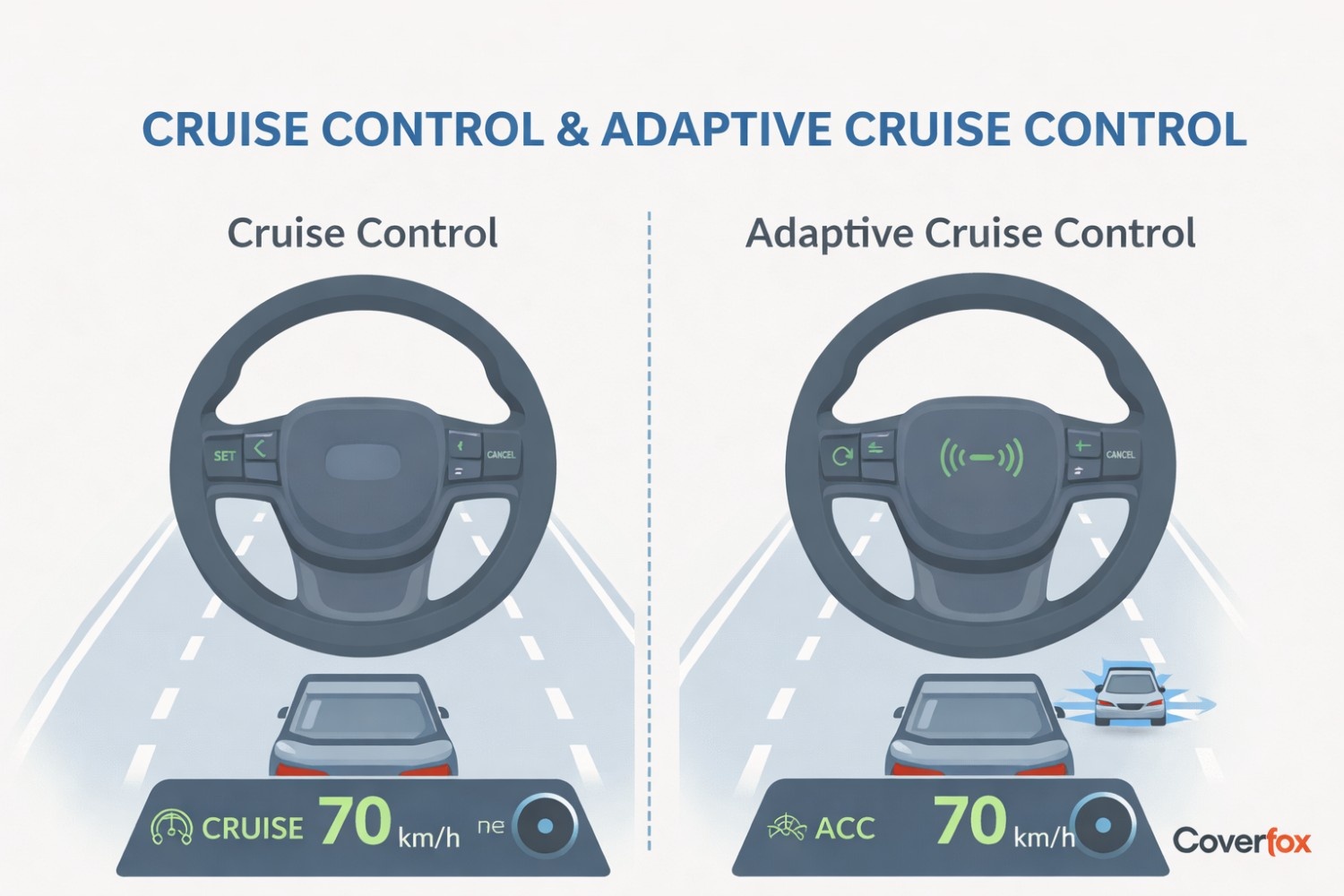
Cruise control is a system that maintains a vehicle at a desired constant speed without the driver having to keep pressing the accelerator pedal. When switched on, the vehicle will continue to move at the set speed unless the driver decides to change it.
Generally, using cruise control in cars involves only a handful of steps. The first step is to reach a comfortable speed, generally one that is above 40 km/h. Then, the cruise control "set" button on the steering wheel or stalk needs to be pressed. Individuals can raise or lower the speed using the controls, while the system will automatically disengage when the brakes or clutch are pressed. Cruise control is ideally suited for use on free-flowing motorways with few speed changes.
Different Types of Cruise Control in Cars
Some of the common cruise controls in cars are the following:
Conventional Cruise Control
Speed Limiter with Cruise Control
Adaptive Cruise Control (ACC)
This is the simplest and most traditional form of cruise control. It is designed to keep the speed constant at the set value, but it has no means to respond to traffic conditions. Therefore, the moment a slower vehicle comes into the path, manual brakes are needed.
Some models come equipped with both features, cruise control and a speed limiter. Whereas cruise control maintains a constant speed, the limiter acts as a barrier, preventing the vehicle from exceeding a set limit, regardless of whether the accelerator pedal is fully depressed.
The beauty of this version lies in its ability to sense the traffic conditions and then adjust its speed accordingly. By using sensors and cameras, it can track vehicles in front of it. This helps maintain the speed.

What Is Adaptive Cruise Control?
Adaptive cruise control is a complex driver assistance tool. Apart from keeping the speed unchanged, it also takes care of the safe distance between the two vehicles. Unlike simple cruise control, ACC can continuously monitor oncoming traffic and respond to it in real time.
When the vehicle ahead slows, the adaptive cruise control automatically reduces your vehicle's speed. Once the path is clear, the adaptive cruise control returns to your preset speed. Some advanced systems even allow the driver to take a breather during stop-and-go traffic.
How Does Adaptive Cruise Control Work?
The functioning of adaptive cruise control is facilitated by different radar sensors, along with cameras and onboard computers. The radar units at the front of the car measure the distance and speed of the vehicles ahead, while the cameras identify lanes and objects.
There is no moment when the system does not analyze the conditions to either accelerate, slow down, or maintain the current speed. It will decelerate and eventually come to a halt if traffic ahead is moving at such a pace, although the driver will still have to steer the vehicle. When moving again, the system will gradually apply the throttle until it reaches the desired speed level.
Cruise Control vs Adaptive Cruise Control: Main Differences
While both cruise control and adaptive cruise control are designed to fight driver fatigue and enhance comfort, the differences are quite distinct. Cruise control is speed-only, while adaptive cruise control relies on situational awareness and technology.
Cruise control in cars is most effective when traffic is predictable. After setting a speed, the vehicle maintains it until the driver presses the brake or turns off the system. However, it lacks information about the vehicle ahead, so the driver needs to remain fully engaged when traffic slows.
Adaptive cruise control, on the other hand, is always aware of the road conditions. It can adjust the vehicle’s speed to maintain a safe distance from the car ahead. This feature is most effective on highways with moderate traffic and frequent speed changes.
Here is the detailed comparison of adaptive cruise control vs cruise control to fully understand the difference between the two:
| Aspect | Cruise Control | Adaptive Cruise Control |
|---|---|---|
| Main Purpose | Fixed speed set by the driver | The speed changes according to the traffic |
| Traffic Awareness | It has no idea about other cars | Uses sensors to identify the cars in front |
| Change in Speed | Needs the driver’s help | Automatically adjusts the speed |
| Slowing Down Capabilities | Cannot apply brakes | Applies brakes when necessary |
| Sensors and Technology | No use of external sensors | Uses radars, cameras and control units |
| Driver Workload | The driver gets some relief when the road is empty | The driver gets some relief even during traffic |
| Safety Assistance | Comfort as a feature | Comfort and additional safety |
| Where Is It Best to Drive | Traffic-free roads | Highways where the traffic speed varies |
| Price and Availability | Available in most cars and is budget-friendly | Present in premium models |
Final Thoughts
Over time, cruise control has turned from a simple comfort feature into a smart driving assistant. A basic cruise control maintains speed and helps reduce driver fatigue, while an adaptive cruise control adds some degree of "brain" by reacting to the surrounding traffic conditions. Being aware of when and how to operate such systems ensures a safer, smoother, and more enjoyable drive, even on long trips on the highway. As Indian roads improve and cars become more sophisticated, these technologies will become everyday necessities making it just as important to choose the best car insurance to complement these advanced safety features and ensure complete peace of mind on every drive.
Related Articles:
What Diesel Exhaust Fluid (DEF) Is
Car Clutch: What It Is, Types, and How It Works
Frequently Asked Questions
When can I use cruise control?
Cruise control works well on highways or expressways with steady traffic. Don't use it in heavy traffic, on city roads, or in mountainous areas.
Do Indian cars come with cruise control?
Certainly, most new Indian-made cars feature cruise control, either standard or optional. Adaptive cruise control is generally found only in luxury models.
Is cruise control safe?
Cruise control is generally safe as long as it is used correctly and on the right roads. Drivers should always be alert and prepared to brake or switch it off immediately.
Is it okay to use cruise control on any road?
Do not use cruise control on busy roads, in sharp turns, in wet areas, or where frequent speed changes are needed.
Disclaimer: The information provided in this article is for general informational and educational purposes only. Vehicle features such as cruise control and adaptive cruise control may vary depending on the car model, variant, and manufacturer. Readers are advised to refer to the official vehicle manual or consult the manufacturer for accurate details. This article does not constitute automotive, technical, or insurance advice. For insurance-related decisions, please review the policy terms and conditions carefully before purchasing.