Cruise control is a driving feature that automatically maintains your car’s speed without pressing the accelerator pedal. It’s especially useful for long highway drives, reducing driver fatigue and improving fuel efficiency.
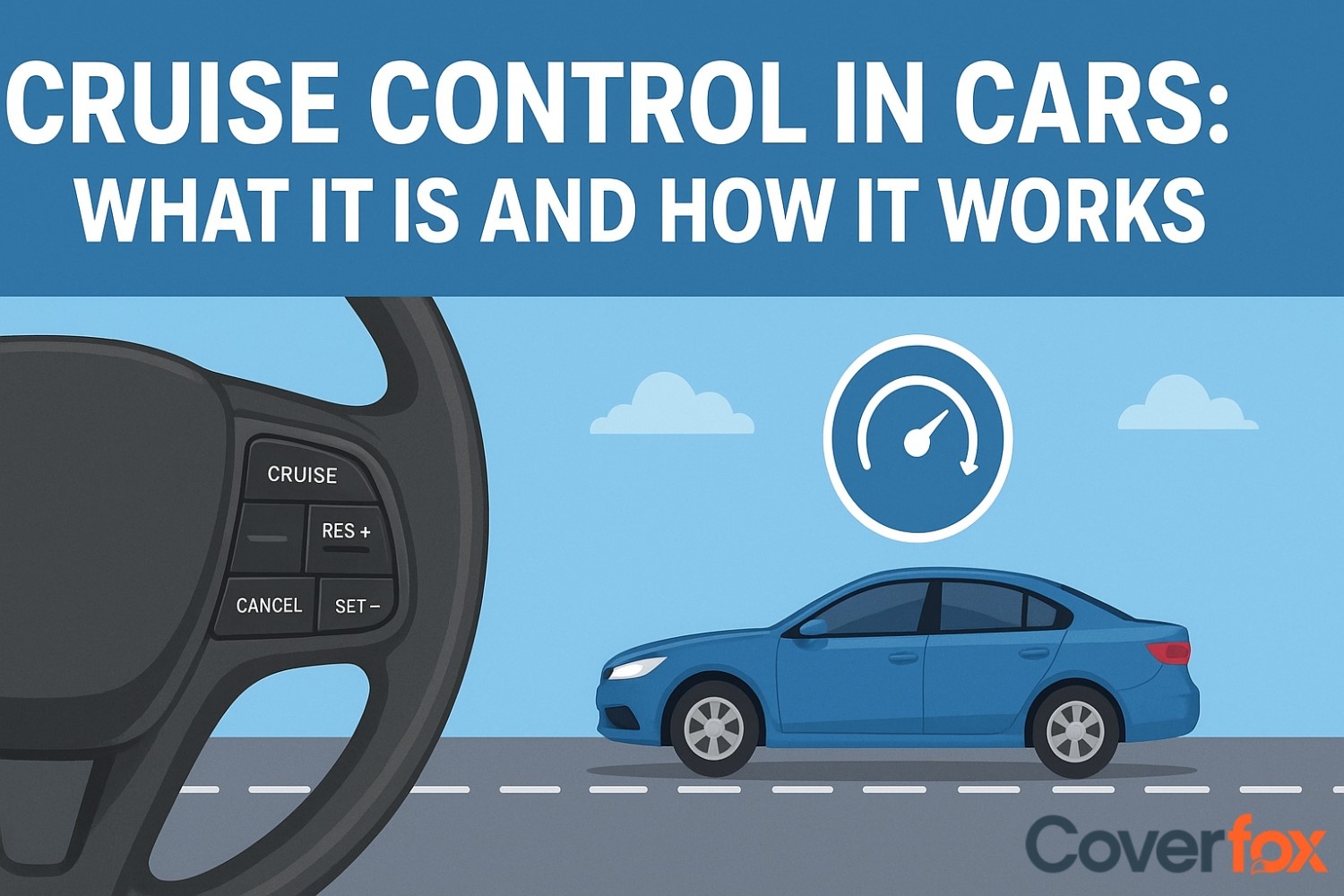
Modern cars now offer advanced versions—like adaptive and dynamic cruise control—that can adjust speed automatically depending on traffic.
What is Cruise Control?
Cruise control is an advanced feature found in modern cars, that helps the vehicle maintain a constant speed, and the driver doesn't have to hold the accelerator continuously. It takes over throttle control and keeps the vehicle steady once it's activated. This feature is especially helpful on highways and long journeys. It reduces the need for constant pedal input, lowers fatigue for the driver and avoids unnecessary acceleration or braking. This not only makes your driving more comfortable but also helps to improve fuel efficiency over long distances and gives less stress to the body. According to the Society of Automotive Engineers (SAE), cruise control is part of Level 1 driver-assist systems that manage acceleration automatically while the driver remains in control of steering.
Benefits of Cruise Control
Cruise control offers multiple advantages, especially on long drives. It reduces driver fatigue, maintains consistent speed for safer driving, and helps improve fuel economy by avoiding frequent acceleration or braking. According to real-world tests by AAA, using cruise control can improve highway mileage by up to 7%.
Types of Cruise Control Systems
Cruise control systems have developed a lot over the years. It has upgraded from simple speed-holding mechanisms to advanced driver-assist technologies. Each system type makes sure that you drive comfortably and also ensures your safety, so it can make your journey more relaxing.
1. Standard Cruise Control
Standard Cruise Control is the basic version, which is designed to maintain a steady speed once it is set by the driver. It helps in minimising the exhaustion on long highway drives with minimal traffic. But the driver still has to brake, accelerate, or change speed manually whenever needed.
2. Adaptive Cruise Control (ACC)
This system monitors vehicles ahead and adjusts speed automatically, due to being equipped with sensors or radar. It ensures that a safe distance is maintained without the need for constant pedal effort. It smoothly accelerates back to the preset speed whenever the road clears, making driving more convenient.
3. Dynamic Cruise Control
Dynamic Cruise Control is the most advanced form, which is designed for heavy or stop-and-go traffic conditions. It can slow down the car to a complete stop if the vehicle ahead halts. The system automatically resumes driving once traffic moves again, offering maximum comfort and safety.
| Type | Key Feature | Ideal For | Driver Input Needed |
|---|---|---|---|
| Standard | Holds set speed | Empty highways | Manual braking |
| Adaptive (ACC) | Adjusts speed using radar/sensors | Moderate traffic | Minimal |
| Dynamic | Can stop and restart automatically | Stop-and-go traffic | Very low |
How Cruise Control Works?
Cruise control works by electronically controlling the car’s accelerator to maintain a steady speed set by the driver. It takes over the accelerator input and ensures that the vehicle continues at the same pace once activated, even on slightly uneven roads.
Activating the System
Throttle Control (Accelerator Control)
Sensors and Feedback Loop
Maintaining Consistency
Manual Override
The driver turns on cruise control and sets the speed using the steering wheel or stalk controls. This chosen speed is recorded by the car’s computer.
The system sends signals to the electronic throttle controller, which adjusts how much fuel and air will enter the engine. This keeps the car moving at the set speed without pressing the accelerator.
Speed sensors continuously monitor the car’s actual speed and compare it with the set speed. If the car slows down or speeds up due to slopes or load, the system adjusts the throttle accordingly.
The throttle is automatically adjusted to ensure speed stays constant. On uphill roads, the system increases throttle to prevent slowing; on downhill slopes, it reduces throttle to avoid overspeeding.
Most modern systems are integrated with the car’s ECU (Engine Control Unit), which constantly monitors throttle input and wheel speed sensors. The driver can instantly override cruise control by pressing the brake, clutch, or accelerator. This ensures safety and gives backup control when needed.

How to Use Cruise Control in a Car?
To use cruise control, accelerate your car to a steady speed (usually above 40 km/h) on a clear highway, switch on the cruise control system, and set your desired speed using the steering controls.
1. Reach a Safe Speed
Accelerate your car to a steady cruising speed, usually above 40 km/h, on a clear and open road. The system can function smoothly without frequent interruptions, which is ensured by this.
2. Activate Cruise Control
Switch on the cruise control feature using the button or stalk provided by the manufacturer. The system is prepared, but the speed is not yet locked until it is set.
3. Set the Desired Speed
Once you’re at a comfortable pace, press the “set” button to allow the system to maintain that speed. From this point, the car will automatically control the throttle to stay steady.
4. Adjust Speed if Needed
Use the “+” or “–” controls on the steering wheel to slightly increase or decrease speed. This allows smooth adjustments without any need to touch the accelerator.
5. Stay Alert and Keep Hands on the Wheel
Cruise control does not mean autopilot; you must drive and watch the road carefully. Staying alert ensures you can respond quickly to traffic changes or hazards.
6. Deactivate or Override
You can detach cruise control by pressing the brake, clutch, or the “cancel” button. This provides you with full manual control whenever you need to slow down or stop.
Safety Precaution: Never use cruise control in rain, fog, or slippery roads. Reduced grip can cause skidding.
Pros and Cons of Using Cruise Control
While it offers several benefits on highways and long drives, it also comes with limitations in certain situations. Knowing both the pros and cons helps the drivers to decide when to use it safely.
| Pros | Cons |
|---|---|
| Reduces driver fatigue on long journeys | Not suitable for heavy traffic or city driving |
| Helps to maintain a consistent speed, improving safety | Unsafe and very risky in bad weather (rain, fog, snow, slippery roads) |
| Improves fuel efficiency by avoiding speed fluctuations | If overused, it can reduce a driver’s alertness |
| Makes highway driving more relaxed and comfortable | May not perform well on steep inclines or winding roads |
| Reduces risk of accidental overspeeding | Requires frequent disengagement in changing road conditions |
Safety Tips for Using Cruise Control
Driving comfort can be improved by cruise control, but risks may be increased if it is used carelessly. By following the right precautions, the system is used only when it is safe, keeping both the driver and the vehicle protected in different road and traffic conditions.
Use Only on Highways or Open Roads
Avoid in Bad Weather
Stay Alert at All Times
Maintain a Safe Distance
Know How to Override Quickly
Avoid on Slopes or Winding Roads
Activate cruise control on long, straight roads with steady traffic. Avoid using it in cities or on crowded roads where frequent braking is required.
Avoid using cruise control during rain, fog, snow, or on slippery surfaces. Reduced grip to the road in such conditions can cause skidding or delayed braking.
Even though the system controls speed, you must keep your hands on the wheel and eyes on the road. Staying attentive ensures a quick reaction to sudden changes.
Keep enough gap between your vehicle and the one ahead, especially if using standard cruise control. Adaptive systems help, but still require caution.
Be ready to disconnect cruise control instantly by braking, pressing the clutch, or hitting the cancel button in case of emergencies.
Uphill or downhill driving may confuse the system and cause inconsistent speeds. Manual control is safer in such terrains. Always remember, cruise control assists the driver—it doesn’t replace attentiveness. Safe usage depends on judgment and road conditions.
Cruise Control Cars in India
Once a feature reserved for premium cars abroad, cruise control is now being offered in more accessible models in India. Here is the detailed table about car models and its cruise control:
| Model | Trim(s) Offering Cruise Control | Approx. Price Range (Ex-showroom)* |
|---|---|---|
| Tata Tiago | XZ+, XZ+ Dual-Tone, XZA+ | ₹6.8–₹8.5 lakh |
| Hyundai Grand i10 Nios | Sportz (and above) | ~₹7.2 lakh |
| Maruti Suzuki Swift | ZXI+, etc. | ~₹9 lakh |
| Hyundai Aura | SX / SX(O) | ~₹8 lakh |
| Hyundai i20 | Sportz & higher trims | ~₹8.4 lakh |
| Mahindra XUV 3XO | Select trims | ~₹13.9–₹15.5 lakh |
| Honda City | V trim and above | ~₹12–₹13 lakh |
| Hyundai Creta | SX Tech and above | ~₹16.5–₹17 lakh |
NOTE: Prices and trims are based on manufacturer listings as of October 2025 and may vary by location.
Cruise Control in Future Applications
Future applications in modern cars aim to integrate advanced sensors, cameras, and steering assist technologies to move closer to fully automated driving. These innovations will allow vehicles to adjust speed, maintain safe distances, navigate lanes, and respond intelligently to changing traffic and road conditions. Adaptive Cruise Control (ACC) is one such feature that helps maintain speed and distance automatically. In India, cars like the MG Astor and Mahindra XUV700 already combine adaptive cruise control with lane-keep assist, moving toward Level 2 semi-autonomous driving.
Role of Adaptive Cruise Control in Autonomous Driving
Adaptive Cruise Control (ACC) monitors vehicles ahead using radar or LiDAR sensors and adjusts speed automatically. Maintaining safe distances and reacting to traffic patterns reduces the reliance on human acceleration and braking. This continuous feedback loop forms the basis for more advanced vehicle automation.
Integration of Steering Aid Technology
Steering assist technology works along with ACC to keep the car centred in its lane and handle curves and turns. It allows the vehicle to manage both speed and direction autonomously when combined with ACC. This integration is crucial for semi-autonomous driving, where cars can operate safely with minimal driver intervention.
Key Takeaways
Cruise control helps you to enhance your driving comfort and fuel efficiency, especially on highways and long stretches of road. To use it effectively, it's important to understand the car’s system and its limitations, alertness must be maintained at all times, and the system must be ready to be overridden when necessary. It should only be used in suitable conditions, avoiding heavy traffic or bad weather, and knowing whether your vehicle has standard, adaptive, or dynamic cruise control ensures safer and more efficient usage.
Additionally, using cruise control responsibly can indirectly impact car insurance, as safer driving habits and reduced chances of accidents may help maintain lower premiums or prevent claims. When used wisely, cruise control not only reduces driver fatigue but also contributes to a smoother, safer driving experience overall.
Read More:
How Advanced Blind Spot Mirrors Improve Your Safety on the Road?
Advanced Driver Assistance System (ADAS) - Working, Levels & Features
Check Engine Light: Causes and What It Means
Frequently Asked Questions
What is the purpose of cruise control in a car?
Cruise control automatically maintains your car’s speed, reducing fatigue and improving comfort on long drives.
Is it better to drive with cruise control on or off?
Generally, it’s better to use cruise control on dry, open highways for comfort and fuel efficiency, but turn it off in heavy traffic, on wet roads, or winding/hilly terrain where constant manual control is safer.
Is cruise control safe to use?
Yes, but only on open highways in good weather; avoid using it in traffic or slippery conditions.
Can I use cruise control on any road?
No, it’s best suited for highways or open roads, not on city streets or steep, winding roads.
Does cruise control save fuel?
Yes, maintaining a constant speed can improve fuel efficiency by 5–7% on highways.
What are the negative effects of cruise control?
Due to cruise control, the driver can reduce his alertness and is unsafe in heavy traffic, poor weather, or slippery roads.
Do Indian cars have cruise control?
Yes, many modern Indian cars have a smart feature of cruise control. It is available in many models and various vehicle types like hatchbacks, sedans, and SUVs.
Can I use cruise control in traffic?
It is not recommended to use cruise control in traffic, as frequent braking and speed changes make it unsafe in heavy traffic.
Can cruise control affect insurance premiums?
Indirectly, yes—safe driving habits with consistent speeds can help avoid claims and keep premiums stable.
Disclaimer - This article is for informational purposes. Always refer to your vehicle’s manual or authorized dealer before using or activating cruise control.