For many car buyers in India, choosing the right car for their travels is a very important decision. Whether you are looking for a classy, elegant sedan or a sporty, practical hatchback, both offer their own unique set of features, including pros and cons. If you’re wondering what your best choice is between a hatchback vs sedan, then do not worry, because the guide below covers everything related to these two cars that you should know about.
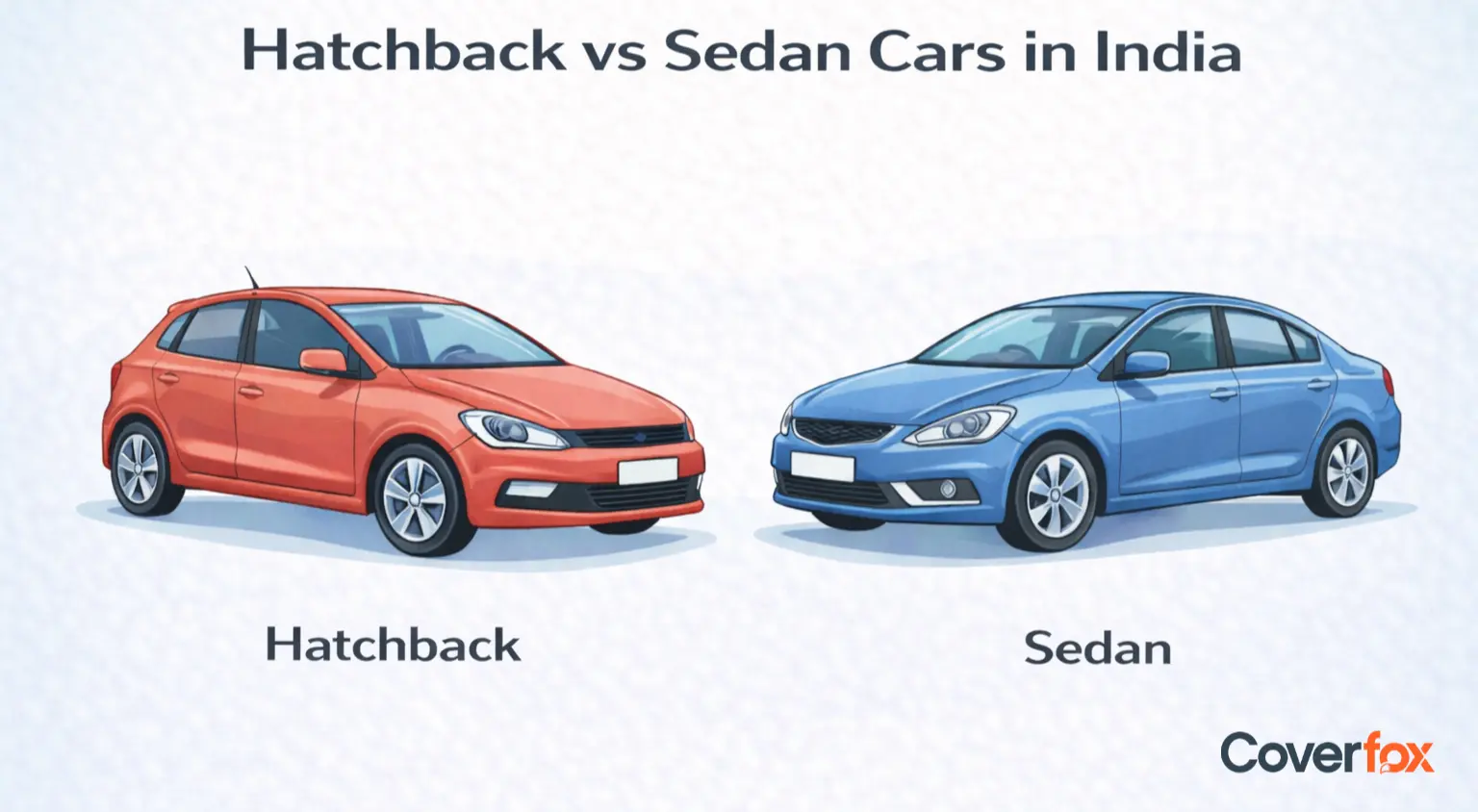
This guide will further explain the key differences between hatchback and sedan cars, their benefits, popular models in India, and how to decide which car suits your needs best.
What is a Hatchback Car?
A hatchback is like a two-box body, consisting of an engine and passenger compartment. It provides a large rear door that swings open to reveal the main cabin, which doubles as a cargo area. Its boot exists inside the main body of the car. These are sporty, compact cars that can accommodate about 4-5 people, and are ideal for congested urban situations and tiny parking places.
Best Hatchback Car Models in India
Here are some reputed hatchback models to look out for in India:
Hyundai i20
Maruti Suzuki Swift
Skoda Fabia
Tata Altroz
Tata Tiago
Maruti Suzuki Baleno Zeta
What is a Sedan Car?
Sedans have a three-box body, consisting of an engine compartment, passenger compartment and boot. In these cars, the rear doors do not swing up and are known to be bigger and roomier than hatchbacks. They offer a smooth driving experience, especially in terms of better interior space, aerodynamic design, comfort and safety, making them suitable for long drives.
Best Sedan Car Models in India
After looking at what a sedan car is, let us see the best models available in India:
Honda City
Hyundai Verna
Maruti Suzuki Dzire
Toyota Camry
Skoda Slavia

Key Differences Between Hatchback and Sedan
Check out the table below, which highlights the difference between hatchback and sedan:
| Parameter | Hatchback | Sedan |
|---|---|---|
| Design Type | Hatchbacks have a two-box design where the engine and passenger area are combined. | Sedans have a three-box design with a separate trunk. |
| Size | Hatchbacks are smaller in size compared to sedans. | Sedans are larger and longer than hatchbacks. |
| Fuel Economy | Hatchbacks are typically more fuel-efficient since they weigh less. | Sedans are usually less fuel-efficient because they are heavier. |
| Rear Visibility | Hatchbacks offer better rear visibility due to a larger rear window. | Sedans have lower rear visibility due to the sloped trunk design. |
| Cabin Space | Hatchbacks generally provide less cabin space. | Sedans usually have more spacious cabins for passengers. |
| Wheelbase | Hatchbacks have a shorter wheelbase, making them easier to manoeuvre. | Sedans feature a longer wheelbase, contributing to a smoother ride. |
| Boot Space | Hatchbacks usually have smaller, combined cargo areas. | Sedans provide larger, separate trunks for luggage. |
| City Use | Hatchbacks are easier to drive and park in cities due to their compact size. | Sedans are harder to drive and park in cities because of their larger size. |
| Highway Use | Hatchbacks can be less stable at high speeds. | Sedans are generally more stable during high-speed highway driving. |
| Price | Hatchbacks are generally less expensive. | Sedans tend to be more expensive. |
| Resale Value | Hatchbacks often have better resale value. | Sedans usually have lower resale value compared to hatchbacks. |
| Comfort | Hatchbacks can be less comfortable due to a shorter wheelbase. | Sedans offer a more comfortable ride due to their longer wheelbase. |
| Rear Crash Safety | Hatchbacks may have lower rear crash safety ratings. | Sedans generally provide better rear crash safety. |
Disclaimer: The information in this table is compiled from online sources for general reference. Specifications, features, and performance may vary by car model and manufacturer.
Advantages and Disadvantages of Hatchbacks
The pros of hatchbacks are - they have high rear visibility and flexible cargo space, are less expensive than sedans, offer efficient fuel economy, and are very easy to drive in cities. The cons of hatchbacks are - have less spacious cabin space, aesthetic appeal is limited, due to rear visibility, privacy is reduced, rear crash safety is low, and less stable at high speeds, making long drives difficult.
Advantages and Disadvantages of Sedans
The pros of sedans are - have a classic and elegant design, can drive easily on highways, sedan cars have high rear crash safety, offer an enclosed trunk for added privacy, and offer generous interior space with more legroom. The cons of sedans are - bigger size makes it difficult to park, fuel efficiency may be potentially lower, cargo space flexibility is less, and may be more expensive than hatchbacks.
How to Choose Between a Hatchback and a Sedan?
Take note of the following so you can choose between a sedan and a hatchback:
Think about driving needs
Comfort for passengers
Style choices
Consider the budget
Fuel Efficiency
Driving environment
Check the cost of insurance
On maintenance/ownership costs
On safety ratings
Based on your daily driving habits, if you often carry large or bulky items, a hatchback is a good choice because of its flexible cargo space. If you want a comfortable and roomy ride, a sedan might suit you better.
If you often drive with rear passengers, sedans offer more legroom and comfort in the back seats, making them a better option for families or groups.
Decide whether you prefer the sportier, youthful look of hatchbacks or the classic, elegant design of sedans.
Compare prices for hatchback and sedan models. Note that generally, hatchbacks cost less than sedans.
If you mostly drive in the city, a hatchback’s better fuel efficiency at low speeds and in stop-and-go traffic can save you money in the long run. However, for highway or mixed use, many modern sedans now offer equal or better highway mileage, narrowing that advantage.
For city driving with tight parking spaces, hatchbacks are easier to manoeuvre due to their smaller size, while sedans are better suited for highway driving and long trips.
Hatchbacks register about 10–15% lower settlements … than sedans.
Hatchbacks are usually cheaper to run (smaller engines, lighter frames)
A listing of crash-test results for many models in India via Global NCAP
Conclusion
In all, the choice you make between a hatchback vs sedan all boils down to your personal preferences, be it in terms of needs, budget, driving style or other factors. Make an effort to clearly understand the difference between the two, so you can pick the ideal car that supports you on all your drives.
After picking the car of your choice between a sedan and a hatchback, don't forget to safeguard it with a valid car insurance policy.
Also Read:
Classification of Cars and How Does It Affect Your Auto Insurance Policy?
Guide to Sedan Insurance and Key Things to Know Before Buying
Disclaimer: Information in this article is for general guidance only. Car specifications, prices, and safety ratings may vary by model and manufacturer. Verify details with official sources before purchase. Insurance options and costs may differ; consult a licensed provider for accurate advice.
Frequently Asked Questions on Sedans & hatchback
Is it more expensive to maintain a sedan than a hatchback?
In general, sedans may be more expensive to maintain as they are larger and have more weight.
Why are hatchbacks suitable for parking in tight spaces?
The small, compact design of hatchbacks makes them beneficial for parallel parking or navigating tight spaces. Due to their shorter wheelbase, it is easier to manoeuvre these vehicles as well.
Which car offers better storage, the hatchback or sedan?
In terms of interior space and legroom, sedans have separate space for people and cargo due to their three-box body design.
Which car is more stable at high speeds, a hatchback or a sedan?
Since sedans have a longer wheelbase design, they tend to be more stable at high speeds.