Leasing a car in India is a cost effective way to use a car without owning it. Most leasing companies (lessors) mandate comprehensive lease car insurance to the lessees, for financial safety. Gap insurance is also recommended for lessees to ensure no out-pocket-expenses are paid in case a mishap happens.
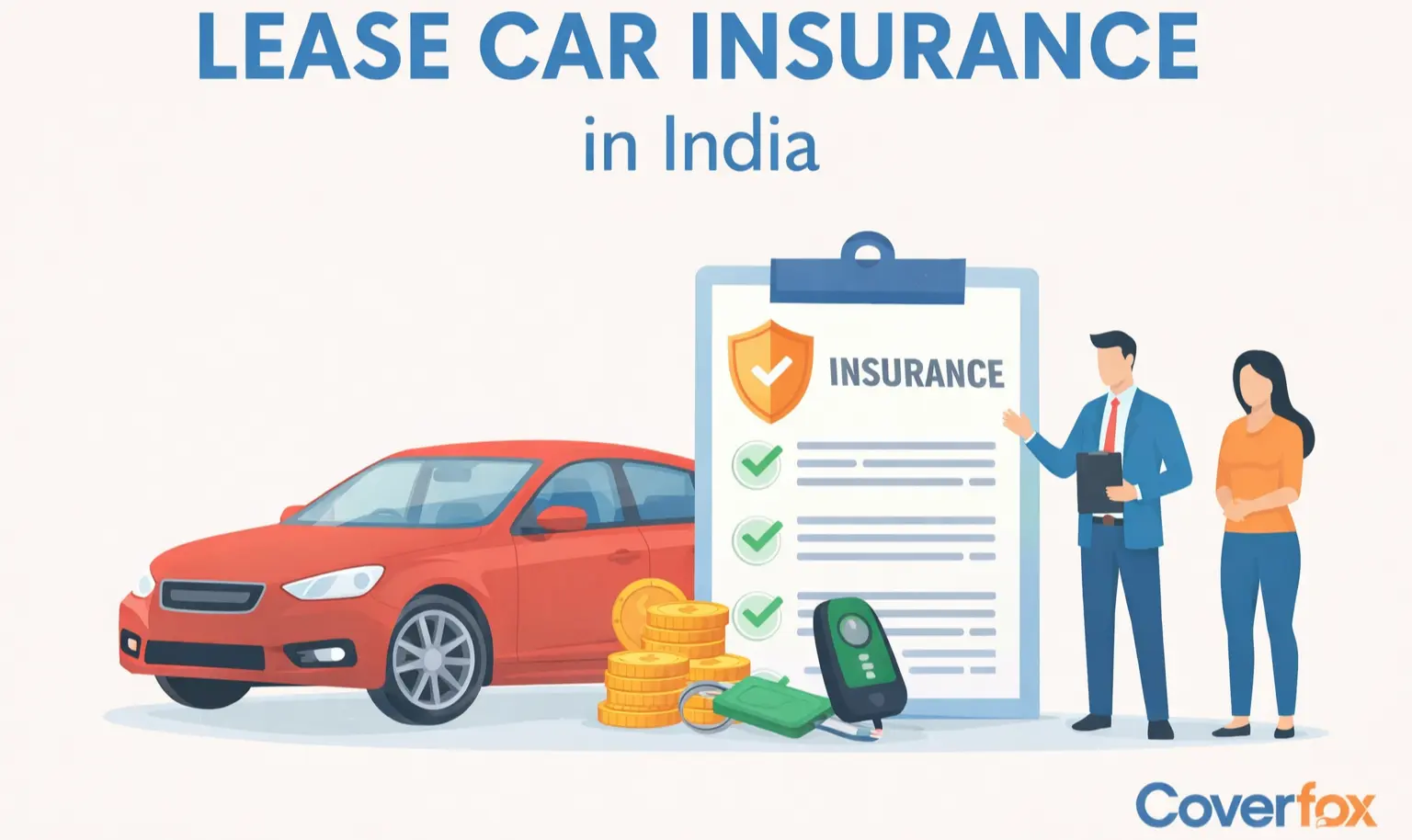
Lease car insurance is a specialised policy designed for vehicles held under a long-term rental or leasing agreement rather than outright ownership. While it provides standard third-party and own-damage protection, it often requires higher liability limits and specific add-ons like gap insurance to satisfy the lessor's requirements. This ensures that both the driver and the leasing company (lessor) are financially protected against total loss, theft, or significant depreciation.
How Does Car Leasing Work in India?
If you are going on a trip in India or relocating for a short period of time and do not own a personal car, it makes sense to lease or rent a car rather than buy one outright. It is a cost-effective and budget-friendly option.
The lease agreements are generally for 2-5 years.
In some lease agreements, you are given the option to buy the car at the end of the agreement.
The leased car has to come with third-party insurance to maintain traffic mandates.
You can upgrade to comprehensive car insurance plans to further increase the Leaprotection.
Down payment for leased cars is not needed, and mostly maintenance costs of the car are included in the lease agreement.
Why Is Insurance Mandatory for Leased Cars?
Just like any other car on the Indian roads, leased cars are required by law to have at least third party car insurance. On the other hand, lessors generally mandate the lessee to have leased car insurance, for further protection, as the car is not privately owned. Gap insurance is recommended for these types of cars as third-party car insurance is not enough.

What Does Lease Car Insurance Typically Cover?
Lease car insurance is a structured safety net that ensures the vehicle is restored to its original value for the leasing company while protecting you from legal and financial liabilities. While the specific terms are dictated by your lease agreement, a comprehensive policy for a leased vehicle typically includes the following key pillars:
Accidental Damage to the Leased Car
Theft and Total Loss
Fire and Man-made Calamities
Natural Disasters
Third-Party Injury and Property Damage
Personal Accident Cover
Covers the cost of repairs for damages resulting from collisions or road accidents. Since the leasing company owns the car, they often mandate "Zero Depreciation" cover to ensure high-quality parts are used without out-of-pocket costs for you.
Provides compensation up to the Insured Declared Value (IDV) if the car is stolen or damaged beyond repair (usually more than 75% of its value).
Protects against losses from accidental fire, explosions, self-ignition, or malicious acts like riots, strikes, and vandalism.
Covers damages caused by "Acts of God," including floods, earthquakes, cyclones, hurricanes, and landslides.
A legal requirement that pays for bodily injury, death, or damage to another person's property (up to ₹7.5 lakh) caused by the leased vehicle.
Provides mandatory financial support to the driver in the event of accidental death or permanent disability while operating the vehicle.
Types of Insurance Coverage Commonly Required for Leased Cars
To fully protect yourself from out-of-pocket expenses, you should consider several specialised add-ons and protections in your leased car insurance policy.
Collision Damage Waiver (CDW)
Theft Protection
Third-Party Liability
Super Collision Damage Waiver (SCDW)
Uninsured Motorist Protection (UMP)
Supplemental Liability Insurance (SLI)
Roadside Assistance Cover (RSA)
This acts as a buffer for minor bodywork repairs. It is particularly useful for urban riders and drivers, ensuring that small dents or scratches sustained in heavy traffic don't lead to high repair bills or penalties from the lessor.
This coverage ensures that if the vehicle is stolen or damaged during an attempted theft, the financial burden does not fall on you. This is a critical requirement for lessors to protect their assets in high-risk areas.
While often bundled into lease agreements, this is the legal baseline. It covers injuries to others or damage to their property. However, standard limits can be low, making additional layers of protection necessary.
For more extensive protection, an SCDW goes beyond the surface. It covers significant structural or mechanical damage that a standard CDW might exclude, offering peace of mind for major accidents.
If you are involved in a collision with a driver who lacks insurance, UMP covers your medical bills and repair costs. It prevents you from being left with a massive bill simply because the at-fault party was uninsured.
SLI provides an extra "umbrella" of protection. If a third-party claim exceeds the basic limits provided by the leasing company's default policy, SLI kicks in to cover the excess, protecting your personal savings.
A must-have for long-term leases, RSA handles the logistics of a breakdown. Whether it’s a flat tyre, a dead battery, or running out of fuel, this service ensures you aren't stranded and that the vehicle is towed safely to an authorised centre.
Standard Car Insurance vs Lease Car Insurance
While standard car insurance and lease car insurance share the same foundation of protection, the key differences lie in ownership, mandated coverage limits, and financial liability to a third party (the lessor).
| Feature | Standard Car Insurance | Lease Car Insurance |
|---|---|---|
| Ownership | You own the vehicle outright. | The leasing company (lessor) owns the vehicle. |
| Policy Mandates | Only Third-Party cover is legally required. | Comprehensive cover is almost always mandatory for the lessor. |
| Liability Limits | Chosen by the owner based on personal risk. | Often requires higher predefined liability limits set by the lessor. |
| Loss Payee | Claims are paid directly to you. | Total loss payouts are typically paid to the leasing company first. |
| Gap Insurance | An optional add-on for new car owners. | Frequently required to cover the "gap" between market value and lease balance. |
| Maintenance | Owner's choice of garage and parts. | May require repairs only at authorised centres to maintain residual value. |
What Is Gap Insurance and Why Is It Important for Leased Cars?
Gap Insurance (Guaranteed Asset Protection) is a specialised add-on that bridges the financial "gap" between the market value of your car and the actual amount you still owe on your lease agreement.
Since cars depreciate the moment they leave the showroom, their Insured Declared Value (IDV) often drops much faster than your lease balance. If your leased vehicle is stolen or declared a total loss in an accident, your standard insurance will only pay the current market value. Without Gap Insurance, you would be legally obligated to pay the leasing company the remaining balance of the lease out of your own pocket.
Covers the IDV Deficit
Mitigates High Depreciation Risk
Total Loss & Theft Protection
Lessor Mandates
It pays the difference between the insurer's settlement (market value) and the total outstanding lease balance, including any early termination fees.
New cars can lose 20% to 30% of their value in the first year; Gap Insurance ensures this rapid loss doesn't become your financial burden.
In "worst-case" scenarios where the car cannot be recovered or repaired, it ensures your debt to the lessor is settled in full.
Because leasing companies own the asset, they often make Gap Insurance compulsory to protect their investment from your potential inability to pay a large lump sum after a wreck.
Who Is Listed as the Owner and Loss Payee in Lease Car Insurance?
In lease car insurance, the way "ownership" and "payment rights" are listed on the policy is different from a standard car insurance policy because the person driving the car is not the person who legally owns it.
The Owner (Lessor)
The Loss Payee (Lessor)
The Named Insured (Lessee)
Paying the monthly premiums.
Maintaining the policy according to the lease agreement's standards.
Handling minor repair claims (where the payout might go to you or the repair shop).
The leasing company (Lessor) is listed as the Registered Owner of the vehicle. Since they hold the title to the car, they have the primary "insurable interest." Even though you are the one paying the premiums and driving the vehicle, the policy must reflect that the asset belongs to the leasing firm.
The leasing company is also designated as the Loss Payee. This is a critical legal clause that ensures that if the car is stolen or declared a "total loss" (irreparably damaged), the insurance company sends the claim settlement check directly to the leasing company first.
You, the Lessee, are typically listed as the Named Insured. This means you are responsible for:
How Much Does Lease Car Insurance Cost?
In 2026, the cost of insurance for leased cars in India remains higher than for privately owned vehicles. This is primarily because leasing companies (lessors) mandate comprehensive car insurance with specific high-value add-ons to ensure their asset is fully protected against all risks.
Insurance Cost Breakdown for Leased Cars (Estimated 2026)
The following table outlines the estimated annual costs for insuring a leased vehicle. These rates include the latest IRDAI-regulated third-party premiums and average market rates for own-damage coverage.
| Insurance Type | Average Yearly Cost (₹) | Description |
|---|---|---|
| Third-Party Insurance | ₹2,500 – ₹8,500 | Mandatory by law; covers only legal liabilities toward third parties. |
| Comprehensive Insurance | ₹12,000 – ₹28,000 | Covers own-vehicle damage, theft, and natural calamities; mandated by most lessors. |
| Mandatory Add-ons | ₹3,000 – ₹7,000 | Includes Zero Depreciation and Return to Invoice (RTI) or Gap Insurance. |
| Leased Luxury Cars | ₹40,000 – ₹65,000+ | Significantly higher due to high IDV and expensive spare parts/repairs. |
Note: Prices are indicative and subject to insurance, and other premium affecting factors.
How to Choose the Right Insurance for a Leased Car?
Choosing the right insurance for a leased car is more about compliance than just personal preference. Since the leasing company (the lessor) is the actual owner, they set the rules. You can follow these tips to ensure your insurance policy is complete and comprehensive without spending extra:
Review Lease Agreement Clauses
Confirm Gap Insurance Requirements
Match Insurer Coverage with Lessor Conditions
Check Deductibles and Exclusions
Verify Claims Process Efficiency
Before shopping, scrutinise your lease contract. Look for specific requirements regarding the type of policy (usually comprehensive) and any mandatory liability limits (often higher than the standard ₹7.5 lakh property damage limit).
Check if the lessor mandates Gap Insurance or Return to Invoice (RTI) cover. In 2026, most Indian lessors require this to ensure the full lease balance is paid off if the car is totalled, as standard IDV (market value) is rarely enough.
Ensure your chosen insurer can provide a policy where the leasing company is listed as the "Loss Payee" and "Hypothecated Party." The policy must align perfectly with the lessor's name and address as per the RC.
Leasing companies often limit how high your "Voluntary Deductible" can be. A higher deductible lowers your premium but might violate your lease terms. Also, verify that the policy doesn't exclude specific drivers or usage types permitted by your lease.
Since repairs on a leased car often must be done at authorised brand workshops to maintain the car's residual value, choose an insurer with a vast cashless garage network that includes the manufacturer’s service centres.
Common Mistakes to Avoid When Insuring a Leased Car
When insuring a leased car, minor oversights can lead to severe financial penalties or even the cancellation of your lease agreement. Below are the most common mistakes to avoid:
Buying Only Third-Party Insurance
Ignoring Gap Insurance/RTI
Not Disclosing Lease Status
Choosing Low Liability Limits
Overlooking Loss-Payee Endorsement
Fails to meet the lessor’s mandatory requirement for a comprehensive policy that covers own-vehicle damage.
Leaves you personally liable for the difference between the depreciated market value (IDV) and the total outstanding lease balance.
Risking claim rejection by failing to identify the leasing company as the legal owner on the policy.
Opting for lower coverage than specified in the lease contract, leading to potential legal and financial penalties.
Failing to include a hypothecation clause, which ensures claim payouts are correctly directed to the lessor.
Conclusion - Lease Car Insurance Protects Both You & the Leasing Company
Having lease car insurance is not just a mandate - it's a financial safety net, for the lessee and the leasing company. Secure your wallets before renting out a car, because mishaps can happen at any time. Drive with a clear mind, and no tension about the finances because insurance has got you covered.
Also Read:
Disclaimer: * Savings are based on the maximum discount provided on own damage premium as offered by our car insurer partners.
FAQs on Lease Car Insurance
Is lease car insurance mandatory in India?
Yes. While the law only mandates Third-Party insurance, almost all leasing agreements in India legally require you to maintain a Comprehensive Insurance policy to protect the lessor's asset.
Is rental car insurance & lease car insurance the same?
No. Rental insurance is typically a short-term, daily protection provided by a rental agency. Lease insurance is a standard annual motor policy customized for long-term use (2–5 years) with the lessor named as the owner.
What is the insurance policy for a leased car?
It is a comprehensive policy that includes Third-Party Liability and Own Damage. Crucially, it must include a Hypothecation/Loss Payee clause in favor of the leasing company.
Can I get insurance on a leased car?
Yes. You can purchase insurance from any IRDAI-approved insurer. You just need to provide the lease agreement details so the insurer can correctly list the leasing company as the legal owner.
What is the best way to insure a leased car?
The most effective way is to buy a comprehensive policy with Zero Depreciation and Return to Invoice (RTI) add-ons. This ensures that in a total loss, the full original price is paid, covering your debt to the lessor.
Can I buy third-party insurance for a leased car?
Technically yes, but it’s a breach of contract. While it meets the minimum legal requirement, most leasing companies will penalize you or cancel your lease if you do not have a full comprehensive policy.
What happens if my leased car is stolen or totally damaged?
The insurer pays the claim amount directly to the leasing company (the Loss Payee). If the payout is less than your remaining lease balance, you must pay the difference unless you have Gap/RTI insurance.
Is gap insurance compulsory for leased cars?
Often, yes. While not a government rule, most Indian lessors make Gap Insurance or RTI mandatory to ensure their financial interest is fully covered regardless of the car’s market depreciation.
Who receives the claim amount for a leased car?
For total loss or theft, the leasing company receives the check. For minor repairs, the payment usually goes directly to the authorized network garage via a cashless claim process.
Can I choose my own insurer for a leased vehicle?
Generally, yes. You are free to shop around for the best premium as long as the policy meets the specific coverage and liability limits stated in your lease agreement.
Is lease car insurance more expensive than owned car insurance?
Yes. It tends to be higher because lessors mandate "Zero Dep" and "RTI" add-ons, along with higher liability limits, which naturally increase the annual premium.
Do I need commercial insurance for a leased car?
Only if you are using the car for business purposes (like a commercial fleet). If you are leasing a car for personal commutes, a private car comprehensive policy is sufficient.
Can someone else drive my leased car?
Yes, as long as they have a valid license. However, you must check your lease agreement, as some lessors require all regular drivers to be officially listed on the insurance policy.
What happens to insurance when the lease period ends?
If you return the car, the policy is terminated. If you buy out the car, you must update the insurance and RC to remove the lessor's name and transfer the policy into your individual name.