The propeller shaft, also known as the drive shaft, is a crucial component of a vehicle’s drivetrain that transfers power from the transmission to the differential and wheels. It is commonly used in rear-wheel drive (RWD), four-wheel drive (4WD), and all-wheel drive (AWD) vehicles where the engine and driven wheels are positioned far apart.
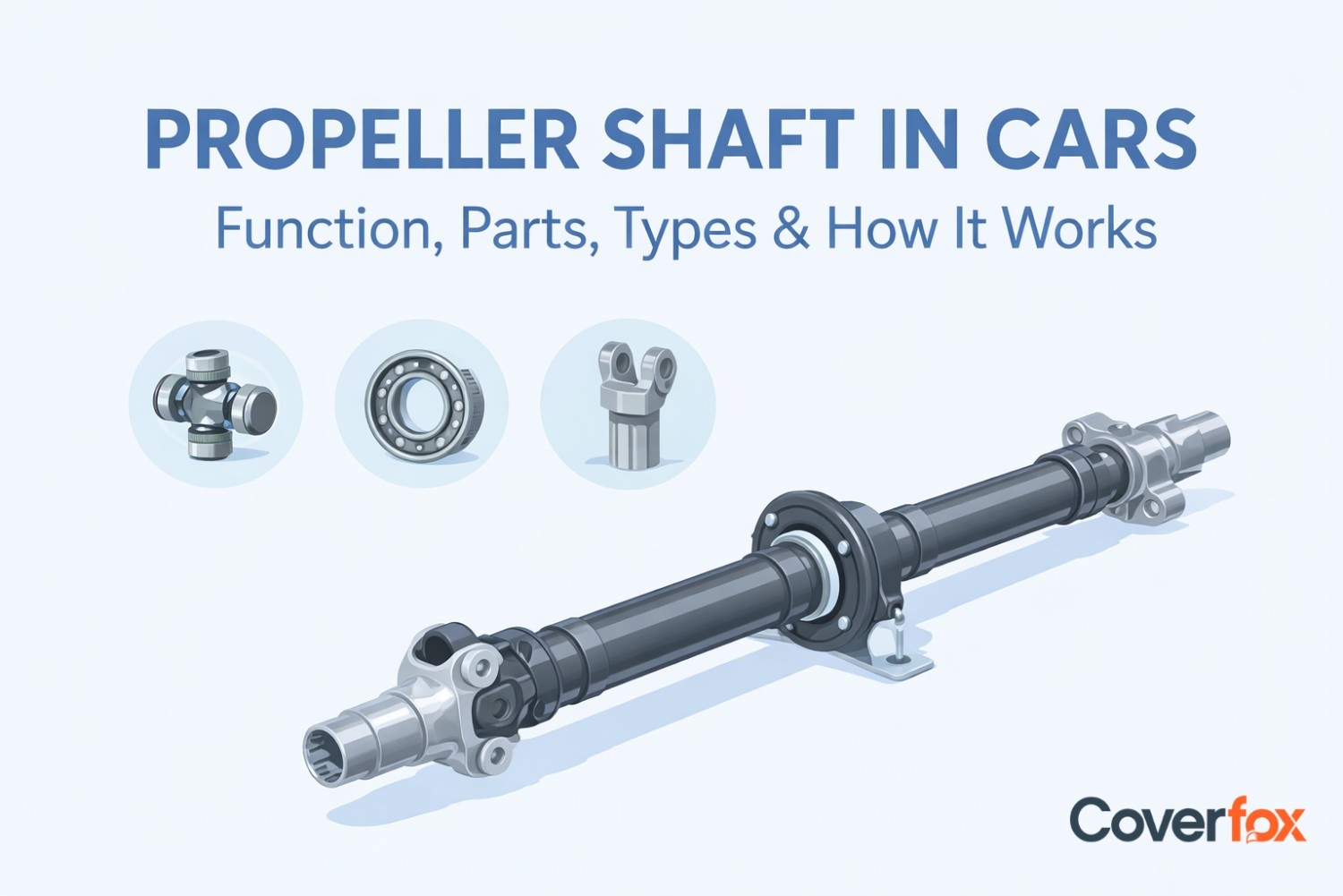
Designed to handle high torque and rotational speed, the propeller shaft uses components such as universal joints, slip joints, and center bearings to accommodate movement caused by suspension travel and road conditions. Understanding how the propeller shaft works, its components, and the signs of potential failure can help vehicle owners maintain smoother performance and avoid costly mechanical issues.
Overview of the Propeller Shaft in Vehicles
A propeller shaft in automobile engineering is the rotating mechanical element that transmits torque and rotational motion from the gearbox (transmission) to the differential or wheel axles. The powertrain layout must place the engine and driven wheels at a distance, such as in rear- and all-wheel-drive vehicles.
Key Components of a Propeller Shaft in Cars
Different kinds of parts make up a conventional propeller shaft assembly. They include the following:
Shaft tube:
Universal joints (U-joints):
Slip joint:
Centre bearing:
Flanges or yokes:
A high-strength cylindrical tube usually manufactured from steel or aluminum to resist torsional loads.
Flexible joints located at each end that accommodate angular movement between the gearbox and differential.
Allows the shaft to change length in response to suspension movement.
The centre bearing is used in a multi-section propeller shaft assembly to support the shaft and minimize vibration of the shaft assembly.
Connect the shaft to the transmission and differential.
All of these components are manufactured to handle high speed and torque and still maintain their designated levels of dynamic balance and structural integrity.
Role of the Propeller Shaft in Power Transmission
The function of the propeller shaft in an automobile covers several mechanical roles:
Transmits torque from the gearbox output to the differential input without significant power loss.
Provides for deviations from centre shaft alignment as a result of alterations to suspension articulation or chassis movement.
Allows transmitting power between the gearbox and rear axle through variation in height above ground level.
The uniformity of the rotation provides a consistent speed of travel, thereby stabilizing the vehicle's motion.

Classification of Propeller Shafts in Automobiles
There are several methods of classifying propeller shafts of automobiles. Propeller shafts are manufactured using different types depending on the design of the vehicle and the performance required:
1. Single-piece shaft:
A single, tubelike piece that is used primarily where the distance between the transmission and the rear axle is very short.
2. Two-piece shaft:
Comprises two sections with a centre bearing for longer wheelbase vehicles.
3. Multi-piece (three-piece) shaft:
Used in large vehicles to reduce vibrations and to produce better stabilization.
With the development of materials, new lightweight and high-strength materials have been introduced that utilize carbon fiber materials. The majority of performance-type propeller shafts now have a carbon fiber composition, as engineered products.
Practical Applications of Drive Shafts
The propeller shaft is used to transfer power between various drivetrain elements in multiple automotive and industrial systems:
Rear-wheel and all-wheel drive vehicles: Core driveline component.
Commercial and heavy-duty vehicles: Longer shafts in buses, trucks, and utility vehicles.
Agricultural and construction machinery: Transfers power from the engine to both the implement and the wheels.
Marine and industrial equipment: Translates engine power to propellers or driven machinery.
The versatility of the propeller shaft makes it an essential component of any drive or non-drive system using torque from one machine to another when the distance involved is not fixed and/or the connected parts move relative to each other during operation.
Key Takeaways
The propeller shaft is essential to the car’s drivetrain, as it helps transmit power from the engine to the wheels. Understanding the function and construction of the propeller shaft will clarify its importance for vehicle speed and handling. Propeller shaft design/material choices will have an impact on a vehicle’s handling, noise, vibration, and overall durability, making it an important consideration even when evaluating four wheeler insurance coverage and vehicle upkeep.
Explore More Articles to Read:
All-Wheel Drive (AWD) vs Four-Wheel Drive (4WD)
Front Wheel Drive vs Rear Wheel Drive - Which is Better?
Complete Guide to the Camshaft in Automobiles
Frequently Asked Questions
What is the purpose of a front propeller shaft?
The front propeller shaft transmits torque from the transfer case to the front differential, facilitating four-wheel traction in 4WD or AWD systems.
What are the main parts of a propeller shaft?
Shaft tubes, universal joints, slip joints, center bearings (if fitted), and flanges are the main components of the propeller shaft assembly.
What purpose does the propeller shaft serve?
The propeller shaft transmits rotational energy from the automotive transmission to either the axles or the wheels, facilitating the transfer of this rotational energy through movement and misalignment.
Can a propshaft be repaired?
Minor issues such as worn universal joints or imbalance can be serviced; however, major damage often necessitates replacement for safety and performance.
What are the signs of a bad propeller shaft?
Some common signs are vibration at high speeds, clunking sounds when speeding up, and visible shaft play or joint wear.
What causes propeller shaft failure?
Failing due to poor balance, worn joints, lack of proper lubrication, or damage caused by road debris may occur in various ways.
Disclaimer: The information provided in this article is intended for general educational purposes only. It explains automotive components and vehicle mechanics to help readers better understand how vehicles function. This content does not constitute mechanical advice, vehicle repair guidance, or insurance policy terms. Insurance coverage, claim eligibility, and repair costs may vary depending on the insurer, policy type, and vehicle condition.