The Motor Vehicles Act in India governs road safety, driver conduct, and penalties for violations. Among its provisions, Section 184 of the Motor Vehicle Act addresses offenses related to dangerous driving. It establishes penalties to deter behavior that may endanger public safety.
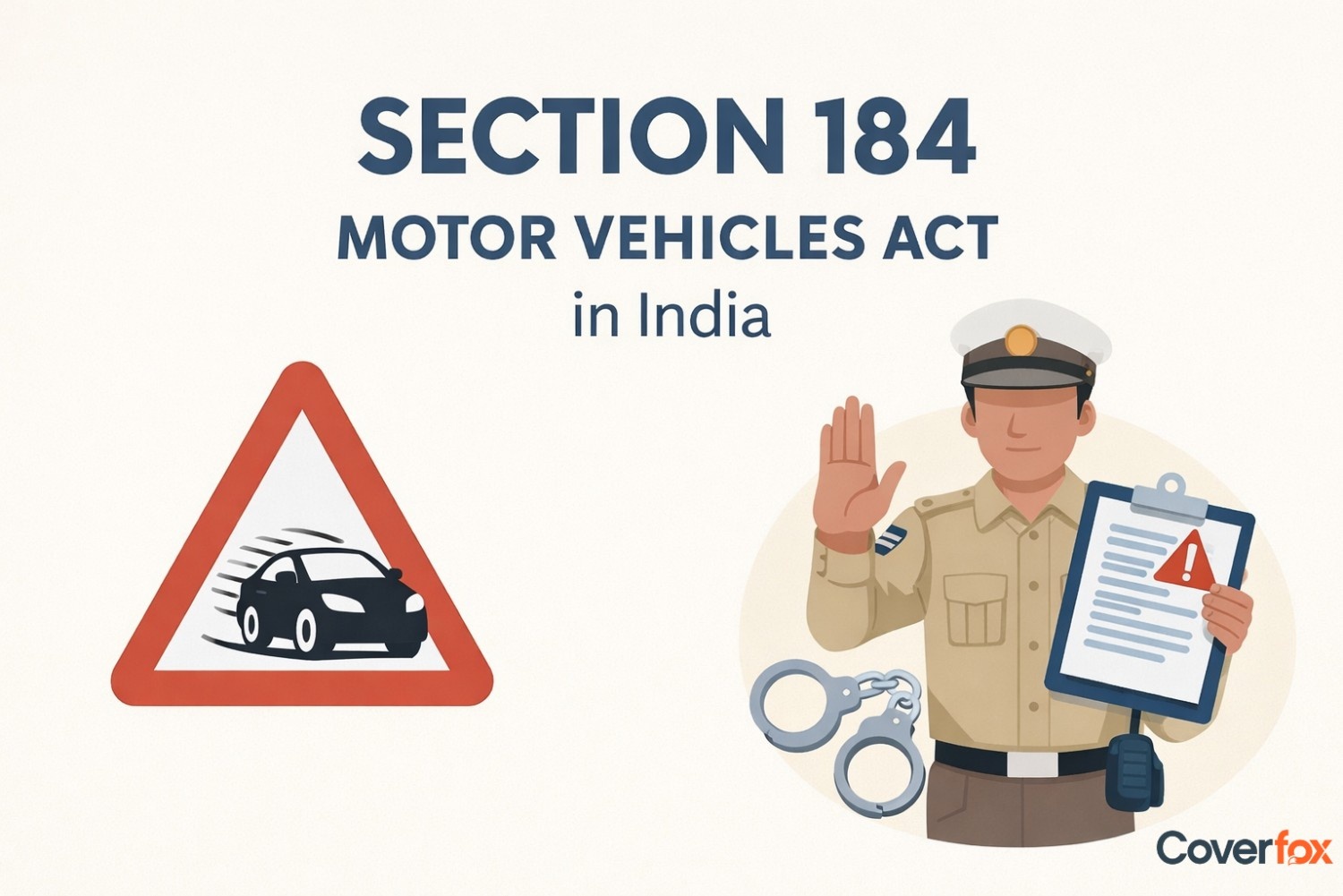
According to the Ministry of Road Transport and Highways (MoRTH), amendments introduced under the Motor Vehicles (Amendment) Act, 2019, strengthened enforcement and increased penalties for traffic violations.
Definition and Scope of Section 184
Section 184 MV Act defines dangerous driving as operating a vehicle in a manner that poses a risk to the public. This includes negligent or reckless actions that may lead to accidents or injuries.
Key conditions covered under section 184:
Driving at excessive speed beyond the prescribed limits
Ignoring traffic signals or road signs
Driving under the influence of stress or distraction
Performing unsafe overtaking or lane changes
As per official provisions under the Motor Vehicles Act, such behavior is categorized as a punishable offense due to its potential to cause harm.
Revised Penalties and Enforcement Measures in Section 184 MV Act
In response to the increase in traffic violations, India revised Section 184 of the Motor Vehicle Act to include harsher penalties for violators in order to promote better traffic safety on public roads. This includes creating a clear penalty structure: a first offense will result in a maximum fine of ₹5000 and/or imprisonment of up to six months, while a repeat offense will result in a maximum fine of ₹10000 and/or imprisonment of up to two years.
These laws will be enforced using many methods, including:
Increased use of electronic surveillance systems
Higher accountability for repeat offenders
Empowerment of authorities to take immediate action
Additional Regulatory Updates
Apart from Section 184 MV Act, several related provisions were updated to strengthen road safety enforcement.
Some highlights include:
Increased fines to be levied against those driving with an invalid licence (Section 3 Case 181)
New stricter penalties for being caught driving under the influence (Section 185)
Changes in the manner in which victims of motor vehicle accidents will receive compensation compared to previously
These new provisions work collectively towards creating and enforcing compliance with the Motor Vehicle Act and, thereby, towards the overall goal of reducing the number of motor vehicle accidents.

Mandatory Documents During Traffic Checks
Drivers who are stopped by an enforcement authority must have with them the required documents and follow the legal requirements for presentation of those documents.
Some of the documents that are considered essential are:
Valid driving licence
Registration certificate (RC)
Pollution Under Control (PUC) certificate
Insurance policy document
Digital copies stored in government-approved platforms such as DigiLocker are considered valid, as per guidelines issued by the Ministry of Electronics and Information Technology.
Requirement of Motor Insurance
Motor vehicles on public roads are required by law to carry motor vehicle insurance under the Motor Vehicles Act.
There are two main types of motor vehicle insurance: Third-Party and Comprehensive insurance.
Third-party car insurance provides coverage for injury to a third party and/or damage to the property of a third party caused by an accident involving your vehicle, and comprehensive Car insurance provides coverage for both third-party liability and damage to your own vehicle arising from an accident.
According to IRDAI (Insurance Regulatory and Development Authority of India), third-party insurance is compulsory and comprehensive insurance is voluntary; however, comprehensive insurance is recommended because it provides better overall coverage.
Practical relevance:
Provides financial protection against any liability resulting from automobile accidents that occur while operating a motor vehicle on public roads
Comply with statutory requirements
Reduce the risk of financial losses incurred as a result of unforeseen occurrences (e.g., automobile accidents).
Concluding Note on Legal Compliance
The revised penalties under the amended section 184 of the Motor Vehicle Act relate to unsafe driving; a dangerous driver is subject to strict penalties, including increased fines for violating the law and increasing penalties for repeat offenders. Section 184 of the Motor Vehicle Act defines an unsafe driver. Dangerous driving includes speeding, reckless driving, and failing to obey all traffic signs/lights.
Related Articles:
What is Section 166 of the Motor Vehicles Act?
Motor Insurance Types in India: Choosing the Right Coverage
Understanding the Different Types of Car Insurance in India
Frequently Asked Questions
What is the new amendment to the 184 MV Act?
The amended 184 MV Act increases fines up to ₹5,000 for first offenses and ₹10,000 for repeat offenses, along with possible imprisonment, as per the 2019 amendment.
What are the MV Acts 185 and 184?
Section 184 of the Road Traffic Act deals with driving dangerously; Section 185 covers driving under the influence. Both have very serious consequences.
What is the offense under Section 184?
The offense under Section 184 of the MV Act includes driving in a manner that is dangerous to the public, such as overspeeding, reckless driving, or ignoring traffic rules.
Can a police officer seize my Vehicle?
Yes, authorities may seize a vehicle in cases of serious violations, lack of valid documents, or repeated offenses, as permitted under Section 184 of the Motor Vehicle Act and related provisions.
Disclaimer: This content is for informational purposes only and does not constitute legal advice. Traffic rules, fines, and penalties under the Motor Vehicles Act may vary by state and are subject to change. Please refer to official government sources or consult a legal expert for the latest updates.