- The Vehicle Scrappage Policy 2025 strengthens India’s efforts to remove old, polluting, and unsafe vehicles through stricter mandatory fitness tests, wider adoption of automated testing stations, and compulsory scrapping for unfit vehicles.
- The 2025 update expands the network of Registered Vehicle Scrapping Facilities (RVSFs) across more states, introduces stricter emission and safety compliance norms, and enhances incentives such as road-tax rebates, registration fee waivers, and OEM discounts for owners scrapping their vehicles.
- By promoting the shift to BS6, hybrid, and electric vehicles, the policy supports cleaner mobility, boosts the automobile and recycling industries, aligns India with global environmental norms, and generates new employment opportunities across the scrappage and recycling ecosystem.
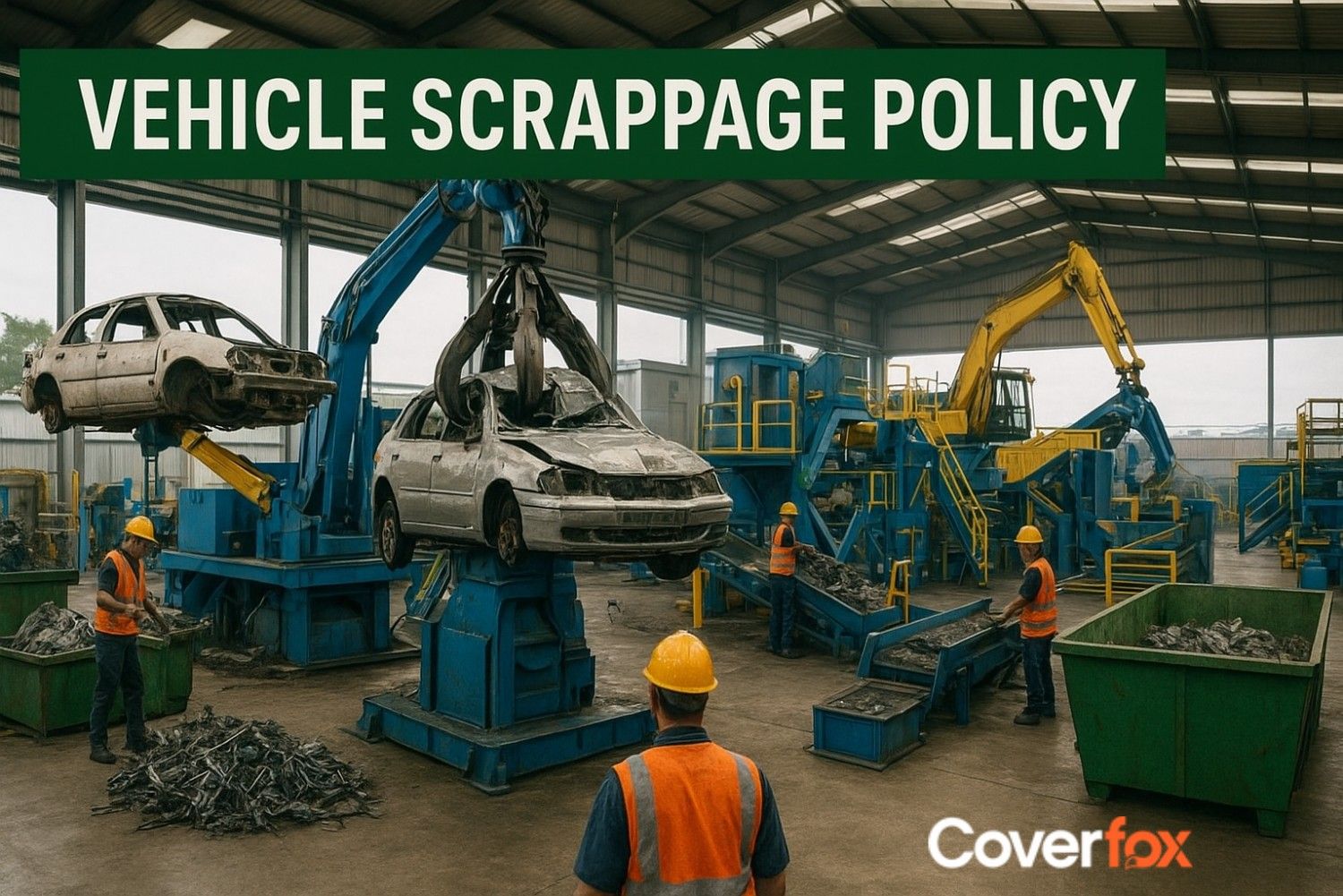
Ever seen that old car when stuck in traffic, passing out smoke that is distinctly visible and causes irritation? They remind us how ageing machinery can be harmful to the environment. The Vehicle Scrappage Policy 2025 aims to change exactly that by phasing out unfit, polluting vehicles and old vehicles that are not roadworthy. This article explains what the policy means for vehicle owners, how it works, and why it marks a major shift toward a greener future.
What Is the Vehicle Scrappage Policy 2025?
The Vehicle Scrappage Policy, which was initiated in 2021, is a government initiative designed to phase out old, unfit, and highly polluting vehicles by mandating fitness tests and encouraging voluntary scrapping. Under this policy, personal vehicles older than 20 years and commercial vehicles older than 15 years must undergo automated fitness checks; those that fail are declared End-of-Life Vehicles (ELVs) and must be scrapped at authorised centres.
What’s new in 2025 is the stronger enforcement of mandatory fitness testing, the expansion of Registered Vehicle Scrapping Facilities (RVSFs) across more cities, and the introduction of stricter emissions and safety compliance standards during fitness evaluation. Additionally, 2025 places greater emphasis on eco-friendly recycling processes and offers improved incentives, such as tax rebates, scrap value benefits, and registration fee waivers, to encourage more vehicle owners to transition to newer, cleaner models voluntarily. (Sources - Ministry of Environment, Forest and Climate Change).
Which Vehicles Qualify for Scrappage in 2025?
Vehicles that are old, unsafe, or fail to meet the government’s updated fitness and emission standards fall under the scrappage criteria for 2025.
Private vehicles over 20 years old
Commercial vehicles over 15 years old
Government vehicles older than 15 years
End-of-Life Vehicles (ELVs)
Vehicles with cancelled registration
Must undergo fitness testing; those that fail or skip testing are marked for scrappage.
Automatically require a fitness test; unfit vehicles must be scrapped.
Mandatory scrappage as per central guidelines.
Any vehicle declared unfit due to structural damage, failed emissions, faulty engine systems, or failed safety tests.
Must be scrapped through an authorised scrapping centre (RVSF).
Source - https://morth.nic.in/en/Circulars-Notifications-related-to-Vehicle-Scrapping-Policy
Key Benefits of Vehicle Scrappage Under the Vehicle Scrappage Policy 2025
Scrapping an old vehicle comes with a wide range of advantages, offering financial relief, cleaner air, and safer roads for everyone.
Discount on new vehicles
*Lower road tax
*Registration fee waiver
Reduced maintenance and fuel expenses
Lower emissions and cleaner air
Encourages cleaner technology adoption
Fewer accidents from mechanical failures
Smoother traffic movement
Owners presenting a scrappage certificate can receive notable price reductions from manufacturers participating in the scheme.
Replacing an old vehicle brings significant road-tax concessions for both private and commercial vehicle owners, easing the cost of upgrading.
A valid scrappage certificate allows buyers to skip the registration fee entirely when purchasing a new vehicle.
Older vehicles consume more fuel and require frequent repairs, while newer models are more efficient and economical to maintain.
Removing ageing, high-polluting vehicles helps reduce carbon emissions and improves air quality, especially in urban areas.
The policy promotes shifting to BS6-compliant or electric vehicles, which offer better efficiency and reduced pollution.
Scrapping unfit vehicles minimises risks associated with brake issues, engine failures, and structural weaknesses.
Removing slow, breakdown-prone vehicles improves overall traffic flow and reduces congestion.
(* Source - MoRTH)
How to Scrap Your Old Vehicle in India?
Scrapping your old vehicle in India is now a formal, government-regulated process done through authorised scrapping centres and the official VScrap/VAHAN portals, so you get proper documentation and benefits while the vehicle is legally deregistered.
1. Confirm that your vehicle is ready for scrappage
Decide to scrap if the vehicle is very old (15–20+ years), has failed/likely to fail a fitness test, is badly damaged, or is no longer economical or safe to run.
2. Find an authorised scrapping centre (RVSF)
Visit the official portal vscrap.parivahan.gov.in and locate a Registered Vehicle Scrapping Facility (RVSF) in your state or city.
3. Collect required documents
Keep your Registration Certificate (RC), ID and address proof, vehicle details (registration and chassis number), and loan NOC (if the vehicle is under hypothecation). Some centres may also ask for a cancelled cheque for payment credit.
4. Apply for scrapping on the VScrap/VAHAN portal
Go to the portal, select “Apply for Vehicle Scrapping”, enter the registration number and chassis details, choose your RVSF, and upload the requested documents. An OTP will be sent to the mobile number linked to the vehicle for verification.
5. Get your vehicle inspected by the RVSF
The scrapping centre verifies the vehicle physically (especially the chassis/VIN against the RC), after which you hand over the vehicle, keys and originals as required, and sign the consent/authorisation.
6. Vehicle dismantling and scrap value payment
The RVSF dismantles the vehicle as per MoRTH norms, updates the scrapping details on the portal, and pays you the agreed scrap value directly to your bank account or as per the agreed mode.
7. Receive the Certificate of Deposit/Scrapping Certificate
Once scrapping is completed, a Certificate of Vehicle Scrapping / Certificate of Deposit (COD) is generated digitally on the portal. You can download it and later use it to claim road tax concessions, registration fee waiver, or OEM discounts on a new vehicle, as per the current policy.
8. Ensure deregistration at the RTO
The RVSF/portal sends details to VAHAN/RTO, and your vehicle is marked deregistered, legally ending your liability for that vehicle. Keep the scrapping certificate safely for future reference and benefits.
State-Wise Vehicle Scrappage Incentives in 2025
While the central government provides a standard framework for scrappage benefits, many Indian states have introduced their own additional incentives and implementation measures under the Vehicle Scrappage Policy 2025. These state-specific benefits often include extra rebates on road tax, further reductions in registration charges, and faster approval processes for owners choosing to retire old vehicles. Some states also offer priority support or subsidies to set up Registered Vehicle Scrapping Facilities (RVSFs), helping expand infrastructure and formalise the recycling ecosystem.
Challenges in Implementing the Vehicle Scrappage Policy
The Vehicle Scrappage Policy faces several practical hurdles that affect smooth adoption across India.
Low public awareness
Limited availability of authorised scrapping centres
Cost-related hesitation
Impact on the used vehicle market
Slow infrastructure expansion
Many vehicle owners remain unclear about eligibility, incentives, or the official scrappage process.
RVSFs are still unevenly distributed, making access difficult in smaller towns and rural regions.
Even with incentives, replacing an old vehicle can be expensive, causing many owners to delay scrapping.
Stricter fitness norms reduce demand for older vehicles, affecting resale values and trade activity.
Fitness centres, automated testing stations, and scrapping facilities are still developing, slowing policy implementation.
Why Vehicle Scrappage Policy Matters for India
The Vehicle Scrappage Policy 2025 is a transformative step that strengthens India’s environmental, economic, and mobility landscape while aligning the country with global sustainability norms.
1. Improves environmental sustainability
Reduces tailpipe emissions by phasing out high-polluting, ageing vehicles.
2. Boosts the automobile sector
Drives demand for new vehicles and accelerates technological upgrades across manufacturers.
3. Promotes electric and hybrid vehicles
Motivates owners to adopt cleaner mobility options, supporting India’s long-term EV goals.
4. Generates employment
Creates jobs across scrapping facilities, recycling plants, logistics, and the formalised dismantling ecosystem.
5. Strengthens circular economy practices
Ensures metals, plastics, and parts are safely recovered and reused instead of being wasted.
6. Aligns India with global norms
Brings India closer to international standards followed in countries with established scrappage and recycling frameworks.
To Conclude
The Vehicle Scrappage Policy 2025 is a key step towards cleaner, safer transportation in India, encouraging the removal of old, polluting vehicles and promoting eco-friendly alternatives like electric and hybrid models. By expanding scrapping facilities, offering incentives, and integrating benefits like reduced car insurance premiums for new, cleaner vehicles, the policy reduces emissions, boosts the automobile industry, and creates jobs. Despite challenges, it aligns India with global sustainability goals and strengthens its circular economy.
Frequently Asked Questions
What is the Vehicle Scrappage Policy India 2025?
It is a government initiative aimed at phasing out old, unsafe, and polluting vehicles through mandatory fitness tests and regulated scrapping at authorised centres.
Who is eligible under the Vehicle Scrappage Policy 2025?
Any owner of a vehicle that has reached the age threshold (15 years for commercial, 20 years for private) or has become unfit due to structural, safety, or emission issues can opt for scrapping.
What is old vehicle deregistration?
It is the process where a vehicle's registration is officially cancelled by the RTO after the vehicle is scrapped or declared unfit.
What benefits do I get from scrapping my old vehicle?
You may receive scrap value, OEM discounts, road-tax rebates, and a waiver on registration fees when purchasing a new vehicle.
Which vehicles are eligible or required to be scrapped?
Vehicles that fail the fitness test, are older than the specified age limits, or are declared End-of-Life Vehicles (ELVs) due to damage or non-compliance.
Is scrapping mandatory for all old vehicles?
No, it is voluntary unless the vehicle fails the fitness test or is deemed unsafe or non-compliant, in which case scrapping becomes compulsory.
What is a Fitness Test?
A fitness test is a detailed inspection conducted at Automated Testing Stations (ATS) to assess a vehicle’s roadworthiness, emission levels, and structural safety.
What happens if my vehicle fails the fitness test?
It is declared an End-of-Life Vehicle (ELV) and must be scrapped at an authorised Registered Vehicle Scrapping Facility (RVSF).
What incentives do I get for scrapping my old vehicle?
You may receive manufacturer discounts, road-tax concessions, a registration fee waiver, and payment for the scrap value of your old vehicle.
Where can I scrap my vehicle?
Vehicles can be scrapped only at government-authorised Registered Vehicle Scrapping Facilities (RVSFs) listed on the VScrap/VAHAN portal.
Can I scrap my vehicle even if it is not old?
Yes, if the vehicle is badly damaged, flood-affected, beyond repair, or fails a fitness test due to structural or mechanical issues, it can be voluntarily scrapped.