Cold weather mainly affects your car’s battery, engine oil, and fuel system, making it harder for the engine to crank and start.
Regular winter preparation includes checking battery health, using the right oil viscosity, and preventing fuel moisture to avoid most cold-start issues.
Simple habits like switching off electrical accessories and cranking in short bursts reduce battery strain.
If the car still won’t start, car insurance with a Roadside Assistance (RSA) add-on can provide jump-starts, towing, and on-spot support during winter breakdowns.
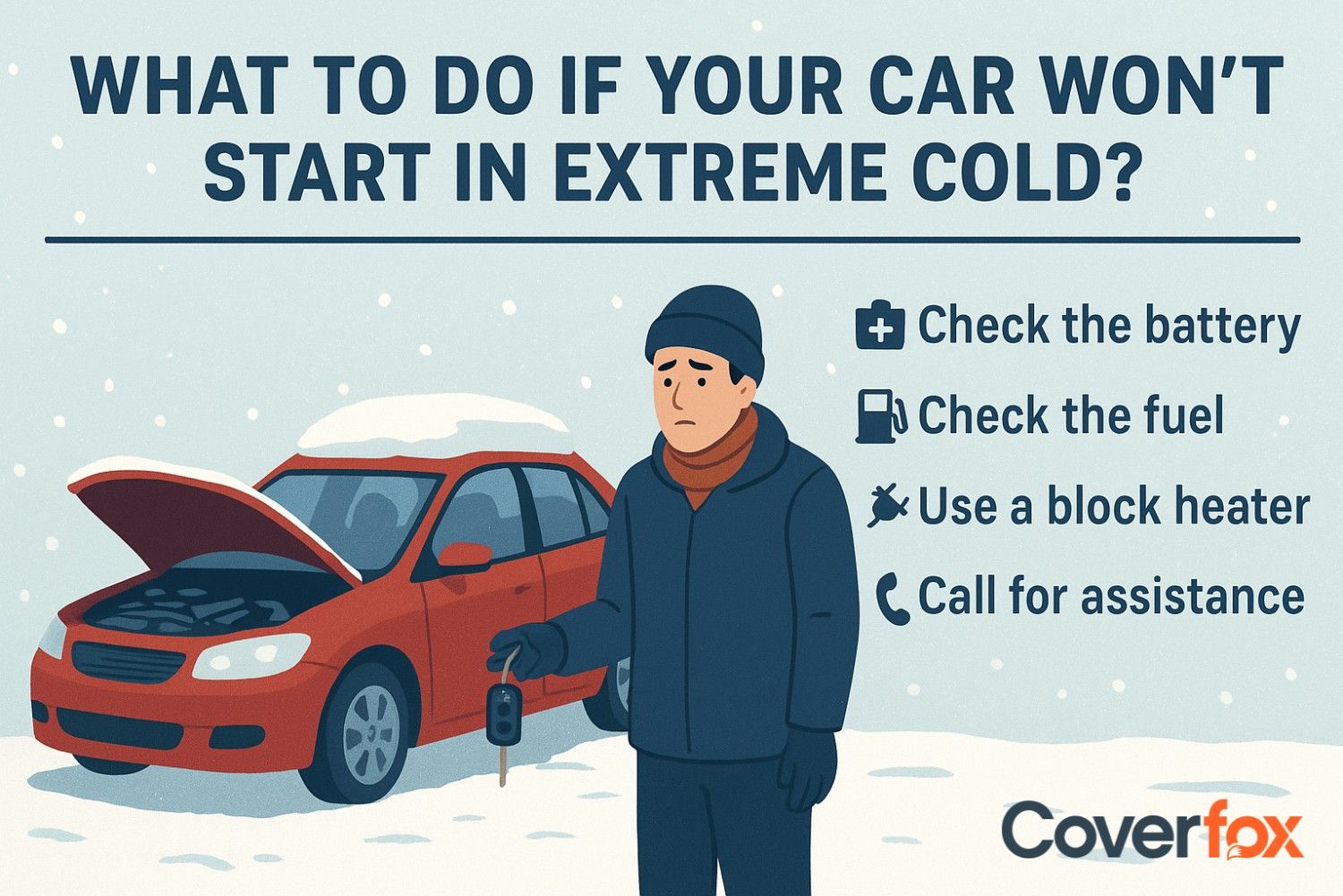
Winters are here, and so are the troubles of starting a car in the extreme cold. If you are having trouble starting your car in this winter season, you have come to the right place/ This guide will help you with some tips that you can use to start your car in the cold days. Here are some tips to help you out!
Battery Power: The First Thing to Check
In extreme cold, car batteries lose power because low temperatures slow chemical reactions, reducing their power to deliver the high current needed to start the engine, as proven by research. Check the battery terminals for corrosion or loose connections, as these can block power flow even if the battery has a charge. If the battery is weak, jump-start the car and consider replacing batteries older than 3–5 years to avoid repeated winter starting issues.
Frozen Fuel Lines: How Cold Weather Affects Your Gas Tank
In extremely cold weather, moisture in the fuel system can freeze inside fuel lines, blocking the flow of petrol or diesel to the engine and preventing the car from starting. Keeping your fuel tank full reduces condensation and the chances of water freezing in the lines. Using winter-grade fuel or fuel additives helps absorb moisture and prevent freezing, while parked cars with frozen lines may need gradual warming or professional assistance to thaw them safely.
Official winter safety guidance from Ready.gov, which is managed by the U.S. government, recommends keeping your gas tank as full as possible to reduce the likelihood of fuel line freezing.
Thickened Engine Oil: A Cause of Starting Trouble in Extreme Cold
When the thermometer goes down, engine oil becomes dense and sluggish, increasing resistance inside the engine and making cold starts difficult. Using the correct low-viscosity oil as recommended by the manufacturer and replacing old oil before winter ensures smoother flow during start-up. Parking in a covered space or using an engine block heater helps warm the oil slightly, reducing strain on the engine and improving cold-start reliability.
Automotive engineering research explains that a cold start becomes difficult at low ambient temperatures because engine oil becomes more viscous and fuel can resist ignition, increasing the effort required to crank the engine.

Starter Motor and Ignition System Problems
The starter motor and ignition system play a critical role in turning the engine and igniting the fuel–air mixture, and any weakness becomes more noticeable during cold conditions. Reduced electrical efficiency and worn components can stop the engine from cranking or firing properly.
Key Things to Check:
Starter motor for slow or clicking cranks, indicating wear or internal damage
Spark plugs and ignition coils for weak or inconsistent sparks
Wiring and fuses for loose connections or corrosion that disrupts power flow
Frozen or Clogged Air Intake
Ice, snow, or debris can block the air intake, preventing the engine from receiving enough air to start properly. A clogged or frozen air filter restricts airflow and disrupts the fuel–air balance needed for ignition. Regularly checking and cleaning the air filter, removing snow buildup around the intake, and parking in a sheltered area can help prevent this winter-starting issue.
Try Cranking in Short Bursts
Repeated long cranks can drain the battery quickly in cold conditions, so using short, controlled attempts is more effective.
Step-by-step approach:
Turn the key or press the start button for 5–7 seconds only
Pause for 10–15 seconds to let the battery recover
Switch off lights and other electronics before the next attempt
Repeat the process 2–3 times instead of one long crank
Don’t Forget to Turn Off All Electrical Accessories
Before starting the car in cold conditions, switching off electrical accessories reduces the load on the battery and ensures maximum power is available for cranking the engine. This small step can make a noticeable difference, especially when the battery is already under strain due to low temperatures.
Electrical accessories checklist to turn off:
Headlights and fog lamps
Cabin lights and boot light
Infotainment system and speakers
Air conditioning or heater blower
Rear defogger and seat warmers
Mobile chargers or USB devices
Call for Roadside Assistance if Needed
When your car refuses to start despite multiple attempts, calling for roadside assistance is often the safest and quickest solution, especially in harsh weather conditions. If your car insurance includes a Roadside Assistance (RSA) add-on, it can be a real lifesaver by providing immediate help without unexpected out-of-pocket expenses.
With RSA cover, insurers can arrange on-the-spot services such as battery jump-start, towing to the nearest garage, fuel delivery, or minor mechanical support. During winter emergencies, this add-on ensures you’re not stranded in the cold and helps you get back on the road with minimal stress and delay.
Summing Up
Cold weather can strain your car’s battery, thicken engine oil, and disrupt the fuel system, making winter starts more difficult if checks are ignored. Preparing your car with a healthy battery, correct oil viscosity, and a moisture-free fuel system helps prevent most cold-start issues. Simple habits like regular maintenance and turning off electrical loads also improve reliability. If a breakdown still occurs, car insurance with a Roadside Assistance add-on provides timely help such as jump-starts and towing, keeping you safe during winter emergencies.
More Articles to Read:
Winter Car Care: Essential Tips & Tricks
The Importance of Engine Protection Cover in Car Insurance
Frequently Asked Questions
Why won’t my car start in the cold?
Cold temperatures reduce battery power, thicken engine oil, and may freeze fuel or air intake systems, making it harder for the engine to crank and ignite.
How can I jump-start my car in freezing weather?
Use jumper cables with a healthy battery, connect terminals correctly, start the donor car first, and let your engine run for 20–30 minutes after starting.
Can cold weather ruin my car battery?
Yes, cold weather can weaken an already ageing battery and reduce its cranking power, often exposing batteries nearing the end of their lifespan.
Should I switch to winter oil for better starts?
Using the manufacturer-recommended low-viscosity oil for winter helps the engine turn more easily and improves cold-start performance.
What’s the best way to warm up my car’s battery?
Parking in a garage, insulating the battery, or using a battery or engine block heater helps maintain sufficient battery temperature and charge.
Can I prevent my fuel lines from freezing?
Keeping the fuel tank at least half full and using fuel additives or winter-grade fuel helps reduce moisture and prevent fuel line freezing.
When should I call a mechanic?
If the car repeatedly fails to start, needs frequent jump-starts, or shows warning lights, a professional inspection is recommended.
Does a block heater really help?
Yes, a block heater warms the engine and oil before starting, reducing strain on the battery and improving cold-start reliability.