- Retail Insurance
- Business Insurance
- Resources
- Claims


When your car faces an unexpected setback, the last thing you need is confusion about what to do next. A car insurance claim bridges the gap between an unfortunate incident and getting your vehicle back on the road. Understanding the car insurance claim process beforehand can make all the difference during a stressful situation. This guide will help you with the car insurance claim procedure.
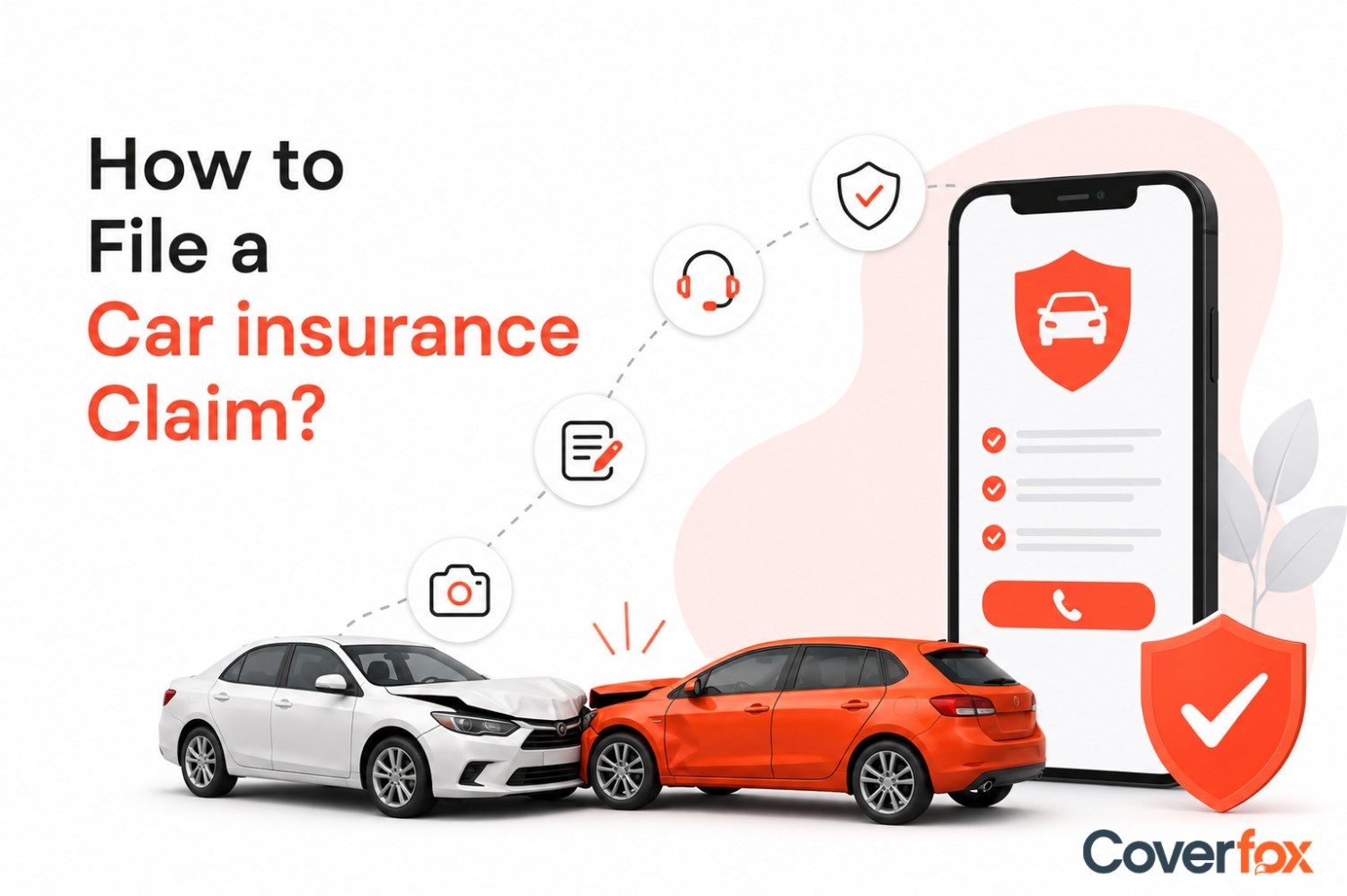
Car insurance claims are broadly classified based on the method used to settle repair expenses after an accident or covered loss. Understanding these claim types can help policyholders choose the most convenient option and ensure a smoother claim settlement process.
A cashless claim is one of the most convenient ways to settle a car insurance claim. Under this process, the insured vehicle is repaired at a network garage that has a tie-up with the insurance company. Once the claim is approved, the insurer directly pays the eligible repair costs to the garage, eliminating the need for the policyholder to arrange large upfront payments.
Minimal out-of-pocket expenses
Faster claim processing and settlement
Repairs carried out at insurer-approved garages
Reduced paperwork for the policyholder
A reimbursement claim is used when the vehicle is repaired at a garage that is not part of the insurer's network. In this process, the policyholder pays the entire repair bill upfront and later submits the invoices and supporting documents to the insurance company for reimbursement.
Freedom to choose any garage for repairs
Suitable when a network garage is not available nearby
Allows policyholders to continue using their preferred service centre
Provides coverage for eligible repair expenses even outside the insurer's network
A car insurance claim can be filed whenever your vehicle suffers a loss or damage covered under your policy. Here are certain situations where you can file a car insurance claim:
You can file a car insurance claim if your vehicle is damaged due to an accident, collision, overturning, skidding, impact with another vehicle or object, or any other covered accidental event. Depending on your policy coverage, the insurer may cover the cost of repairing or replacing damaged vehicle parts. Accidental damage claims are among the most common types of car insurance claims and are typically covered under comprehensive and standalone own damage policies.
If your insured car is stolen, you can raise a theft claim under a comprehensive car insurance policy. To initiate the claim process, you must immediately notify the police and register an FIR. The insurer will review the claim, verify the documents, and process compensation based on the vehicle's Insured Declared Value (IDV) if the vehicle is not recovered within the prescribed period.
A third-party liability claim arises when your car causes bodily injury, death, or property damage to another person. Since third-party car insurance is mandatory in India, such claims help cover the legal and financial liabilities resulting from accidents involving third parties. Compensation is generally determined through the appropriate legal process and settled as per policy terms and applicable regulations.
Comprehensive car insurance policies generally cover damage caused by natural and man-made calamities. These may include floods, cyclones, storms, earthquakes, landslides, fire, riots, strikes, vandalism, malicious acts, and similar covered events. If your vehicle is damaged due to any such incident, you can file a claim for the repair or replacement of the affected components, subject to the terms, conditions, and exclusions of your policy.
Filing a car insurance claim online is a straightforward process when the incident is reported promptly and the required documents are submitted accurately. Whether the claim relates to accidental damage, theft, or third-party liability, following the correct procedure can help ensure faster claim approval and settlement.
Notify your insurer as soon as possible after the accident, theft, or damage occurs. Most insurers allow claim intimation through their customer care helpline, website, mobile app, email, or branch office. Delayed reporting may lead to complications during claim assessment and settlement. You can also report the claim at help@coverfox.com if you have enough of the policy from Coverfox.
An FIR (First Information Report) is generally mandatory in cases involving vehicle theft, third-party injuries, death, major accidents, fire, vandalism, riots, or malicious damage. The FIR acts as an important supporting document during the claim verification process.
Take clear photographs and videos of the damaged vehicle, accident location, surrounding conditions, and any third-party vehicles involved. Proper documentation helps establish the circumstances of the incident and supports the claim assessment process.
Complete the claim form provided by the insurer and submit it along with the necessary documents. These may include the insurance policy copy, Registration Certificate (RC), driving licence, FIR copy (if applicable), repair estimates, photographs, and any additional documents requested by the insurer.
The insurer will appoint a surveyor to inspect the damaged vehicle and verify the claim details. The surveyor assesses the extent of damage, reviews the supporting documents, and estimates the repair costs before recommending claim approval.
Once the claim is approved, the vehicle can be repaired. In a cashless claim, the insurer directly settles the approved repair costs with the network garage. In a reimbursement claim, the policyholder pays the repair expenses first and later receives reimbursement after submitting the final bills and documents for verification.
The claim process may vary depending on the nature of the incident. Here's a breakdown of how claims are typically handled in different situations.
Inform your insurer immediately after the accident.
Capture photographs and videos of the damaged vehicle and accident scene.
Submit the claim form along with the required documents.
Allow the insurer's surveyor to inspect the vehicle.
Get the vehicle repaired after receiving approval.
The claim is settled through either the cashless or reimbursement route.
Car Insurance Claim form
Car insurance policy copy
Registration Certificate (RC)
Driving licence
Repair estimate and invoices
Damage photographs
FIR copy (if required)
Report the theft to the police and file an FIR immediately.
Notify the insurer and register the theft claim.
Submit the required claim documents and vehicle details.
Obtain a non-traceable certificate if the vehicle is not recovered.
Complete the insurer's verification process.
Receive claim settlement based on the vehicle's IDV.
Car Insurance Claim form
FIR copy
Non-traceable certificate
Original car keys
Registration Certificate (RC)
Insurance policy copy
Driving licence
Subrogation letter
RTO-related documents
Inform the insurer and local police authorities about the accident as soon as possible.
Collect relevant evidence, including photographs, witness details, and other supporting records.
Submit the claim form and required documents to the insurer.
The case is presented before the Motor Accident Claims Tribunal (MACT), which evaluates the claim and determines the compensation payable to the affected third party.
Once the tribunal issues its award, the insurer processes the claim in accordance with the MACT order and policy terms. The compensation amount is paid to the claimant as directed by the tribunal.
Car Insurance Claim form
FIR copy
Insurance policy copy
Registration Certificate (RC)
Driving licence
Legal notice or court documents
Accident photographs and supporting evidence
Medical records, bills, or property damage documents (as applicable)
Claims can be rejected if the policyholder fails to comply with policy terms and conditions or if the loss falls outside the scope of coverage.
Failing to notify the insurer about an accident, theft, or damage within the prescribed timeframe may lead to claim rejection.
Claims are generally not approved if the driver did not possess a valid driving licence at the time of the incident.
Accidents occurring while the driver is under the influence of alcohol or drugs are typically excluded from coverage.
Claims cannot be raised if the car insurance policy had lapsed before the incident occurred.
Getting the vehicle repaired before the insurer's approval or surveyor's assessment may result in claim rejection.
Missing, inaccurate, or misleading information in the claim form or supporting documents can delay or invalidate a claim.
Damages arising from exclusions such as wear and tear, mechanical breakdowns, illegal activities, or unauthorised modifications are generally not covered.
Claims may be rejected if a privately insured vehicle is being used for commercial purposes at the time of the incident.
Providing false information, fabricated documents, or exaggerated loss estimates can lead to claim rejection and policy cancellation.
Following a few simple precautions can significantly improve the chances of a successful car insurance claim settlement.
Inform the Insurer Promptly: Report the accident, theft, or damage to your insurer as soon as possible after the incident.
Keep Your Policy Active: Renew your car insurance policy before its expiry date to avoid coverage gaps.
Carry a Valid Driving Licence: Ensure that the person driving the vehicle holds a valid and appropriate driving licence.
Avoid Driving Under the Influence: Never drive after consuming alcohol or drugs, as such incidents are excluded from coverage.
Do Not Repair the Vehicle Before Inspection: Wait for the insurer's approval or surveyor's assessment before initiating repairs.
Maintain Accurate Documentation: Keep your policy, RC, driving licence, and other vehicle-related documents readily available and up to date.
Provide Complete and Correct Information: Submit accurate details and all required documents during the claim process.
Understand Policy Coverage and Exclusions: Familiarise yourself with what is covered and excluded under your policy to avoid surprises during claim settlement.
Use Authorised Network Garages: Opting for insurer-approved network garages can simplify the claims process and reduce the chances of disputes.
Avoid Misrepresentation or Fraud: Always disclose facts honestly and refrain from submitting false or exaggerated claims.
The time required for a car insurance claim depends on the type of claim, the insurer's procedures, and the completeness of the submitted documents. While minor accident claims may be settled within a few days, theft and third-party claims can take longer due to additional verification and legal processes.
An FIR is generally mandatory in cases involving vehicle theft, third-party injury or death, major accidents, fire, vandalism, riots, and other serious incidents. For minor own-damage claims, insurers may not always require an FIR, but requirements can vary between insurers.
Yes. Damage caused by accidental fire is typically covered under a comprehensive car insurance policy. You can file a claim for the repair or replacement of the damaged parts, subject to the policy's terms, conditions, and exclusions.
Filing a claim may affect your No Claim Bonus (NCB), which could result in a higher renewal premium compared to a claim-free year. However, the impact varies depending on the insurer, claim history, and policy terms.
Yes. If your car is damaged due to an accident involving a stationary object, wall, pole, or any other obstacle, you can file an own-damage claim under a comprehensive or standalone own-damage car insurance policy.
A comprehensive car insurance policy typically covers own-damage claims arising from accidents, theft, fire, natural calamities, man-made disasters, and third-party liabilities. Coverage may vary depending on the insurer and the add-ons selected.
Yes. You can raise a claim for dents and other accidental damages if they are covered under your policy. However, it is advisable to consider the repair cost and potential impact on your No Claim Bonus before filing a claim for minor damages.
Yes. There is generally no restriction on the number of claims you can file during a policy year, provided the claims are genuine and fall within the policy coverage. However, frequent claims may affect your No Claim Bonus and future premiums.
Most insurers require policyholders to report accidents as soon as possible after the incident. Delayed claim intimation may lead to additional scrutiny, delays, or even claim rejection. The final decision depends on the insurer's claim guidelines and the reason for the delay.