Zero depreciation add-on is for saving on depreciated parts that are repaired/replaced in a car repair, whereas consumables cover pays for small items like nuts, bolts, engine oil, etc that a standard car insurance policy does not cover. Each add-on serves its own purpose and can be purchased together for further protection.
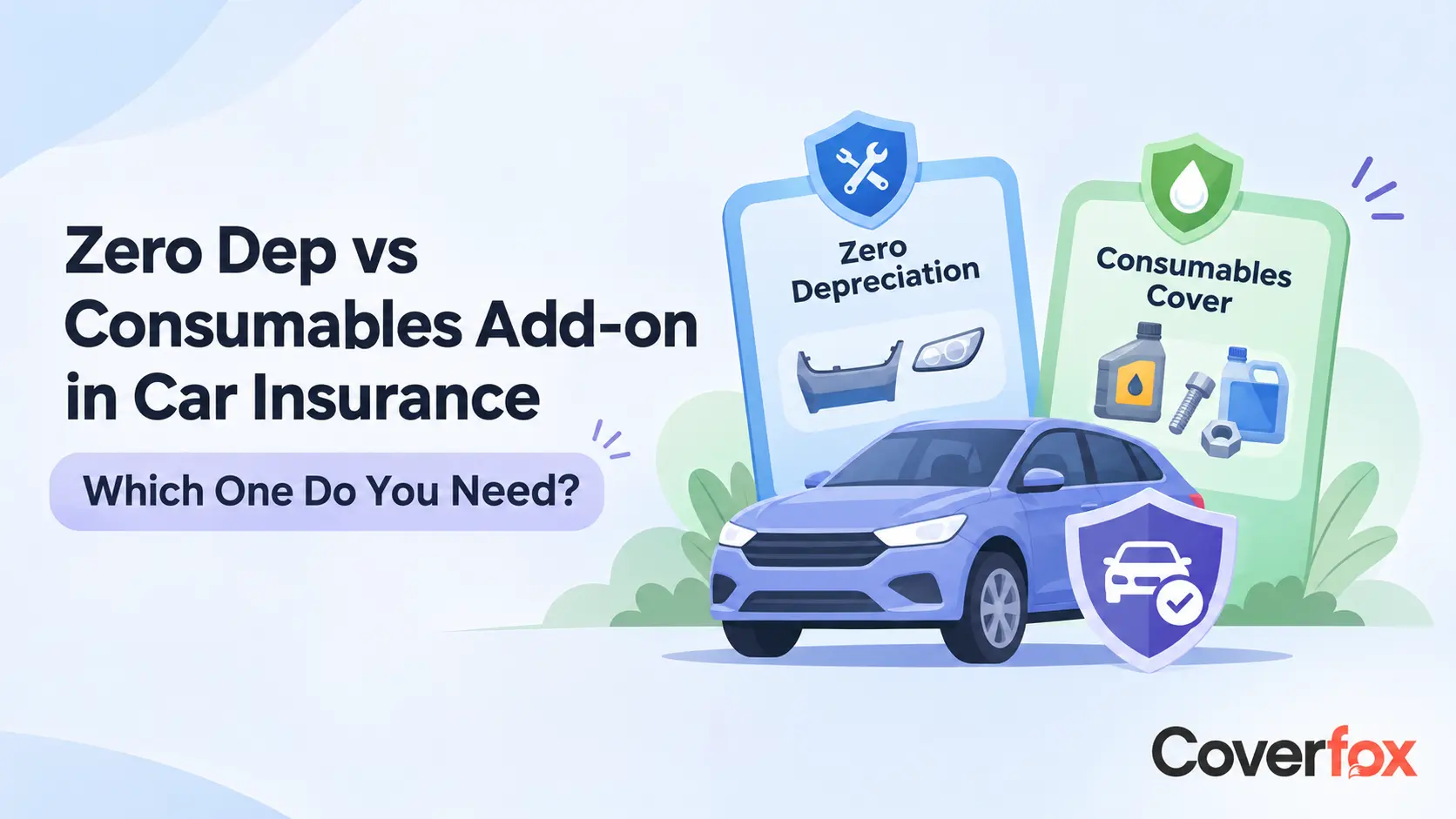
While purchasing a car insurance policy, you may come across several add-ons that might feel like jargon if you do not know what they do. People often confuse zero depreciation and consumables cover as they both deal with repair parts in a claim.
How Do Zero Depreciation and Consumables Cover Work?
Zero depreciation and consumables cover work in different ways. Zero depreciation focuses on depreciation on certain parts, whereas consumables cover deals with materials used while making a repair at a garage.
Zero Depreciation Cover
Zero dep insurance for car helps you get replaced parts during a repair at full cost rather than the depreciated value, as per policy terms. The policyholder must notify the insurer about the damage and follow its claim registration, inspection and repair approval process. The zero depreciation benefit applies to an admissible own-damage claim, subject to the add-on's terms, conditions and exclusions.
Consumables Cover
Consumables are materials that a garage uses when making a repair, which include parts like nuts, bolts, screws, washers, engine oil, coolants, brake fluid, etc. These are not covered under a standard policy unless you have consumables in car insurance. This add-on will compensate for the material charges made on the eligible claim. Note that it does not pay for damaged parts or routine servicing. Always check the list of parts covered with the insurer.
What Is the Difference Between Zero Depreciation and Consumables Cover?
| Factor | Zero Depreciation Cover | Consumables Cover |
|---|---|---|
| What it pays for | The depreciation amount deducted on replaced parts | Cost of small repair materials such as nuts, bolts, oils and coolant |
| Gap it closes | Part-cost deduction on depreciated parts | Exclusion of consumable items |
| Size of benefit | Can be large, especially on costly parts like bumpers, headlamps and body panels | Usually smaller per claim, but it appears on most repair bills |
| Typical age limit | Often restricted to newer cars up to 5 years, depending on the insurer. | Usually available for a wider range of car ages, depending on the insurer |
| Effect on premium | Higher Impact on Premium | Lower Impact on Premium |
| Claim limits | Often limited to a set number of claims per year | May carry its own limit, depending on the insurer |
| Does it cover the full bill? | No. Deductibles and excluded items still apply | No. Only listed consumable items are paid |
Note: Coverage price and claim limits may differ as per insurer.
Can You Buy Both Zero Depreciation and Consumables Cover Together?
Yes, most insurers allow you to purchase both add-ons under a single four wheeler insurance policy. Each serves a different purpose:
Zero Depreciation Cover: Helps reduce depreciation deductions on eligible replaced parts during an admissible claim.
Consumables Cover: Covers eligible consumables used during repairs, such as nuts, bolts, engine oil and lubricants.
Both add-ons are available at an additional premium and are subject to their respective policy terms and conditions.

Which Add-on Should You Choose for Your Car?
| Consider zero depreciation if… | Consider consumables cover if… |
|---|---|
| Your car is new or only a few years old and is eligible under the insurer's age limit | You want the small items on the repair invoice, such as nuts, bolts, grease, engine oil and coolant, paid by the insurer |
| Your car has costly plastic, fibre or painted parts, such as bumpers and headlamps, that are expensive to replace | Your car takes a large quantity of oils and fluids, as many SUVs and diesel cars do, so refilling them adds noticeably to a repair bill |
| You drive in dense city traffic where minor collisions and scrapes are common | Your past repair invoices have shown many small line items for materials and fluids |
| You want the insurer to bear the depreciation on replaced parts | You expect repairs involving the engine, gearbox or AC system, where oils, coolant and AC gas are replaced |
| Your car has a high parts cost, so depreciation deductions would be large | You want a lower-cost add-on and are fine with a narrower benefit |
Conclusion
Zero depreciation and consumables cover close two different gaps in a standard claim: one on replaced parts, the other on small repair materials. You can take both on a comprehensive car insurance policy, which lowers what you pay but never brings it to zero. Before buying, read the add-on terms for age limits, claim limits, covered items and exclusions.
Frequently Asked Questions
Does zero depreciation cover consumables like engine oil?
No, zero depreciation cover does not cover consumables like engine oil, lubricants or nuts and bolts. These expenses are covered under a separate consumables add-on, subject to its terms and conditions.
Can I buy zero depreciation and consumables cover together?
Yes, you can buy both zero depreciation and consumables cover together, based on the eligibility criteria of the insurer.
Does consumables cover include regular car servicing?
No. Consumables cover applies only to consumable items used during repairs arising from an eligible insurance claim. Routine servicing, oil changes and wear-and-tear maintenance are not covered.
Is zero depreciation cover better than consumables cover for a new car?
For a new car, zero depreciation usually offers the larger benefit, because replaced parts are costly and depreciation deductions can be high. Consumables cover can still be added to reduce the smaller charges. Which one is better for you depends on the insurer's terms and your premium budget.
Do zero depreciation and consumables covers eliminate all out-of-pocket expenses?
No. You still pay the compulsory deductible, any voluntary deductible you opted for, and costs for items the policy excludes or that exceed limits. Claim limits under the add-ons can also leave part of the bill with you.

.webp)