Salvage in car insurance is the residual value of a damaged car after a total loss, based on its remaining parts and scrap value. If you retain the wreck, the assessed salvage value may be deducted from the IDV during a cash-loss settlement, subject to the policy terms.
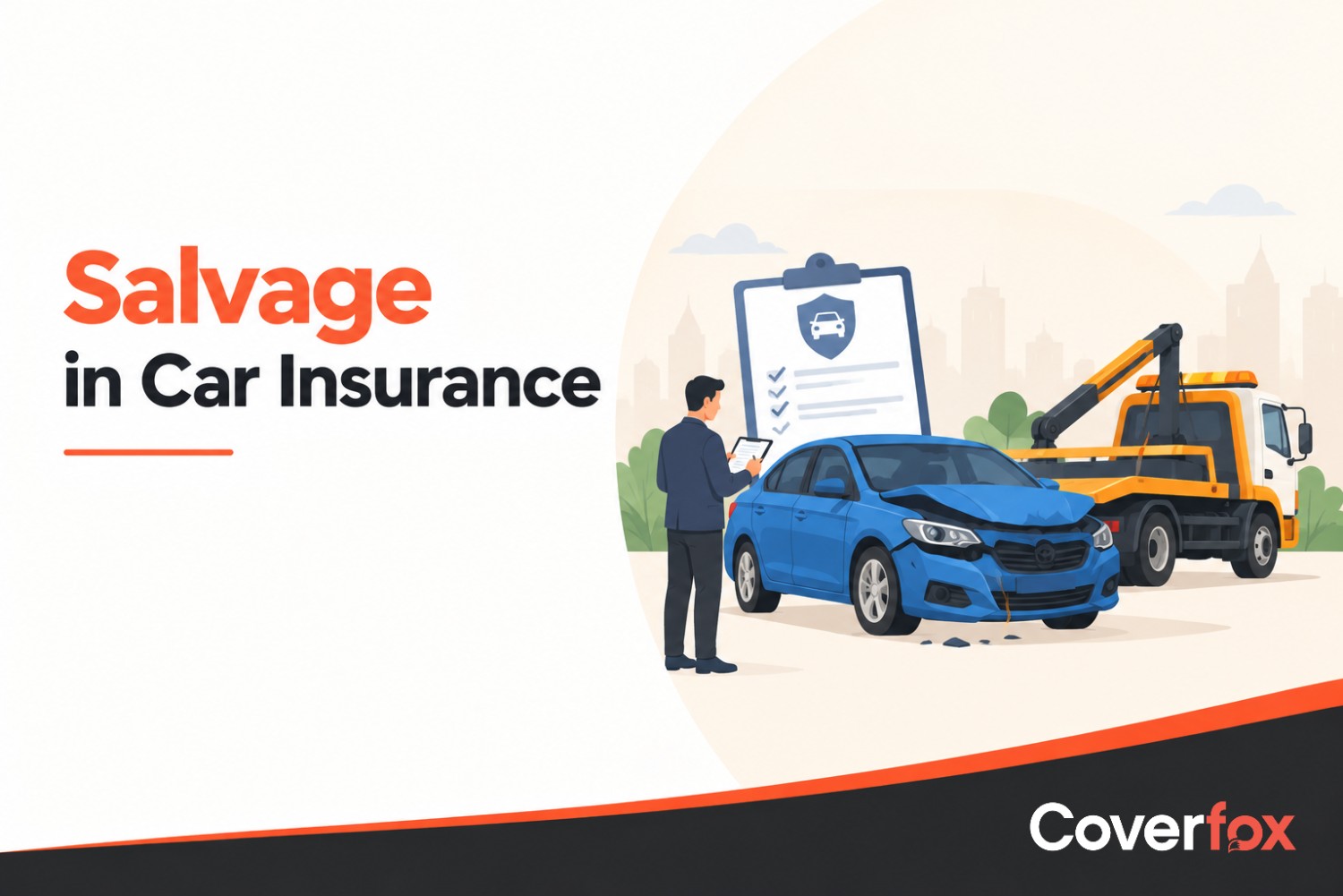
A badly damaged car still holds value in its metal and working parts, even after an insurer writes it off. That leftover value is salvage, and it changes the amount you receive as a claim.
What is Salvage in Car Insurance?
Salvage in car insurance, or salvage insurance value, is what a wrecked vehicle is worth in the resale market once it's declared a total loss. When repair costs exceed 75% of the IDV, the insurer pays the IDV minus this salvage value, not the full amount.
Key Factors That Affect Salvage Value in Car Insurance
Extent of damage:
Working parts:
Vehicle age and model:
Buyer quotes:
A burnt-out car is worth less as salvage than one with a crushed front end and an intact engine.
An engine, gearbox or battery that still runs adds to the salvage value, since these sell separately.
Popular models with spare-parts demand fetch better salvage prices than rare ones.
The insurer may obtain competitive quotes from salvage buyers to assess the vehicle's residual value. The final salvage value depends on the assessment and applicable policy terms.
How Does Salvage Affect the Car Insurance Claim Settlement?
If your car is declared a total loss or Constructive Total Loss, the settlement depends on what happens to the damaged vehicle. If you keep the wreck, the insurer can settle the claim on a cash-loss basis after deducting the assessed salvage value from the IDV.
Example: If the car's IDV is ₹6 lakh and the assessed salvage value is ₹40,000, the cash-loss settlement would be ₹5.60 lakh, before applicable deductibles and subject to the policy terms.
You surrender the wreck: The insurer may take ownership of the salvage and settle the claim according to the policy terms.
You retain the wreck: The assessed salvage value is deducted from the IDV, and you keep the damaged vehicle.
| Term | Meaning | Salvage |
|---|---|---|
| Total Loss | The car is damaged beyond repair or recovery. | The insurer may take the salvage. |
| Constructive Total Loss | Repair cost crosses the 75% threshold. | Salvage may be surrendered or retained, subject to policy terms. |
| Cash Loss | You retain the damaged car. | Salvage stays with you and its assessed value is deducted from the claim. |
IDV vs Salvage in Car Insurance
| Aspect | IDV | Salvage |
|---|---|---|
| Meaning | Insured value of the car used for total loss or CTL claims | Residual value of the damaged vehicle after a total loss |
| Determined | Fixed at the start of the policy period based on the vehicle's applicable value and depreciation | Assessed after the loss based on the condition of the wreck and its residual value |
| Role in claim | Forms the basis for a total loss or CTL settlement | Can be deducted from the IDV when the policyholder retains the wreck |
| Changes with | Vehicle age and applicable depreciation | Damage, usable parts, scrap value and buyer quotes |
| If the wreck is surrendered | Used to determine the applicable claim settlement | The insurer takes the salvage, subject to the policy terms |
How to Reduce Salvage Impact on a Car Insurance Claim?
Taking the right steps can help reduce salvage deductions and maximise your car insurance claim options.
Set an accurate IDV: A lower IDV to save on premium shrinks the base before salvage is even deducted.
Add an RTI cover: A Return to Invoice add-on pays the car's invoice price instead of the depreciated IDV, so a total loss claim also covers on-road price and registration.
Question the salvage quote: You can ask for the valuation details and push back on a quote that looks too low.
Retain the wreck when it pays off: If the parts are worth more than the insurer's quote, keeping the car and selling them yourself can net more.
Wrapping Up
Salvage is what's left of your car's value after an accident writes it off, and it's the one deduction most owners don't expect. Know your IDV, question the salvage quote, and pick add-ons that close the gap between what your car was insured for and what you receive.
Frequently Asked Questions
What does salvage mean in car insurance?
Salvage is the remaining value of a damaged car after it is declared a total loss or Constructive Total Loss (CTL). It may include the value of the vehicle’s metal, usable parts and other recoverable components.
How is salvage value determined in car insurance?
The insurer assesses the damaged vehicle and may obtain bids from salvage buyers. The assessed or accepted value is used to determine the salvage amount for the claim, subject to the policy terms.
Is salvage deducted from a car insurance claim?
Salvage is relevant to total loss and CTL claims. If you retain the damaged vehicle, its assessed salvage value is generally deducted from the claim amount, subject to the policy terms.
What happens if I disagree with the salvage value?
You can ask the insurer to explain how the salvage value was assessed and provide the basis or valuation used. If you disagree with the amount, you can request a reassessment or raise the matter through the insurer's grievance redressal process.
What does retain salvage mean in car insurance?
Retain salvage means you keep the damaged vehicle instead of surrendering it to the insurer. The assessed salvage value is deducted from the claim amount, and you remain responsible for the vehicle.
What happens to salvage after the insurance claim is settled?
If you do not retain the salvage, the insurer can take possession of the damaged vehicle and dispose of it through its salvage process. If you retain it, the vehicle remains with you after the claim is settled, subject to applicable requirements.