Turbocharged diesel engine technology is referred to as TDI, which stands for turbocharged direct injection. TDI engines have both turbocharger and direct fuel injection capabilities; therefore, TDI refers to engines that can produce more torque than a turbocharged petrol (gasoline) engine, as well as better fuel economy compared to petrol engines.
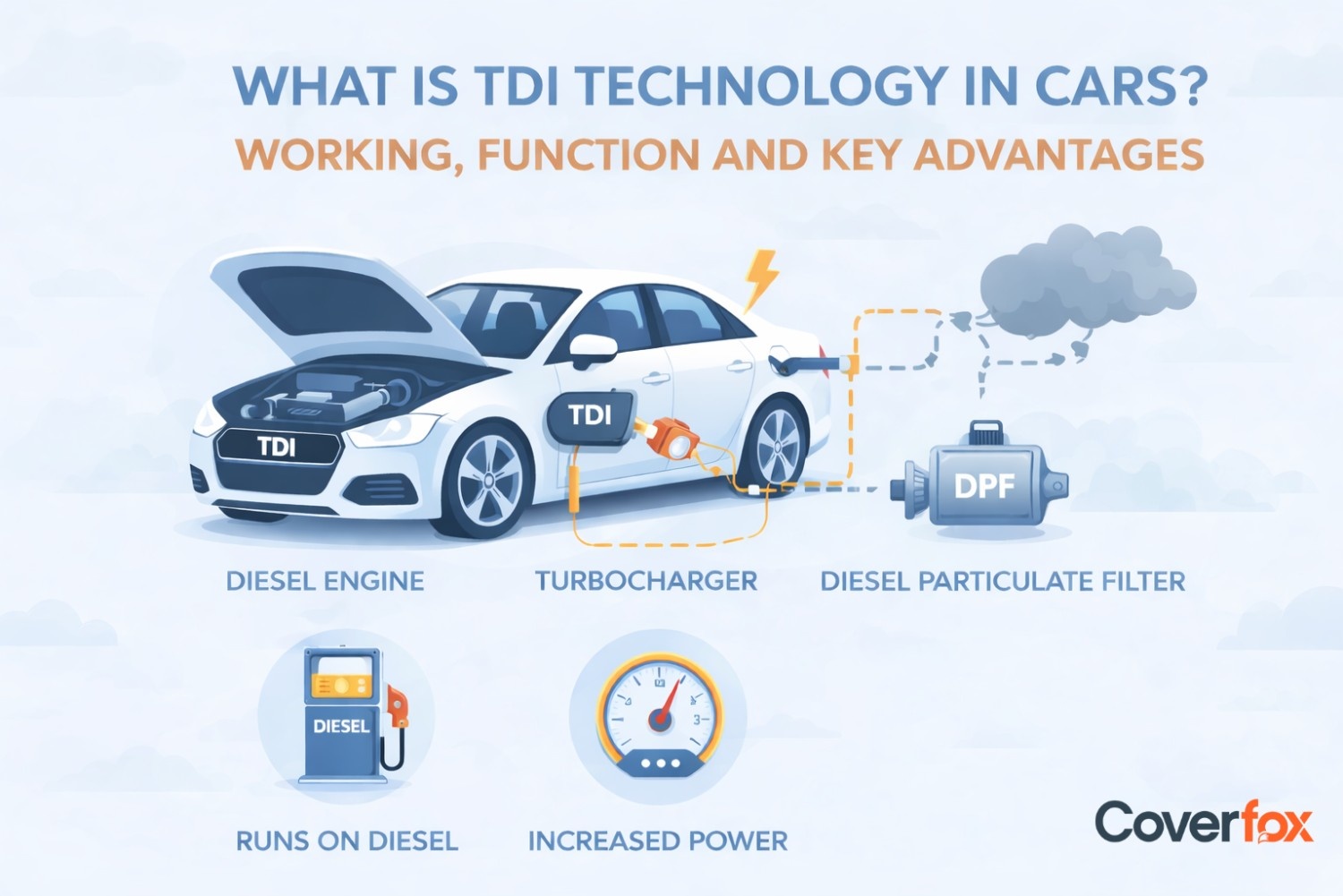
Additionally, TDI technology has played an important part in developing modern diesel engines by balancing performance with efficiency. It became especially popular in markets where fuel economy and long-distance driving are key considerations, making it a preferred choice for highways and commercial usage.
Understanding TDI in Simple Terms
A basic understanding of TDI would indicate that it injects high-pressure diesel fuel directly into the combustion chamber (in-cylinder) to improve combustion efficiency. TDI is a term frequently used by manufacturers like Volkswagen to identify their advanced diesel engines.
This direct injection method ensures that fuel is burnt more completely, resulting in better mileage and lower fuel wastage. It also contributes to smoother engine response, especially during acceleration.
Mechanism Behind a TDI Engine
TDI engines consist of two primary components:
The turbocharger, which improves the air intake into the engine.
The direct injection system, which allows for more accurate and efficient delivery of the diesel fuel into the cylinder.
When combined, both components work together to create optimal combustion. TDI engines are particularly effective when manufactured according to the BS6 emissions standards, as they significantly improve fuel economy and reduce emissions according to the Society of Indian Automobile Manufacturers.

Key Advantages of TDI Engines
Higher fuel efficiency compared to traditional engines
Increased torque at lower RPMs
Improved engine longevity
Reduced emissions under regulated standards
The TDI technology supports better thermal efficiency, as noted by the Ministry of Road Transport and Highways.
Another notable advantage is the ability of TDI engines to perform well under load, making them suitable for heavy vehicles and long drives. Their durability also means lower long-term maintenance costs when properly serviced.
Availability of TDI Cars in India
The TDI engine was previously popular in models from global manufacturers. However, stricter emission norms have reduced its presence in the Indian market.
Despite this decline, diesel technology continues to evolve, with newer systems focusing on cleaner emissions and hybrid integration. Some international markets still use advanced diesel variants inspired by TDI concepts.
TDI vs CRDi Engine Comparison
Both systems use direct injection technology:
TDI:
CRDi:
Uses a specific term that relates specifically to TDI’s design specifications.
The common term for all manufacturers’ common-rail direct diesel injection systems.
Both TDI and CRDi systems are functionally the same as comparable engines manufactured today, as far as function. However, CRDi has become more widely adopted across brands due to standardization and adaptability. TDI remains a brand-specific implementation, while CRDi represents the broader industry evolution of diesel injection systems.
Future Outlook
The TDI engine represents an important step in diesel engine evolution, combining efficiency and performance within regulatory limits. However, TDI technology faces a gradual decline due to electrification trends, though diesel engines remain relevant in commercial segments. The future of TDI engines hinges on two crucial factors: TDI and BS6 emission standards and choosing the right car insurance policy for long-term protection
Also Read - Turbo Engines: How They Work, Benefits, Types & Tips
What is a V Engine? Types, Working, and Car Applications.
What is InLine Engine: Types and Applications
Engine Decarbonisation: Why It's Essential and How It Works
Frequently Asked Questions
What are the benefits of a TDI engine?
TDI engines offer higher fuel efficiency, better torque at low speeds, and improved combustion performance. They are especially useful for long-distance driving due to their mileage advantage. Additionally, they provide strong pulling power, making them suitable for heavier vehicles.
Is TDI petrol or diesel?
TDI is a diesel engine technology that combines turbocharging and direct fuel injection into one source. It is specifically designed for diesel fuel and cannot operate on petrol.
Is TDI better than gas?
TDI engines provide better mileage, while petrol engines typically offer smoother and quieter performance. Diesel engines are more efficient for long drives, whereas petrol engines are preferred for city use.
What does TDI mean for cars?
TDI is a reference to Turbocharged Direct Injection (engine type), which is an advanced form of diesel engine technology. It signifies improved fuel efficiency and performance compared to traditional diesel engines. It is commonly associated with modern diesel innovations.
How does a TDI work?
A TDI engine utilises a turbocharger to achieve a larger air charge into the combustion chamber, along with directly injecting fuel into the combustion chamber to burn it more efficiently.
Is the TDI a 4-cylinder?
TDI engines are available in multiple configurations, including 3, 4, and 6 cylinders, and vary based on the vehicle type and performance requirements. Most passenger cars commonly use 4-cylinder TDI engines for balanced efficiency and power.
Disclaimer:
The information provided in this article is for general informational and educational purposes only. It does not constitute professional automotive, mechanical, or financial advice. Vehicle features, engine technologies, and specifications may vary depending on the manufacturer, model, and regulatory updates. Readers are advised to verify details with official automotive sources or consult qualified professionals before making any vehicle purchase or insurance-related decisions.