- Retail Insurance
- Business Insurance
- Resources
- Claims


When buying car insurance, the premium is only one part of the decision. An equally important factor is how efficiently an insurer settles claims when you need financial support after an accident or loss. The best claim settlement ratio in car insurance gives you an idea of an insurer's claim settlement performance, helping you compare insurers beyond just price.
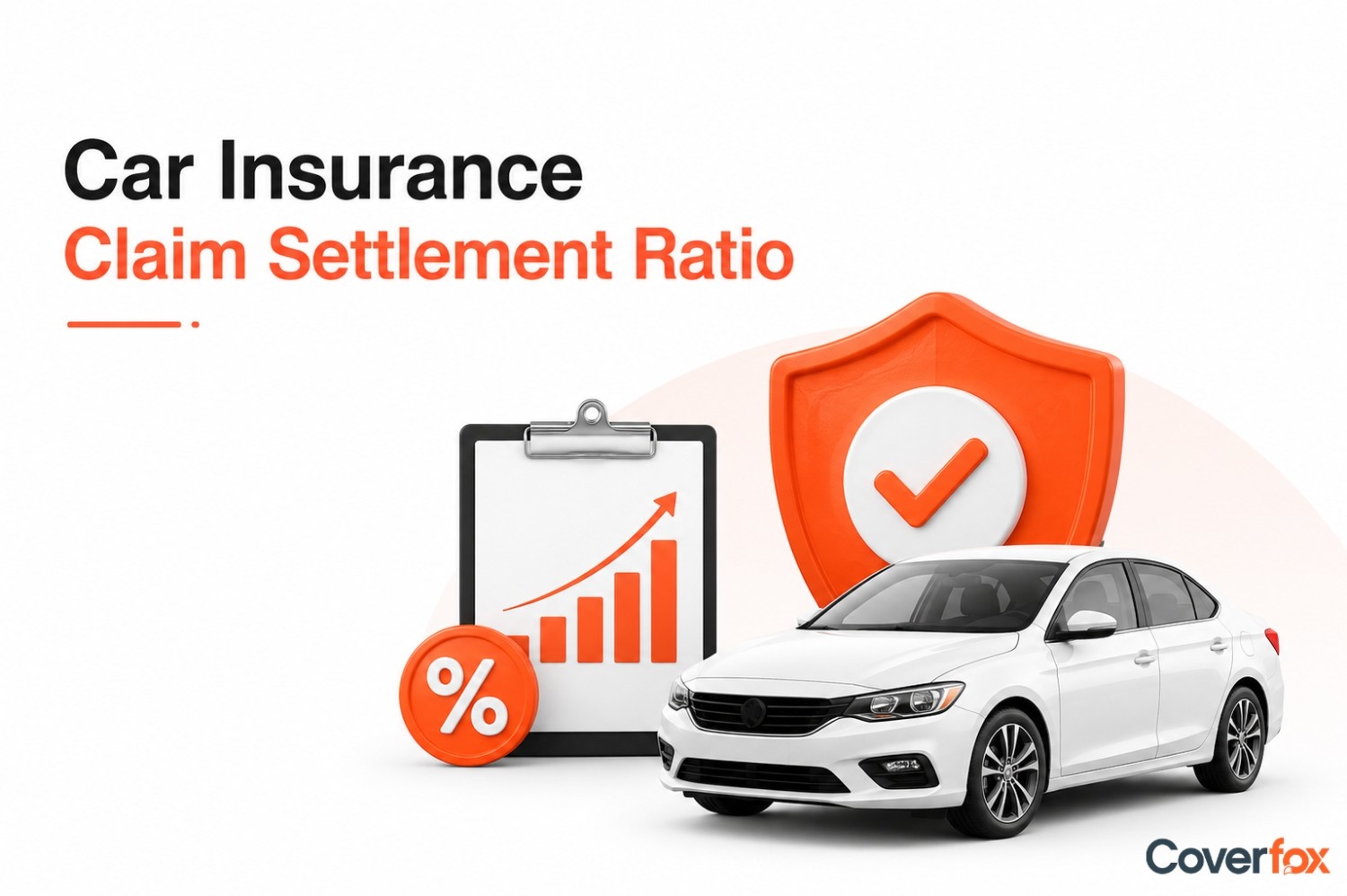
A car insurance claim settlement ratio is the percentage of claims an insurance company settles out of the total claims it receives during a financial year. It reflects how consistently an insurer honours valid claims and is one of the key indicators of its claim settlement performance.
While a higher ratio generally indicates better claim handling, it should not be the only factor when comparing insurers. The claim process, turnaround time, network garage availability, and customer support are equally important when evaluating a car insurance provider.
The car insurance claim settlement ratio is calculated using the following formula:
Claim Settlement Ratio = (Number of Claims Settled ÷ Total Number of Claims Received) × 100
Example:
Suppose an insurance company receives 20,000 car insurance claims during a financial year and successfully settles 19,200 of them.
Claim Settlement Ratio = (19,200 ÷ 20,000) × 100 = 96%
This means the insurer settled 96 out of every 100 claims it received during that period. A consistently high claim settlement ratio can indicate a reliable insurer, but it should always be considered alongside other factors such as claim settlement speed, cashless garage network, policy coverage, and customer service.
The claim settlement ratio helps you assess an insurer's ability to settle car insurance claims. It reflects the percentage of claims settled during a financial year and can be a useful metric when comparing insurance providers.
A higher claim settlement ratio indicates that the insurer has settled a larger share of the claims it received during the reporting period.
If two insurers offer similar premiums and coverage, the claim settlement ratio can help differentiate them based on their claims record.
Choosing an insurer with a consistently high claim settlement ratio can increase confidence that valid claims are handled efficiently.
The claim settlement ratio should be evaluated alongside claim settlement time, cashless garage network, customer support, ease of claim filing, and policy coverage to get a complete picture of an insurer's claims service.
A claim settlement ratio for car insurance is based on all claims an insurer settles, regardless of the settlement method. These claims are processed through the following two types of claim settlements:
Under a cashless claim settlement, you get your car repaired at the insurer's network garage, and the insurer directly pays the approved repair cost to the garage. You only need to pay deductibles or expenses not covered under the policy.
Under a reimbursement claim settlement, you can get your car repaired at any garage, including non-network garages. You pay the repair bill first and submit the required documents to the insurer, who reimburses the approved claim amount after verification.
Here are the top car insurers in India with their respective Claim Settlement Ratio (CSR), and network garage list.
| Car Insurance Company | Network Garages | Claim Settlement Ratio (CSR) |
|---|---|---|
| Acko General Insurance Ltd. | 4,000+ | 94% |
| Bajaj Allianz General Insurance Co. Ltd. | 7,200+ | 98.5% |
| Cholamandalam MS General Insurance Co. Ltd. | 16,800+ | 96% |
| Future Generali India Insurance Co. Ltd. | 6,500+ | 96.3% |
| Go Digit General Insurance Ltd. | 9,000+ | 96% |
| HDFC ERGO General Insurance Co. Ltd. | 12,200+ | 99% |
| ICICI Lombard General Insurance Co. Ltd. | 6,900+ | — |
| IFFCO-Tokio General Insurance Co. Ltd. | 11,800+ | 95.8% |
| Zurich Kotak General Insurance | 4,600+ | 98% |
| Liberty General Insurance Ltd. | 6,000+ | 98% |
| Magma General Insurance Co. Ltd. | 4,000+ | 96.6% |
| Navi General Insurance Ltd. | 900+ | 97% |
| Raheja QBE General Insurance Co. Ltd. | 1,300+ | 92% |
| IndusInd General Insurance Company Limited | 11,000+ | 98% |
| Royal Sundaram General Insurance Co. Ltd. | 7,600+ | 98.6% |
| SBI General Insurance Co. Ltd. | 9,277+ | — |
| Shriram General Insurance Co. Ltd. | 2,000+ | 96% |
| Tata AIG General Insurance Co. Ltd. | 10,000+ | — |
| Universal Sompo General Insurance Co. Ltd. | 13,500+ | 96% |
| Zuno General Insurance Ltd. | 3,300+ | 98% |
| Car Insurance Company | Network Garages | Claim Settlement Ratio (CSR) |
|---|---|---|
| National Insurance Co. Ltd. | 3,100+ | 93% |
| The New India Assurance Co. Ltd. | 3,000+ | 95% |
| The Oriental Insurance Co. Ltd. | 7,926+ | 94% |
Disclaimer: The insurers listed above are organised by ownership type and alphabetically within each category. The information is provided for comparison purposes only. The insurers featured are Coverfox's partner insurers offering motor insurance on our platform. Coverfox does not rank, endorse, or recommend any insurer based on this listing. For the complete list of registered general insurers in India, visit the IRDAI website.
A claim settlement ratio of car insurance companies is influenced by the number of claims an insurer receives and the number of valid claims it settles during a financial year. Some of the key factors that affect this ratio include:
Claims that fail verification due to incorrect information, fraud, or insufficient evidence may be rejected, affecting the overall settlement ratio.
Claims filed for exclusions, expired policies, or losses not covered under the policy are less likely to be settled.
Missing or incorrect documents can delay or lead to the rejection of a claim if the required information is not provided.
Delays in reporting an accident or loss may result in claim rejection if they violate the insurer's claim reporting requirements.
Following the insurer's prescribed claim procedure, including vehicle inspection and repair guidelines, helps ensure claims are processed and settled efficiently.
There is no fixed benchmark for an ideal car insurance claim settlement ratio. In general, insurers with a consistently high claim settlement ratio indicate a strong record of settling claims. However, you should also compare claim settlement time, cashless garage network, customer support, and policy coverage before making a decision.
A higher claim settlement ratio generally reflects better claim settlement performance. When comparing insurers, it is advisable to look for companies with a consistently high claim settlement ratio over multiple years rather than relying on a single year's figure.
The claim settlement ratio varies across insurers and may change every financial year. You should refer to the latest IRDAI disclosures or the insurer's official website for the most recent figures before purchasing a policy.
Yes. A 95% claim settlement ratio means the insurer settled 95 out of every 100 claims received during the reporting period. However, it should be evaluated along with claim settlement time, policy coverage, customer service, and the cashless garage network.
No. A high claim settlement ratio does not guarantee that every claim will be approved. Each claim is assessed based on the policy terms, coverage, exclusions, supporting documents, and compliance with the claim process.
You can check the latest claim settlement ratio in the insurer's annual report, IRDAI publications, or on trusted insurance comparison platforms that publish updated insurer information.
Yes. A claim may be rejected if it falls under policy exclusions, contains incorrect information, lacks required documents, is reported late, or does not comply with the policy terms and conditions.
Yes. The claim settlement ratio is calculated for a specific reporting period and may change every financial year based on the number of claims received and settled by the insurer.
No. While the claim settlement ratio is an important indicator, you should also compare policy coverage, claim settlement time, network garages, add-on covers, customer support, premium, and the insurer's overall claims process before choosing a car insurance policy.