


Varun raj
Renewing my bike insurance policy online was quick and easy
09 Jan 2025


 Language

Bike insurance, also called two-wheeler insurance, helps protect you from the financial impact of accidents, theft, fire, natural disasters and third-party liabilities involving your bike or scooter. It can cover repair or replacement costs and keeps you legally compliant with the mandatory third-party insurance requirement for riding on Indian roads.
Whether you ride a motorcycle, scooter, moped or electric bike, the right motorcycle insurance can save you from unexpected expenses when things go wrong. Compare bike insurance plans from 20+ insurers on Coverfox, with premiums starting at just ₹457*. View quotes in under three minutes, choose the add-ons that suit your needs, and buy or renew your policy through a completely paperless process. And if you ever need to raise a claim, the Coverfox support team is there to help you through it.
A valid third-party bike insurance policy is mandatory for every registered bike and scooter used on public roads in India under the Motor Vehicles Act, 1988. Its primary purpose is to protect you from legal and financial liability if your bike causes injury to another person or damages someone else's vehicle or property.
Riding without valid 2-wheeler insurance isn't just illegal. A first offence can attract a fine of ₹2,000^, with higher penalties for repeated violations. If you're involved in an accident, you may also have to bear third-party compensation yourself. Third-party insurance fulfils the legal requirement, but it doesn't cover your own bike. That's why many riders opt for comprehensive bike insurance for wider financial protection.
----
One of the most common mistakes riders make is choosing a two wheeler insurance policy based only on the premium. A lower price can sometimes mean a lower IDV, fewer useful add-ons or limited claim support. Before buying, compare the overall cover and not just the cost. That's what usually makes the biggest difference when you need to raise a claim.
Not every bike insurance policy offers the same level of protection. Some only help you meet the legal requirement, while others also cover damage to your own bike. Understanding the differences makes it easier to choose a plan that suits your budget and riding needs.
For many riders, third-party bike insurance is the starting point because it's the minimum insurance required to legally ride on Indian roads. It covers your legal and financial liability if your bike causes injury to another person or damages someone else's vehicle or property. However, any damage to your own bike isn't included, making it suitable only if your primary goal is to comply with legal requirements.
A valid third-party bike insurance policy doesn't protect your own bike, which is where standalone own damage insurance comes in. It covers repair or replacement expenses if your bike is damaged in an accident, stolen, catches fire, or is affected by natural or certain man-made calamities. Since it doesn't include third-party liability, it can only be purchased along with an active third-party policy.
Choosing comprehensive bike insurance means you're protecting more than just your legal liability. The policy combines third-party insurance with own damage cover, helping you manage repair costs arising from accidents, theft, fire, natural disasters, and man-made incidents under a single plan. You can also customise the policy with add-ons such as Zero Depreciation, Roadside Assistance, or Engine Protection for broader coverage.
New bike owners often opt for a bundled insurance policy because it simplifies coverage from day one. The plan includes one year of own damage insurance along with a long-term third-party policy, ensuring you meet regulatory requirements while protecting your new bike. After the own damage cover expires, only that portion needs to be renewed, while the long-term third-party cover continues until the end of its tenure.
Third-Party Liability
If your insured bike causes injury to another person or damages someone else's vehicle or property, the policy helps cover the resulting legal liability.
Accidental Damage
Damage caused by collisions or road accidents is covered, helping reduce the cost of repairing or replacing your bike.
Fire Damage
Losses arising from fire, self-ignition, lightning or explosions are covered, subject to your two-wheeler insurance policy terms.
Natural Calamities
Your bike remains insured against losses caused by floods, earthquakes, cyclones, storms and other covered natural events.
Man-Made Calamities
Incidents such as riots, strikes, vandalism and malicious acts are included under the policy wherever applicable.
Theft or Total Loss
If your bike is stolen or declared a total loss, you'll receive compensation as per the Insured Declared Value (IDV) and policy conditions.
Personal Accident Cover
The owner-driver receives financial compensation in case of accidental death or permanent disability, wherever the cover is applicable.
Transit Damage
Damage sustained while transporting your bike by road, rail, inland waterways, lift or air is covered under specified policy conditions.
Mechanical or Electrical Breakdown
Routine mechanical failures or electrical faults that aren't linked to an insured event aren't payable under the policy.
Normal Wear and Tear
Gradual ageing, depreciation and routine replacement of parts are considered maintenance expenses, not insurance claims.
Drunk or Illegal Riding
Any claim arising while riding under the influence of alcohol, drugs or during illegal activities will be rejected.
Without a Valid Driving Licence
The policy does not apply if the insured bike is being ridden without a valid driving licence.
Consequential Loss
Damage resulting from continued use after an accident or from ignoring an existing issue isn't covered.
Outside Geographical Limits
Any incident occurring outside the geographical area specified in your bike insurance policy falls outside the scope of coverage.
War and Nuclear Risks
Losses linked to war, invasion, rebellion, nuclear risks or similar events remain excluded from bike insurance policies.
Contractual Liabilities
Liabilities accepted under private agreements or contractual obligations cannot be claimed under a general two-wheeler insurance policy.
Disclaimer: Policy inclusions and exclusions are subject to policy terms and may differ from insurer to insurer. For accurate coverage, please refer to your policy document only.
Many bike owners make two-wheeler insurance decisions based on assumptions rather than facts. Clearing a few common myths can help you choose the best 2 wheeler insurance policy and avoid surprises when you need to make a claim.
Third-party bike insurance covers my bike too.
False. Third-party bike insurance only covers legal liabilities towards others. Damage to your own bike is covered only under a comprehensive or standalone own damage policy.
The cheapest bike insurance policy is always the best bike insurance.
False. A lower premium may also mean lower coverage or fewer benefits. Always compare coverage, IDV, add-ons and claim support before buying.
Buying bike insurance online is risky.
False. Buying bike insurance online is safe, paperless and allows you to compare plans from multiple insurers before making a decision.
I can transfer my No Claim Bonus (NCB) to my new bike.
True. The No Claim Bonus belongs to you, not your bike. It can usually be transferred to your new bike, subject to the insurer's guidelines and applicable timelines.
A comprehensive bike insurance policy covers every type of damage.
False. Every policy has exclusions. Mechanical breakdown, normal wear and tear, riding under the influence of alcohol, and illegal activities are typically not covered.
Bike insurance premiums remain the same every year.
False. Your premium may change based on factors such as your bike's age, IDV, claim history, add-ons, location, and policy type.
Compare bike insurance plans from leading public and private insurers available on Coverfox. While the cashless garage network is one of the key factors to consider, it's equally important to compare premiums, coverage, add-ons and claim support before choosing 2 wheeler insurance online. Explore our insurer partners below and find the plan that's right for your bike.
| Bike Insurance Company | Cashless Garages |
|---|---|
| Acko General Insurance Ltd. | 4,000+ |
| Bajaj General Insurance Ltd. | 7,200+ |
| Cholamandalam MS General Insurance Co. Ltd. | 16,800+ |
| Generali Central Insurance Co. Ltd. | 6,500+ |
| Go Digit General Insurance Ltd. | 9,000+ |
| HDFC ERGO General Insurance Co. Ltd. | 12,200+ |
| ICICI Lombard General Insurance Co. Ltd. | 6,900+ |
| IFFCO–Tokio General Insurance Co. Ltd. | 11,800+ |
| IndusInd General Insurance Company Limited | 11,000+ |
| Liberty General Insurance Ltd. | 6,000+ |
| Magma General Insurance Ltd. | 4,000+ |
| Navi General Insurance Ltd. | 900+ |
| Raheja QBE General Insurance Co. Ltd. | 1,300+ |
| Royal Sundaram General Insurance Co. Ltd. | 7,600+ |
| SBI General Insurance Co. Ltd. | 9,277+ |
| Shriram General Insurance Co. Ltd. | 2,000+ |
| Tata AIG General Insurance | 10,000+ |
| Universal Sompo General Insurance Co. Ltd. | 13,500+ |
| Zuno General Insurance Ltd. | 3,300+ |
| Zurich Kotak General Insurance Co. Ltd. | 4,600+ |
|
|
|
| Bike Insurance Company | Cashless Garages |
|---|---|
| National Insurance Co. Ltd. | 3,100+ |
| The New India Assurance Co. Ltd. | 3,000+ |
| The Oriental Insurance Co. Ltd. | 7,926+ |
| United India Insurance Co. Ltd. | 500+ |
Disclaimer: The bike insurance companies displayed above are in alphabetical order, and Coverfox does not endorse or favour any one company over the other. For an accurate list of bike insurers in India, you can refer to the IRDAI (Insurance Regulatory and Development Authority of India) website www.irdai.gov.in. The network garage count is approximate and may change periodically.
The best two-wheeler insurance policy depends on your bike, how often you ride and the level of protection you're looking for. Here's a quick guide to help you decide.
If you've recently bought a motorcycle or scooter, new bike insurance with comprehensive cover, Zero Depreciation and Return to Invoice can help reduce expensive repair or replacement costs.
Recommended: New Bike Insurance + Zero Depreciation + Return to Invoice
If your bike is on the road every day, the chances of accidental damage naturally increase. A comprehensive policy with Roadside Assistance can make daily commuting less stressful.
Recommended: Comprehensive Two-Wheeler Insurance + Roadside Assistance
Older bikes don't always need every add-on. However, if your bike still has good market value, own-damage cover is often worth keeping.
Recommended: Comprehensive or Standalone Own Damage Insurance
Repairs for premium motorcycles can be expensive. Wider cover and the right add-ons can help reduce large out-of-pocket expenses after a claim.
Recommended: Comprehensive Bike Insurance + Zero Depreciation + Engine Protection + Return to Invoice Cover
The battery is one of the most expensive parts of an electric bike. Look for a policy that includes suitable EV-specific protection and relevant add-ons.
Recommended: Comprehensive EV Bike Insurance + EV Add-ons
Don't ride very often? If your bike has a lower market value and spends most of its time parked, basic cover may be enough.
Recommended: Third-Party or Standalone Own Damage Insurance
Disclaimer: Insurance requirements vary from rider to rider. The suggested policy combinations are indicative and should not be treated as personalised insurance advice. Review the policy terms and coverage carefully before purchasing.
Choosing two wheeler insurance online isn't just about finding the lowest premium. A few extra minutes spent comparing policies can help you avoid unnecessary expenses and unpleasant surprises when it's time to make a claim.
Start with the basics. If you only want to meet the legal requirement, third-party two-wheeler insurance may be enough. If you'd also like protection for your own bike, consider comprehensive cover.
Your Insured Declared Value (IDV) determines both your two wheeler insurance premium and the maximum amount you can receive if your bike is stolen or declared a total loss. A lower premium may look attractive, but an unrealistically low IDV can reduce your claim payout.
Not every rider needs every add-on. Choose options such as Zero Depreciation, Engine Protection or Roadside Assistance based on your bike, where you ride and how often you use it.
Don't let price be the only deciding factor. Compare the coverage, exclusions, IDV, claim support and available add-ons before choosing a two-wheeler insurance policy.
If you've earned a No Claim Bonus, make sure it's transferred correctly at bike insurance renewal. It can significantly reduce your own-damage premium.
Knowing what's not covered in your two-wheeler insurance policy is just as important as understanding what is. Spending a few minutes reading the exclusions today can help prevent claim-related surprises later.
Know how claims are handled and whether your insurer has a good cashless garage network. A smooth claim experience can be just as important as the premium.
If you've added accessories or modified your bike, make sure they're declared while buying the policy. This helps avoid claim disputes later.
Add-on covers in two-wheeler insurance online are optional enhancements that you can include with your comprehensive or standalone own-damage policy. Though they come at a small additional cost, these add-ons significantly boost the protection offered by your standard insurance plan. Here are some popular add-ons you can consider:
A zero depreciation cover in two-wheeler insurance ensures a higher claim payout by eliminating depreciation deductions on replaced bike parts during a claim settlement. It covers expenses for fibre, plastic, rubber, and metal parts that would otherwise attract depreciation under a standard policy. This add-on is generally available for bikes up to 5 years old.
Your bike's fibre body panels are damaged in a traffic collision and need full replacement.
A premium motorcycle suffers scratches and cracked parts after skidding on a wet road.
Your newly purchased scooter requires expensive plastic component repairs after an accident.
NCB protection cover in bike insurance helps retain your accumulated No Claim Bonus, usually ranging from 20% to 50%, even after raising a claim during the policy period. It allows policyholders to continue enjoying renewal discounts despite making limited claims as per policy terms.
You raise a claim for accidental damage but still want to retain your bike insurance renewal discount.
A minor crash leads to repair expenses after years of claim-free riding.
You want to make a single claim during the year without losing accumulated NCB benefits.
A 24x7 roadside assistance cover in bike insurance provides emergency assistance services such as towing, battery jumpstart, flat tyre repair, fuel delivery, on-site minor repairs, and key retrieval support. This add-on offers help during breakdowns without affecting your No Claim Bonus.
Your bike breaks down late at night on a highway and requires towing assistance.
You accidentally run out of fuel during a long-distance ride.
A sudden puncture leaves you stranded far from the nearest repair garage.
Return to Invoice (RTI) cover in bike insurance compensates you with the bike's original invoice value or on-road price in case of theft or total loss. It covers the difference between the Insured Declared Value (IDV) and the original purchase price, including registration charges and road tax in many cases.
Your newly bought motorcycle gets stolen from a parking area.
Severe accident damage results in the bike being declared a total loss.
Flood damage completely ruins the insured scooter beyond repair.
Consumables cover in bike insurance reimburses the cost of consumable items that are usually excluded under a standard policy claim. It covers expenses for engine oil, brake oil, lubricants, nuts and bolts, screws, washers, coolants, grease, and similar items replaced during repairs after an accident.
Accident repairs require replacement of engine oil and brake fluid.
Multiple consumable parts are replaced during garage servicing after a collision.
Your commuter bike undergoes repair work involving lubricants and coolant replacement.
A personal accident cover in two wheeler insurance provides compensation of up to ₹15 lakh in case of accidental death or permanent total disability of the owner-rider due to a road accident. This cover is mandatory under Indian motor insurance regulations for registered vehicle owners.
A major road accident results in permanent disability for the rider.
An accident during daily commuting leads to long-term hospitalisation expenses.
A fatal bike collision provides financial support to the nominee's family.
Engine protection cover in bike insurance provides coverage for repair expenses arising from engine damage caused by water ingress, hydrostatic lock, lubricant leakage, or gearbox failure. Since standard bike insurance policies usually exclude consequential engine damage, this add-on helps cover expensive engine repair costs.
Your bike's engine gets damaged after riding through waterlogged roads during monsoon.
Water enters the engine during urban flooding and causes hydrostatic lock.
Lubricant leakage after an accident damages internal engine components.
Pillion rider cover in bike insurance offers financial compensation for accidental injuries, disability, or death of the co-rider travelling on the insured bike. The compensation amount and coverage terms depend on the insurer and selected sum insured under the add-on.
Your family member travelling as a pillion suffers injuries in a collision.
A co-rider requires medical treatment after a skid on a slippery road.
An accident during a road trip leads to hospital expenses for the passenger.
Disclaimer: The availability, features and eligibility criteria of add-on covers may vary across insurers and policy types. Please refer to the policy wording for complete details.
The Insured Declared Value (IDV) is the current market value of your bike and the maximum amount your insurer may pay if it's stolen or declared a total loss. It's calculated after applying depreciation based on your bike's age, making it one of the biggest factors affecting both your premium and claim payout.
When comparing 2 wheeler insurance online, don't focus on the premium alone. Two policies may cost almost the same but have different IDVs, which means the claim amount can also vary. Choosing the right IDV helps strike the right balance between affordability and financial protection.
₹1,20,000
Your bike's IDV
If it's stolen or declared a total loss and the two-wheeler insurance claim is admissible, the settlement will generally be based on this IDV.
Now imagine you lower the IDV just to reduce your premium. You'll pay less for the policy, but you'll also receive a lower claim amount if your bike is stolen or written off.
Expert Tip
Don't choose a lower IDV simply to save on your two-wheeler insurance. The small saving today could result in a much lower claim payout when you need it most.
Several factors influence your bike's IDV:
Age of the bikeAs your bike gets older, depreciation reduces its IDV.
Manufacturer, model and variantHigher-value bikes generally have a higher IDV.
City of registrationLocal market conditions can influence the insured value.
Declared accessoriesApproved accessories may increase the overall insured value.
Insurer's valuationThe final IDV is determined by the insurer in line with applicable guidelines.
| Age of the Bike | Standard Depreciation |
|---|---|
| Up to 6 months | 5% |
| More than 6 months to 1 year | 15% |
| More than 1 year to 2 years | 20% |
| More than 2 years to 3 years | 30% |
| More than 3 years to 4 years | 40% |
| More than 4 years to 5 years | 50% |
Disclaimer: The depreciation rates shown are standard guidelines. For bikes older than five years, the IDV is generally determined through mutual agreement between the insurer and the policyholder based on the bike's condition and market value.
| Particulars | Value |
|---|---|
| Bike's Ex-Showroom Price | ₹1,50,000 |
| Bike Age | 3 Years |
| Depreciation Applied | 30% |
| Approximate IDV | ₹1,05,000 |
If this bike is stolen or declared a total loss, the claim amount will generally be based on the applicable IDV.
A No Claim Bonus (NCB) is a reward insurers offer for every claim-free policy year. Instead of receiving cash, you earn a discount on your Own Damage premium when you renew your policy. The longer you go without making an own-damage claim, the bigger the discount becomes.
Another advantage? The NCB belongs to you, not your bike. If you buy a new two-wheeler, you can usually transfer your accumulated NCB to your two-wheeler insurance, provided you follow your insurer's transfer guidelines and timelines.
Note: NCB applies only to the Own Damage premium and not to the mandatory third-party premium.
Own damage premium
₹2,500
After 20% NCB
₹2,000
If your own damage premium is ₹2,500 and you've completed one claim-free year, you'll receive a 20% NCB, reducing your own damage premium to ₹2,000. NCB does not affect the third-party premium.
Building an NCB for two wheeler insurance takes time, but losing it can be surprisingly easy. You may lose your accumulated bonus if:
You make an own-damage claim during the policy period.
Your two-wheeler insurance policy isn't renewed within the applicable grace period.
You declare an incorrect NCB while buying or renewing your policy.
Expert Tip
If you've built up a high NCB, think twice before making a small own-damage claim. In some cases, paying for a minor repair yourself could help you preserve a valuable two-wheeler insurance renewal discount. If available, an NCB Protection Cover can also help safeguard your bonus after a limited number of claims.
The cost of 2 wheeler insurance online depends on the type of policy you choose. While comprehensive insurance premiums vary based on factors such as your bike's IDV, age, location, claim history and selected add-ons, third-party insurance premiums are fixed by IRDAI. Below are the third-party two wheeler insurance premium rates for petrol, diesel and electric two-wheelers.
| Engine Capacity (CC) | Annual Premium (₹) | 5-Year Premium (₹) |
|---|---|---|
| Up to 75 cc | ₹538 | ₹2,901 |
| 75 cc to 150 cc | ₹714 | ₹3,851 |
| 150 cc to 350 cc | ₹1,366 | ₹7,365 |
| Above 350 cc | ₹2,804 | ₹15,117 |
| Motor Power (kW) | Annual Premium (₹) | 5-Year Premium (₹) |
|---|---|---|
| Not exceeding 3 kW | ₹457 | ₹2,466 |
| Exceeding 3 kW but not exceeding 7 kW | ₹607 | ₹3,273 |
| Exceeding 7 kW but not exceeding 16 kW | ₹1,161 | ₹6,260 |
| Exceeding 16 kW | ₹2,383 | ₹12,849 |
Disclaimer: Third-party premium rates are prescribed by IRDAI. Comprehensive insurance premiums vary across insurers based on factors such as the bike, coverage selected and applicable discounts.
The easiest way to find your two wheeler insurance premium is by using the Coverfox Bike Insurance Premium Calculator. Instead of relying on estimated bike insurance prices, the calculator instantly compares quotes from multiple insurers based on your bike's details and coverage preferences, helping you find the best bike insurance policy.
Enter your bike registration number or select your bike model.
Provide details such as the registration year and previous bike insurance details.
Choose the type of bike insurance policy and any add-ons you require.
Instantly compare bike insurance quotes from multiple insurers.
Select the best bike insurance policy that matches your coverage needs and budget.
Compare two wheeler insurance quotes from multiple insurers in one place.
Get an accurate premium based on your bike's details.
Customise your policy with add-ons before buying.
Buy or renew your bike insurance online through a quick, paperless process.
Your bike insurance premium is calculated using a combination of regulatory charges and insurer-specific risk factors. While the third-party premium is fixed by IRDAI based on your bike's engine capacity or motor power, the own damage premium varies depending on your bike, coverage selected and insurer. For a comprehensive two wheeler insurance policy, the premium is generally calculated as:
Own Damage (OD) Premium
Calculated by the insurer based on factors such as your bike's IDV, age, make, model, registration location and claim history.
Third-Party (TP) Premium
Fixed by IRDAI based on your bike's engine capacity (cc) or motor power in the case of electric bikes.
Add-on Premiums
Additional premium payable if you choose optional covers such as Zero Depreciation, Engine Protection, Roadside Assistance or Return to Invoice.
Discounts
Includes benefits such as the No Claim Bonus (NCB), voluntary deductible discounts and other insurer-specific discounts, wherever applicable.
GST
The applicable Goods and Services Tax (GST) is added to the final bike insurance premium payable.
Suppose you buy a comprehensive bike insurance policy with the following details:
Note: The above example is for illustration purposes only. Actual premiums vary depending on the insurer, bike details and selected coverage. The scooty insurance price also depends on factors such as the model, IDV and the type of cover selected.
Your bike insurance premium isn't the same as everyone else's. It depends on several factors, including your bike, the type of cover you choose and your overall risk profile. Understanding what influences your premium can help you compare policies more effectively, avoid paying for coverage you don't need, and manage your overall bike insurance cost.
Reducing your bike insurance premium doesn't always mean compromising on coverage. A few informed decisions can help you lower the cost while ensuring your bike remains adequately protected.
Every claim-free policy year earns you a No Claim Bonus, which can reduce your own damage premium by up to 50% over time. If the repair cost is minor, consider paying for it yourself instead of making a claim, as preserving your NCB may result in greater long-term savings.
The IDV determines your bike's insured value and directly affects your premium. While selecting a lower IDV can reduce the premium, it also lowers the maximum amount you can receive if your bike is stolen or declared a total loss. Choose an IDV that fairly reflects your bike's market value instead of opting for the lowest available amount.
A voluntary deductible is the amount you agree to pay from your own pocket during a claim. Choosing a higher deductible usually lowers your premium, but make sure it's an amount you can comfortably afford if you need to make a claim.
Add-ons improve your coverage, but each one increases the premium. Instead of selecting every available option, choose only those that suit your bike's age and usage. For example, Zero Depreciation Cover may be more beneficial for newer bikes, while older bikes may not require it.
Premiums for similar coverage can vary across insurers. Comparing multiple bike insurance plans before purchasing or renewing helps you identify competitive premiums, better coverage, or additional benefits without paying more than necessary.
Timely 2 wheeler insurance renewal helps you retain benefits such as your No Claim Bonus and avoids the need for inspections that may be required after a policy lapse. Timely renewal also ensures uninterrupted financial protection.
Many insurers offer premium discounts if your bike is fitted with an ARAI-approved anti-theft device. Besides improving your bike's security, it can also help reduce the cost of your insurance.
Expert Tip
Don't treat bike insurance renewal as an automatic decision. Your bike's value, insurance needs and available plans change over time. Spending a few minutes comparing policies each year can help you find better coverage or save money without compromising on protection.
Comparing plans is one of the easiest ways to find the best bike insurance online for your needs. Comparing two wheeler insurance isn't just about finding the lowest premium. A good comparison helps you understand what's covered, what's excluded and whether you're getting the right value for your money.
Here's a simple way to compare policies before making a decision.
Start by entering your bike registration number or selecting your bike's make, model and registration year. This helps you view policies that match your vehicle.
Instead of checking insurer websites one by one, view quotes from multiple insurers on a single platform. It makes comparing prices and features much easier.
Compare third-party, standalone own-damage and comprehensive plans to decide which level of protection best suits your bike and riding needs.
Look beyond the premium. Compare the IDV, add-ons, exclusions and key benefits to understand what each policy actually covers.
Check if the insurer has a network garage near you for cashless claim services. This ensures quicker repairs and saves you the effort of finding an authorised garage during a claim.
Once you've compared the coverage, premium and policy features, choose the plan that offers the best overall value for your needs.
Comparing policies manually can take time, especially if you're trying to understand the fine print.
Upload your existing policy to COVER AI and get an instant breakdown of your current cover, identify potential gaps, and compare it against other plans available on Coverfox before you renew or switch.
Analyse My Policy with COVER AIBuying online bike insurance is easy. Choosing the right policy is where Coverfox helps.
View quotes, premiums and policy features from leading insurers to choose online two wheeler insurance without visiting multiple websites.
Choose bundled plans that combine long-term third-party insurance with first-year comprehensive cover for eligible new bikes.
Buy or renew bike insurance online in just a few minutes through a fully digital process.
Whether you're buying a new two-wheeler insurance policy, doing a bike insurance renewal or need help after purchase, the Coverfox support team is available to assist you.
Compare premiums, IDVs, add-ons and policy features side by side so you can make a confident and informed decision.
Upload your existing policy and get a detailed analysis of your coverage, along with recommendations to help you compare it with other available plans.
Try COVER AI →
Whether you're insuring a bike for the first time or renewing an existing policy, the process takes just a few minutes. Pick an option below to see the steps.
Buying bike insurance online through Coverfox takes less than 3 minutes. You can compare plans from multiple insurers, choose the coverage that suits your needs, and receive your policy instantly.
Visit Coverfox and open the Bike Insurance page.
Enter your bike registration number or select the make, model, and registration year.
Compare plans based on premium, IDV, coverage, claim settlement, and available add-ons.
Select the policy that matches your requirements.
Add optional covers such as zero depreciation, roadside assistance, or engine protection if required.
Complete the payment online using a secure payment method.
Your bike insurance policy will be issued instantly and shared via email.
A two wheeler insurance renewal can be completed online without visiting the insurer's office. Renewing your policy before it expires helps you maintain continuous coverage and preserve benefits such as the No Claim Bonus (NCB), if applicable.
Visit Coverfox and go to the Bike Insurance section.
Enter your bike registration number and verify the vehicle details.
Provide your existing bike insurance details.
Review the available bike insurance renewal quotes and compare coverage, premium, and add-ons.
Update your coverage if your requirements have changed since the previous policy.
Complete the payment online.
Your renewed policy will be generated instantly and sent to your registered email address.
Keep these handy before you start. Most details can be entered directly online, and you'll only need to share documents if your insurer asks for them during verification.
Bike registration certificate (RC)
Previous insurance detailsFor renewal
Personal identification proof
Address proof
Invoice of purchaseFor new bike insurance
Driving licence
Electric bikes don't have an engine, but they do have expensive components like the battery, motor and electronic systems. If they're damaged or stolen, repair and replacement costs can be significant. That's why choosing the right EV bike insurance is just as important as choosing the right bike.
The buying process is similar to general bike insurance, but a few factors are unique to electric two-wheelers.
Start with the cover that protects your costliest component, then build from there.
The battery is one of the most expensive parts of an electric bike. This add-on helps cover repair or replacement costs if it's damaged due to an insured event.
If your electric bike is stolen or declared a total loss, this add-on helps bridge the gap between its invoice value and the IDV.
Running out of charge or facing a breakdown away from home can be inconvenient. Roadside Assistance provides help with towing and other on-road emergencies.
This add-on reduces out-of-pocket expenses by ensuring depreciation isn't deducted on eligible replaced parts during an admissible claim.
Repairs often involve replacing small but essential consumables. This cover helps pay for eligible items such as lubricants, coolants, nuts, bolts and similar components replaced during accident-related repairs.
Disclaimer: Availability of electric bike add-ons is subject to the insurer.
A used bike can be a great way to save money, but don't ignore its insurance. Before you complete the purchase, check whether the existing policy is still active and make sure it's transferred to your name along with the vehicle ownership.
If the policy has expired or no longer offers the level of cover you need, compare fresh quotes and choose a policy that matches your bike's current value and condition.
The two wheeler policy should be transferred to your name along with the bike's ownership. Until then, claims may be delayed or even rejected due to a mismatch in ownership details.
An active policy saves you the trouble of buying cover immediately. If it has already lapsed, the insurer may require a break-in inspection before restoring own-damage cover.
Some used bikes are insured only with third-party cover. Depending on the bike's condition and market value, upgrading to comprehensive insurance may be worth considering.
The No Claim Bonus (NCB) belongs to the previous owner, not the bike. As the new owner, you'll start with a fresh NCB record and cannot claim the seller's discount.
The bike's age, condition and any aftermarket modifications can influence both the premium and the type of cover available. It's worth checking these before buying a policy.
Expert Tip
Don't assume the existing insurance is the right fit just because it comes with the bike. Once the ownership transfer is complete, compare fresh quotes based on the bike's current condition, IDV and the cover you actually need. A few minutes spent comparing policies can help you avoid paying for outdated or inadequate cover.
Filing a bike insurance claim is straightforward when you know the process. Depending on where you get your bike repaired, you can choose between a cashless claim or a reimbursement claim.
Where you repair your bike decides how the claim is settled.
A cashless claim lets you get your bike repaired at one of your insurer's network garages without paying the full repair bill upfront. Once the claim is approved, the insurer settles the eligible repair cost directly with the garage. You only pay deductibles or any non-payable expenses, if applicable.
Prefer using your own garage? A reimbursement claim gives you that flexibility.
You'll pay the repair bill first, submit the required documents to your insurer and receive the eligible claim amount after the claim is verified.
The process is the same for both claim types until settlement.
Report the incident as soon as possible and register your claim by sharing the necessary details.
Provide documents such as your policy details, photographs of the damage, a repair estimate and an FIR, wherever required.
The insurer may arrange a survey or inspection to assess the damage and determine the claim amount.
How you're paid depends on the garage you choose.
Cashless settlement
Once your claim is approved, take your bike to the insurer's authorised network garage. The insurer settles the approved repair costs directly with the garage, while you only need to pay any applicable deductibles, depreciation (if not covered), or expenses excluded under the policy.
Reimbursement settlement
If you choose to repair your bike at a non-network garage, you'll need to pay the repair bill upfront. After the repairs are completed, submit the original invoices, payment receipts, and other required documents to your insurer. Once the claim is verified and approved, the eligible amount is reimbursed as per your policy terms and conditions.
Need Help?
Not sure what to do after an accident? The Coverfox support team can guide you through every stage of the claim process, from registering your claim to coordinating with the insurer and answering any questions along the way.
Make sure to have the following documents ready when filing your two-wheeler insurance claim to ensure quick and smooth processing:
Valid licence of the rider at the time of the incident.
Filled and signed claim form provided by your insurer.
Proof of vehicle ownership and registration details.
Valid photo ID of the policyholder (Aadhaar, PAN, etc.).
Active policy copy for verification.
Required for theft or major accidents.
Required for reimbursement claims to validate repair expenses.
Here's how you can avoid getting your two-wheeler insurance claims rejected using these simple tips:
Having your bike insurance claim rejected can be frustrating and inconvenient. Here are common reasons why claims get rejected:
It's one thing to read about cover and add-ons. It's another to see what happens when a claim actually lands.
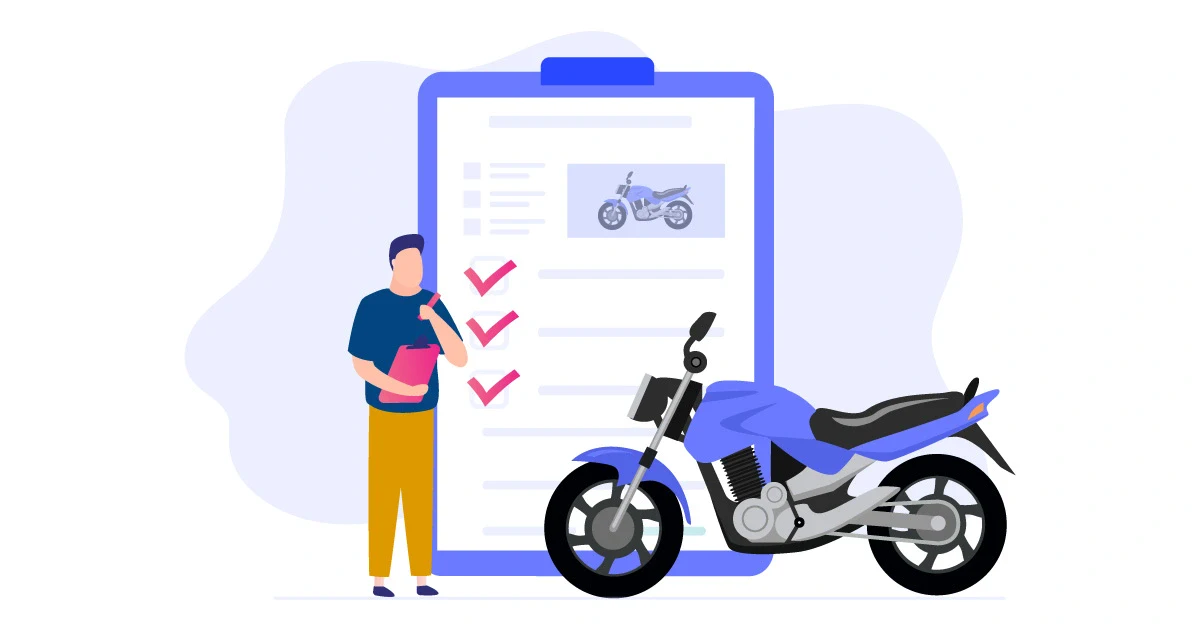
Rahul recently bought a new bike and chose a comprehensive insurance policy through Coverfox. Since he rides to work every day, he also opted for Zero Depreciation Cover to minimise out-of-pocket repair costs and Roadside Assistance for help during unexpected breakdowns or accidents.
A few months later, Rahul skids on a rain-soaked road and crashes into a divider. His bike is badly damaged, making it unsafe to ride.
Estimated repair cost ₹28,000Since the bike can't be ridden, Rahul uses his Roadside Assistance add-on to arrange towing to the nearest authorised network garage, avoiding the hassle and expense of arranging transportation himself.
Rahul informs his insurer about the accident and contacts Coverfox for assistance. The support team guides him through the documentation, coordinates with the insurer, and keeps him informed until the claim is processed.
After the claim is approved, the insurer settles the eligible repair costs directly with the network garage. Because Rahul had opted for Zero Depreciation Cover, the depreciation on replaced parts is waived as per the policy terms, significantly reducing his out-of-pocket expenses.
Rahul pays
Deductible + non-payable charges
Insurer settles
Remaining eligible amount, direct to the garage
Instead of bearing the entire ₹28,000 repair bill, Rahul pays only the deductible and other non-payable charges, while the insurer settles the remaining eligible amount directly with the garage.
The Takeaway
A comprehensive bike insurance policy becomes even more valuable when paired with the right add-ons. In Rahul's case, Roadside Assistance helped him get his damaged bike to a garage without additional towing costs, while Zero Depreciation Cover reduced the amount he had to pay for repairs. Together, they made the claim process smoother and significantly lowered his financial burden.
Note: This example is for illustrative purposes only. Claim settlement, add-on benefits, and payable amounts depend on the policy purchased, applicable terms and conditions, and the circumstances of the claim.
India's insurance regulator responsible for overseeing insurers, insurance products and policyholder interests.
The current insured value of your bike and the maximum amount generally payable if it's stolen or declared a total loss.
A bike insurance renewal discount on your Own Damage premium earned for every claim-free policy year.
Mandatory cover for injury, death or property damage caused to another person by your insured bike.
Protects your bike against insured events such as accidents, theft, fire and natural calamities.
An add-on that reduces depreciation deductions on eligible replaced parts, helping you receive a higher claim payout.
The fixed amount you must pay from your own pocket for every own-damage claim.
An additional amount you choose to pay during a claim in exchange for a lower premium.
An inspection carried out before restoring own-damage cover after a policy has lapsed.
An official update made to your policy to record changes such as vehicle details, personal information or coverage.
A bike is treated as a Constructive Total Loss when the approved repair cost exceeds 75% of its IDV.
The insurer's legal right to recover claim expenses from the person responsible for causing the loss.
The estimated value of the damaged bike or its remaining usable parts after a total loss.
The document that summarises your policy details, including coverage, IDV, premium, add-ons and vehicle information.
A network garage where the insurer settles the approved repair cost directly, so you don't have to pay the full bill upfront.
Quick answers to the most common questions about bike insurance policies, claims, and renewals.
Yes. Every registered motorcycle, scooter, moped and electric two-wheeler used on public roads in India must have at least a valid third-party bike insurance policy under the Motor Vehicles Act, 1988. However, low-speed electric two-wheelers with a motor power of up to 250 W and a maximum speed of 25 km/hr are exempt from registration and insurance requirements.
Yes. You can buy or renew two-wheeler insurance online even if you don't have your previous policy document. Your bike registration number and vehicle details are usually sufficient to retrieve the required information or generate fresh insurance quotes.
If you've purchased a new bike, you can compare new bike insurance plans on Coverfox, customise your cover with suitable add-ons and complete the purchase online before taking delivery of your vehicle.
Yes. You can compare plans and buy scooty insurance online just as you would for any other two-wheeler.
A third-party bike insurance policy covers your legal liability for injury, death or property damage caused to a third party. A comprehensive bike insurance policy includes third-party liability cover along with protection for your own bike against accidents, theft, fire, natural calamities and other covered risks. You can also enhance comprehensive coverage with optional add-ons.
Engine damage is covered only if it results from an insured event under the policy. Damage caused by water ingress, oil leakage, or hydrostatic lock is covered only if your policy includes an Engine Protection add-on.
Yes. Electric bikes can be insured just like petrol-powered two-wheelers. Third-party premiums are determined based on the motor power (kW), while comprehensive premiums depend on the bike's value, coverage selected and applicable add-ons.
To claim bike insurance online, inform the insurer as soon as possible about the incident, provide necessary documents alongside the claims form, get the bike repaired at a network garage for cashless claims or get reimbursed from the insurer if you choose a different network garage.
Yes. The No Claim Bonus (NCB) belongs to the policyholder, not the vehicle. If you buy another bike, you can transfer your accumulated NCB to the new bike, subject to the insurer's guidelines and the prescribed transfer timeline.
Yes. You can purchase or renew bike insurance for a used or second-hand bike after the ownership has been transferred to your name. It is also advisable to transfer the existing insurance policy or purchase a new policy with suitable coverage.
The premium for a comprehensive bike insurance policy is calculated using the following formula: Bike Insurance Premium = Own Damage (OD) Premium + Third-Party (TP) Premium + Add-on Premiums − Applicable Discounts + GST. The Own Damage Premium depends on factors such as your bike's IDV, age, make, model, registration location and claim history. The Third-Party Premium is prescribed by IRDAI based on the bike's engine capacity or motor power for electric bikes. Optional add-ons, No Claim Bonus (NCB), voluntary deductibles and applicable GST determine the final premium payable.
If your bike insurance policy expires, your coverage ends immediately. If you don't renew it within the applicable period prescribed by the insurer, you may lose your accumulated No Claim Bonus (NCB). If the policy remains expired beyond the permitted period, the insurer may also require a break-in inspection before restoring the Own Damage cover.