
- Retail Insurance
- Business Insurance
- Resources
- Claims


Pay As You Drive (PAYD) car insurance is an add-on to Motor Own Damage cover that links the own-damage premium to the car’s declared annual driving distance. Permitted by the IRDAI in July 2022, PAYD uses kilometre slabs to determine the applicable own-damage premium. The third-party premium continues to follow standard regulator-set pricing. PAYD is also known as pay-as-you-go car insurance and is mainly intended for vehicles with limited annual usage.
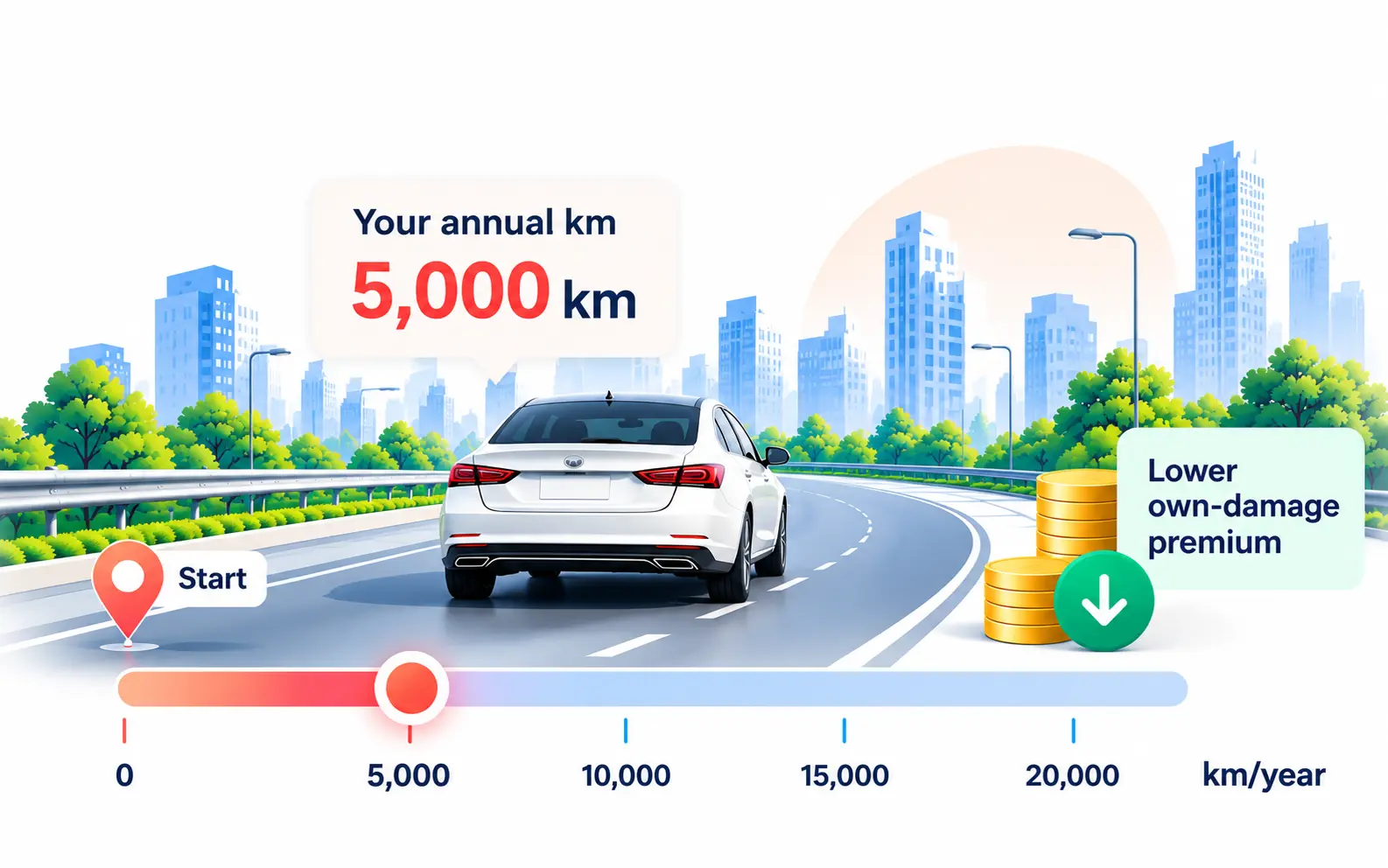
PAYD car insurance links the own-damage premium to how much you plan to drive during the policy year.
At policy inception, you record your car's current odometer reading with the insurer.
Select a kilometre slab based on the expected distance the car will be driven during the policy year. Available slabs and premiums vary by insurer.
The insurer prices your own-damage premium against the chosen slab, so a lower slab generally means a lower premium.
Claims are processed normally as long as the distance covered stays within the declared slab for that policy year.
Insurers can determine the distance driven using different methods, depending on the PAYD product.
You may be required to submit your car's odometer reading when buying the policy, renewing it or making a claim.
The insurer may verify the declared reading through photographs, inspections or other verification methods specified under the policy.
Some insurers may use a device installed in the vehicle to record the kilometres driven.
Certain PAYD policies can track distance through an insurer-approved mobile app or connected technology.
The method used to measure your mileage will depend on the insurer and the specific PAYD policy you choose.
Owners who drive less pay less for the OD portion of their policy, getting discounts as per slabs and policy terms.
A car parked most of the week no longer costs the same to insure as one driven daily. The policyholder will pay per km driven as per policy.
PAYD may be useful for people who use their car occasionally, such as for weekend trips or limited commuting.
Get additional kilometres during the policy period. Availability, cost, timing, and the effect on claim eligibility depend on the insurer's terms.
A second or third car used sparingly can carry a lighter premium than under a flat-rate policy.
Repair costs from collisions, within the declared kilometre slab.
Damage from fire, flood, storm, or similar events, same as under a standard OD section.
Total loss due to theft, subject to standard theft-claim conditions.
Legal liability for injury or property damage to a third party, priced independently of your driving slab.
Damage from riots, strikes or malicious acts, where included in the base OD wording.
Own-damage claims filed after crossing your declared limit without topping up are typically not payable.
Regular wear, part failure, or breakdowns unrelated to an accident.
Items like engine oil or nuts and bolts, unless a separate add-on is purchased.
Standard motor insurance exclusions around licensing and intoxication apply unchanged.
Using a private car for commercial purposes when the policy is issued for personal use.
Even if you drive only a few thousand kilometres a year, depreciation deductions on replaced parts can increase your share of a repair bill. Zero dep insurance for car add-on reduces those deductions on eligible parts.
A low kilometre count does not rule out engine damage. Engine Protection cover pays for specified engine and gearbox damage, such as damage caused by water ingress, when covered by the policy.
If your car breaks down during an occasional outing, rsa in car insurance add-on can help with services such as towing, battery assistance and flat-tyre support.
Nuts, bolts, lubricants and other eligible consumables used during accident repairs can add to your bill. Consumable cover pays for specified consumables covered under the policy.
If your car is stolen or declared a total loss, the IDV might be lower than its original invoice value. Return to Invoice add-on covers the eligible difference under the stated conditions.
Disclaimer: The availability and conditions of these add-ons depend on the insurer and policy wording.
Pay as you use insurance can be suitable for drivers who use their car only a few times a month. The lower annual driving distance can mean a lower own-damage premium compared with a higher kilometre slab.
City dwellers with short commutes or those who mostly work close to home tend to log well under the standard kms a PAYD insurance is priced around.
If the car mostly stays parked while daily travel happens by metro, bus, or cab, pay as you go insurance avoids paying full price for a vehicle that barely moves.
A household's second or third car is often used far less than the primary vehicle. PAYD allows the owner to select a kilometre slab based on the expected usage of each vehicle.
Reduced commuting under hybrid work schedules often means fewer kilometres driven overall, which is exactly the pattern PAYD pricing is built for.
The amount you can save with Pay-As-You-Drive (PAYD) insurance depends on the insurer, the kilometre slab you choose, your car and the discount available under the selected product. Choosing a lower kilometre slab may reduce the own damage car insurance premium, but the actual savings can vary significantly between insurers and plans.
Lower annual kilometre slabs may qualify for a higher discount on the own-damage premium, depending on the insurer's product.
Your vehicle's value, age and other rating factors continue to influence the base own-damage premium.
Location-related risk factors can affect the premium before any applicable PAYD discount is applied.
Each insurer may offer different kilometre slabs, discount structures and conditions.
Some products may also consider driving behaviour or usage data as part of their pricing structure.
Suppose your annual own-damage premium is ₹10,000. If your selected PAYD kilometre slab qualifies for a 20% discount, your own-damage premium could reduce to ₹8,000, resulting in a saving of ₹2,000. Pay only for the miles you drive while getting you discount on OD cover.
Note: This example is for illustration only. Actual discounts, premium savings, kilometre slabs and eligibility conditions vary by insurer and PAYD product.
If your car exceeds the declared kilometre limit, the impact on your Pay As You Drive cover depends on the insurer and product terms. You may be able to purchase a Kilometre Benefit Add-on Cover as per your policy. Some insurers may also apply conditions such as a co-payment or revise the PAYD discount applicable to the policy. The treatment of claims made after exceeding the kilometre limit can also vary. Check your policy wording or contact the insurer to understand the options available and how exceeding the selected slab may affect your own-damage cover. It is advisable to track your odometer periodically and take action before crossing the declared limit.
| Feature | Pay As You Drive | Standard Comprehensive |
|---|---|---|
| Own-damage pricing | Based on declared kilometre slab | Flat annual premium |
| Third-party premium | Fixed, per regulatory tariff | Fixed, per regulatory tariff |
| Best suited for | Drivers with low annual kms driven | Drivers with higher total annual kms driven |
| Claim eligibility | Within the declared slab, unless topped up | No mileage-based restriction |
| Regulatory status | IRDAI-permitted add-on to Motor OD cover | Base policy structure |
Provide your car registration number and other basic vehicle details on Coverfox.
Compare car insurance plans available under PAYD policies for your vehicle.
Select the annual kilometre limit that matches your expected usage.
Check the coverage, kilometre limit, exclusions and premium before proceeding.
Complete the payment to purchase the selected car insurance policy.
Get Pay As You Drive insurance for your car emailed to you after verification.
The PAYD claim process is similar to a standard own-damage car insurance claim. The insurer may verify the vehicle's kilometre usage as part of the claim assessment, depending on the terms of the PAYD policy.
Report the accident or damage through the insurer's app, website, helpline or other available claim channel.
The insurer may appoint a surveyor to assess the damage and inspect the vehicle.
Provide the claim form and other documents requested by the insurer.
The insurer may verify the odometer reading or declared kilometre usage under the PAYD policy.
Once the claim is assessed, the insurer settles the admissible amount according to the policy terms.


.jpg)


PAYD stands for Pay As You Drive, an IRDAI-permitted add-on to the Motor Own Damage section of a car insurance policy.
PAYD insurance may reduce the own-damage premium for eligible low-mileage drivers, depending on the insurer, selected kilometre slab and product terms. The third-party liability premium is separate. Compare the total premium and coverage conditions with a comprehensive car insurance policy before choosing.
Yes. Pay as you go car insurance refers to the same usage-based concept as pay as you drive insurance. Different insurers and aggregators use these terms interchangeably in India.
PAYD is filed as an add-on to the Motor Own Damage cover, and it's typically offered as part of a comprehensive structure that also includes 3rd party car insurance, rather than as a standalone product.
Not always. Some insurers rely on declared and verified odometer readings without any device, while others use telematics or app-based tracking, particularly for "pay how you drive" pricing. This depends on the insurer and product variant.
The requirements are largely the same as any car insurance purchase: the vehicle's registration certificate, previous policy details if renewing, and a current odometer reading declaration at the time of purchase.
Yes. A second or third car in a household is often driven far less than the primary vehicle, making it a strong candidate for kilometre-based pricing under pay as you drive car insurance.
It tends to be worth it for occasional and low-mileage drivers, where the premium discount reflects genuinely lower usage. For drivers covering high annual distances, the discount narrows or disappears, and a standard policy may be more practical.
This depends on the insurer's specific policy terms. Some products allow limited carry-forward at renewal, while others reset the slab each policy year, so checking the policy wording before renewal is necessary.
You can raise a claim under your Pay As You Drive (PAYD) car insurance policy according to the terms of your selected kilometre slab and policy coverage. Third-party liability cover remains subject to the applicable policy terms and legal requirements. Check your insurer's PAYD policy wording to understand how exceeding the kilometre limit may affect an own-damage claim.
Disclaimers

